The Inner Worlds of Black Quilters
I am often reminded of the warmth of a quilt at my great-grandmother’s house, the weight of wool and polyester patchwork that dared you to try to break free.
I love being a Black, Southern woman. In this place I call home, we craft networks of “multisensory culture” — an existence shaped by the material, visual, and even olfactory. It’s the smell of pending afternoon rain. The subtle tinge of red clay dust sprinkled across a crisp white t-shirt on a hot summer day. Even love-worn quilts at the edge of a bed hold layered stories that require spoken word and silent feeling to fully grasp their significance.
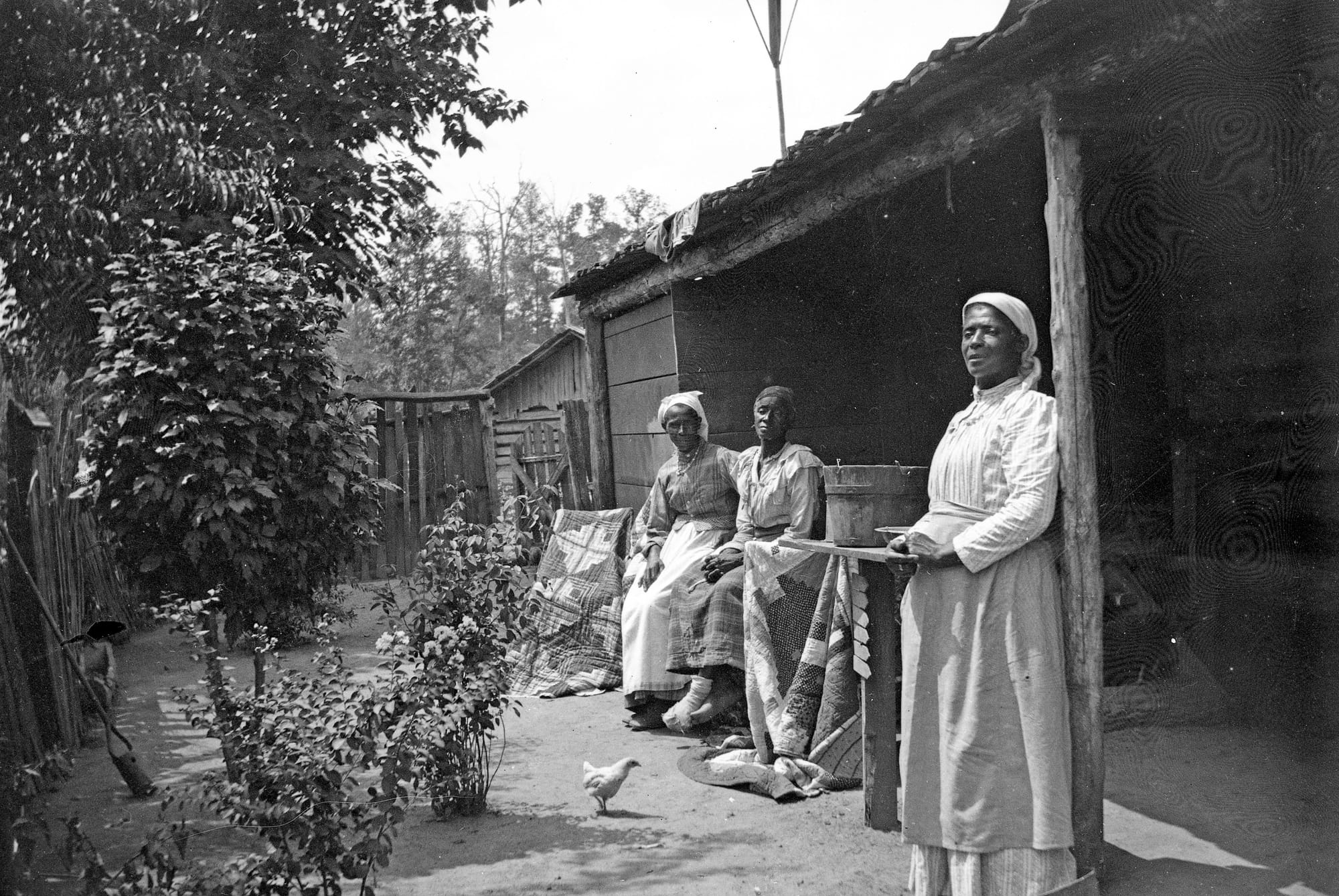
Quilts are a treasure in our cultural inventory. They are forever tethered to the South within Black history but have extended far across boundary lines as we’ve migrated and taken root in new homeplaces. Those privileged enough to own these cherished heirlooms can walk you through the memory that each patch invokes. I am often reminded of the warmth in my great-grandmother’s bed from my childhood; visiting her home meant being nestled into the mattress by the weight of wool and polyester patchwork that dared you to try to break free. To others, quilts, especially in traditional styles, are quietly unassuming and functional. Despite the ongoing recognition of Gee’s Bend by some institutions in the art world, quilts still largely represent a bygone era and commitment to labor that feels unimaginable in today’s culture of immediacy.
As a curator and scholar, I find this binary of appreciation between quilt holders and observers intriguing. Cloth is integral to the human experience, and textiles follow us from birth to death. But quilts often meet a split audience, due in part to histories of “women’s work,” the underappreciation of craft, consumerism and capitalism, and the politics of recognition. I argue that the missing link in achieving broader appreciation of these quilts is a curiosity around and protection of the lineages, aesthetics, and inner worlds of the Black women who make them.
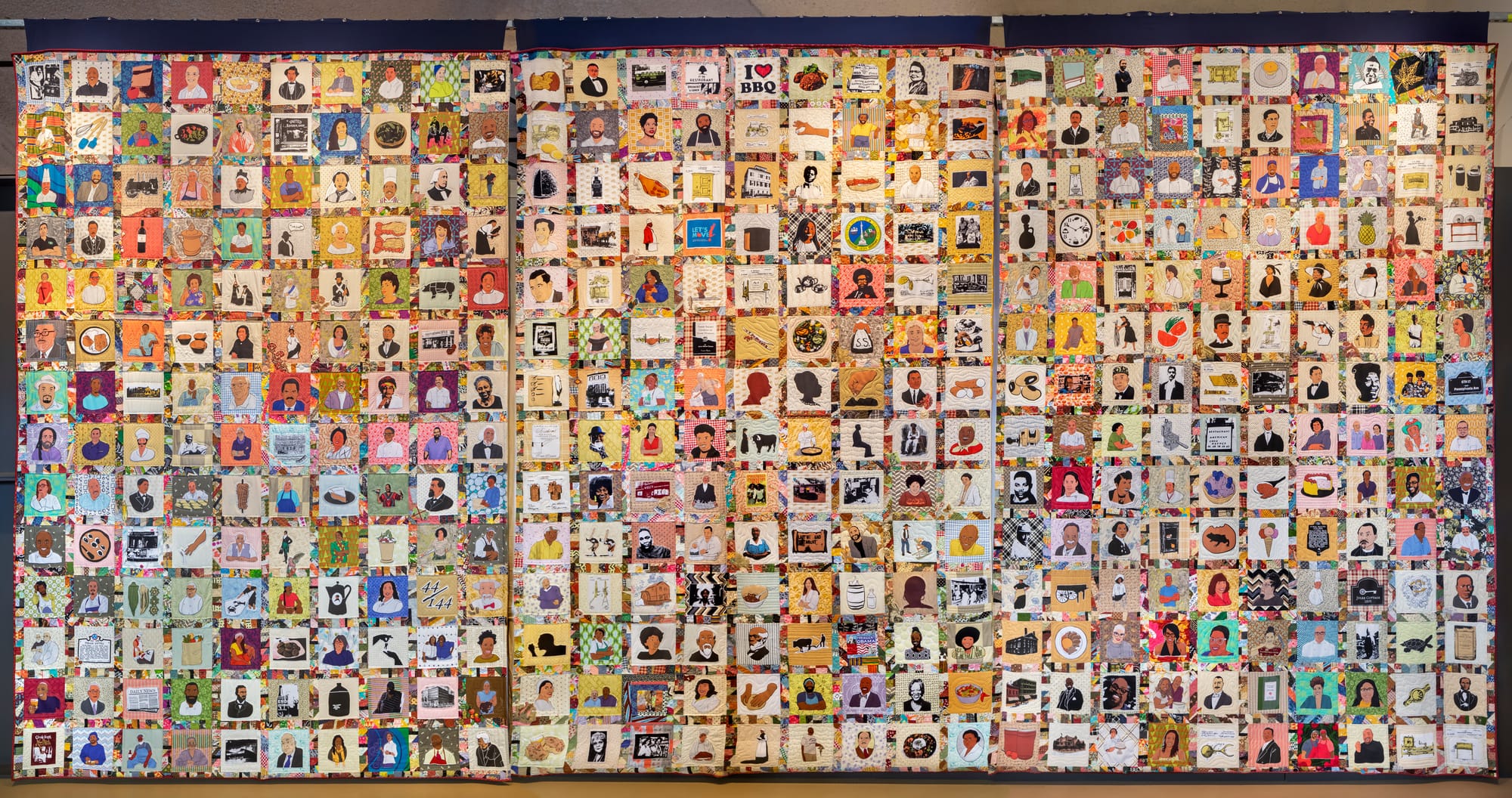
The study of Black quilts across time and space reveals an archive that would rival most historical texts. From Hystercine Rankin to Faith Ringgold, Black quiltmakers have scripted their experiences and our collective consciousness into worlds of fabric that are only understood, fully, from the inside. My relationship to quilts confirms truths I’ve known for some time, like that investigations into sovereignty, self-determination, and ancestral reverence aren’t defaulted into art school curricula. Instead, they’re forged at the feet of our elders, among chosen family and community at a quilt frame.
I remember growing up in the church and hearing people hum when words escaped them; I now connect to the hum of the sewing machine as another embodied experience. Quilters I interviewed for my next book, Stories in the Seams: A People’s History of Black Quilts and Their Makers (2026), often describe how free they feel while making. As anti-Blackness and misogynoir continue to run rampant, quilting has continued to offer refuge and kinship. To reduce these approaches to categories like abstraction and improvisation presents a limited definition of the minds and skills of Black quilters. Cloth in hand, these women are able to develop a liberated language, free of surveillance, through imagery that is deeply personal, reverent, and timeless.
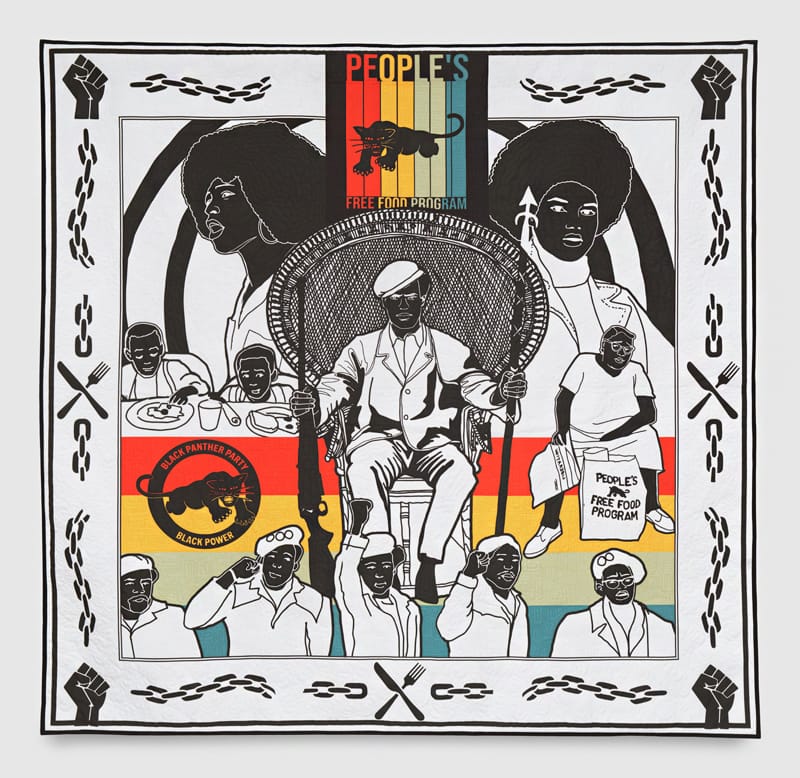
It is this refuge that drives quilters like artist and curator Dr. Carolyn Mazloomi, who has dedicated four decades to advancing the activism of the Women of Color Quilters Network while also producing dozens of boldly illustrated, whole-cloth quilts that center unfettered truths about Black history. Though quilting, she uses her experiential knowledge, and the perpetual loop of history, to permanently bear witness in black and white for future generations.
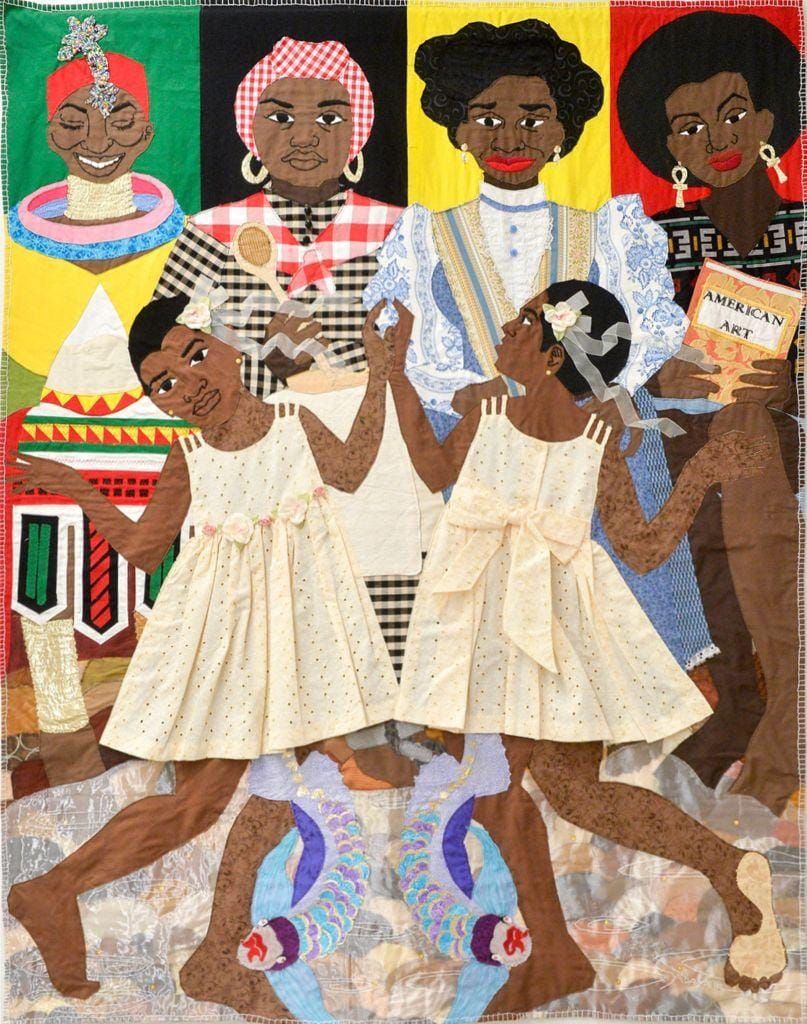
Art-making is also a sanctuary for Dawn Williams Boyd. “It is where I am engaged. It’s where I’m safe. It’s where I am calm,” she said in a 2022 interview with scholar Margaret T. McGehee. Her quilt titled “Piscean Dancer” (2016) carries forward this sense of peace, capturing the beauty of Black girlhood and the self-actualization that is shaped by intergenerational love, guidance, and ancestral protection.
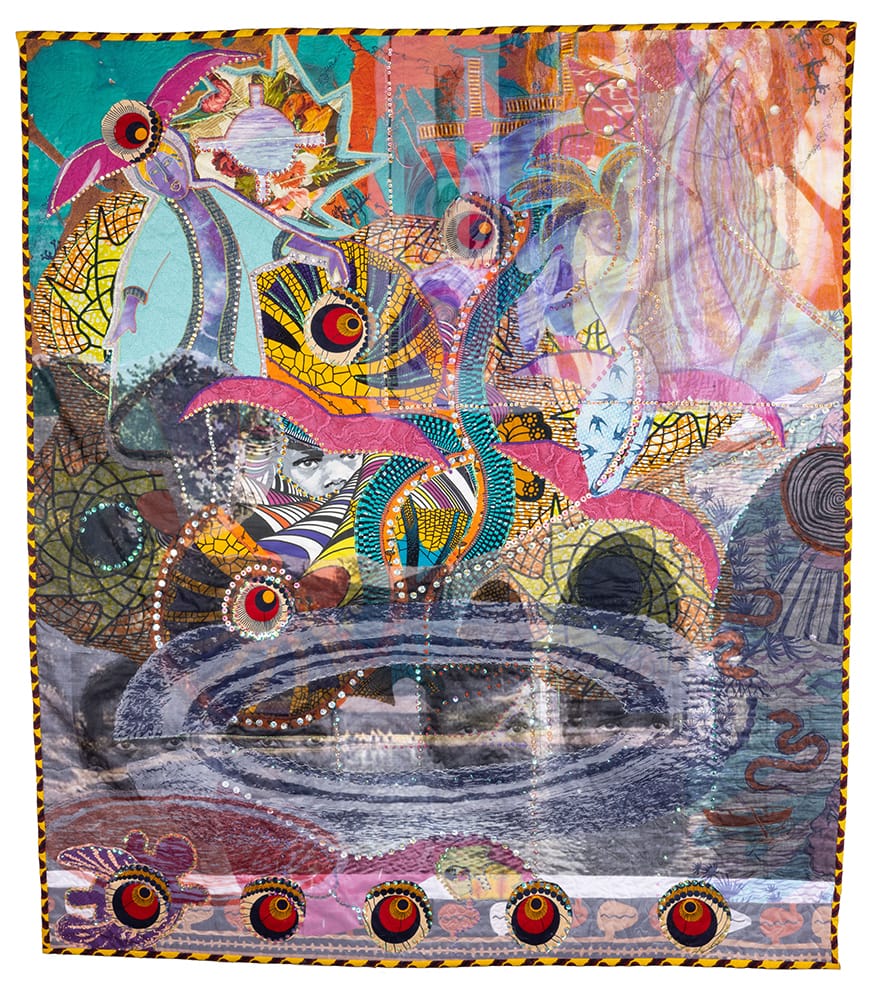
Pittsburgh-based artist Tina Williams Brewer approaches quilting as a ritual that is intuitive, spirit-led, and meditative. In “Sequences: Soul Spirit Heart” (2023), she invokes the connections between the physical and spiritual realms, using water as a meeting place where our ancestors greet us and where life ends and begins again. Using layered imagery drawn from Ghanaian adinkra symbolism, African cosmologies and African-American spiritual traditions, Williams Brewer asks viewers to take a “celestial” view of our existence.
Narratives like these are what led me to write Stories in the Seams. Black quilts cannot be described through form and color theory alone. Just as quilting takes time and careful attention, so does understanding the work and path of the maker, which are inseparable. This requires a reset of how many of us have been conditioned to listen, see, and feel. It calls us back into our humanity, and Black women quilters continue to lead the way.