The Joy of Discovery at 1-54 Art Fair
Though smaller than previous editions, the contemporary African art fair draws our attention to works that are tactile, surprising, and alive with material expression.

Every art fair season the question arises: If you aren’t an arts journalist or a patron looking to augment your collection, why attend an art fair at all? With regard to the 1-54 Contemporary African Art Fair, which was founded in 2013 by Touria El Glaoui, the answer I find is that it keeps offering surprise and the genuine pleasure of discovery. Among the spring art fairs that take place in New York, 1-54, open at the Starrett-Lehigh Building in Manhattan through Sunday, still features work that’s unexpected.
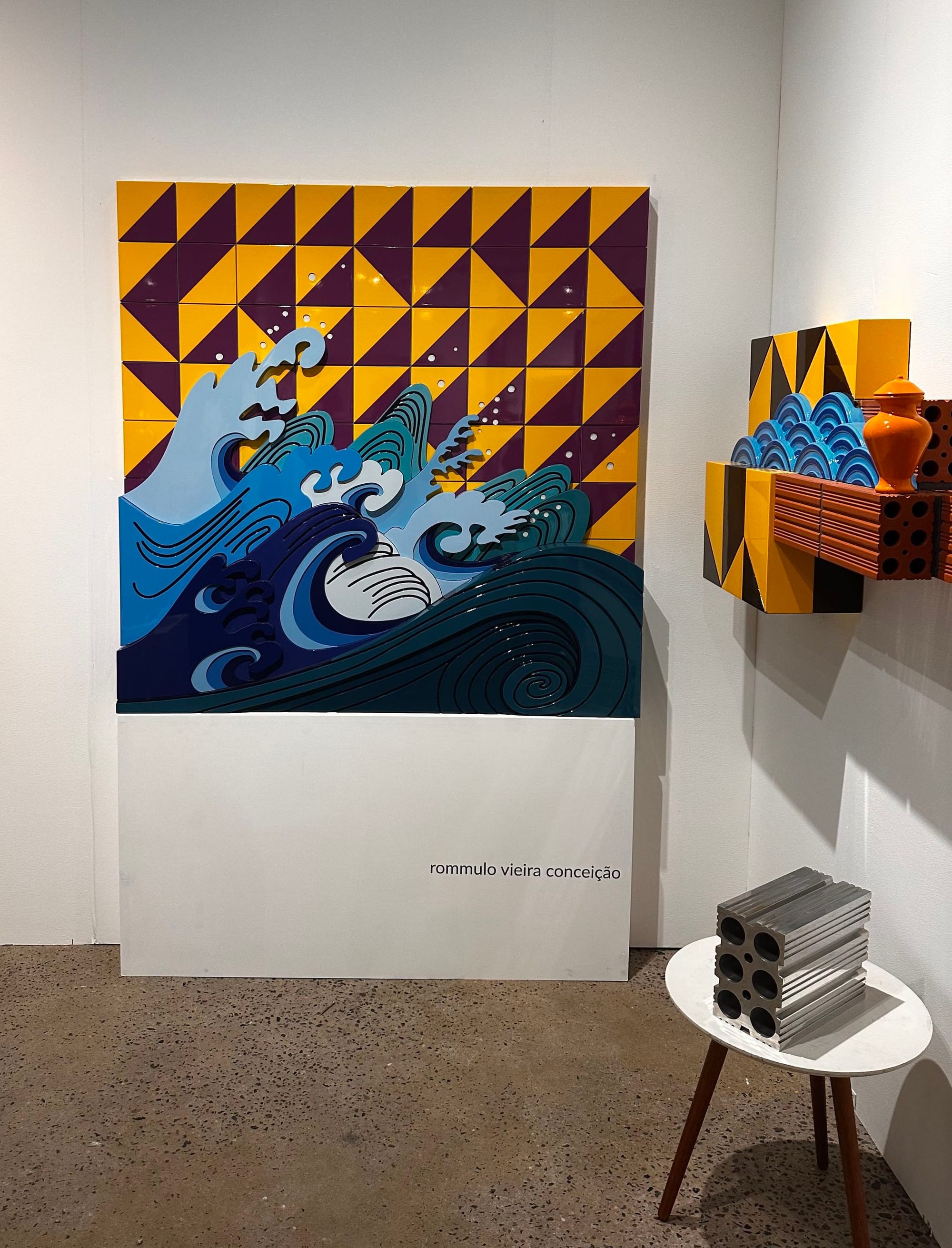
Take, for example, the presentation of the work of Rommulo Vieira Conceição by the Brazilian gallery Aura. His wall installation “the physical space requires that the other be ally or enemy, n10” (2025) has a Pop-art sensibility — a roiling confluence of oceanic waves ranging from teal to baby blue cresting against a background of yellow and purple tiles. It’s made of completely modern materials: PVC, resin, and automotive paint. Aura Director Edoardo Biancheri explained that Conceição means to provoke a conversation about Brazil’s influence on the United States, rather than the typical converse, by way of its Concrete art movement, which in the 1940s and ’50s began to explore the possibilities of geometric abstraction. The work is playful, and approaching it I realized that it is materially layered in way that creates a variegated topography. It’s not a painting exactly. It’s a wall work with a secreted history lesson.
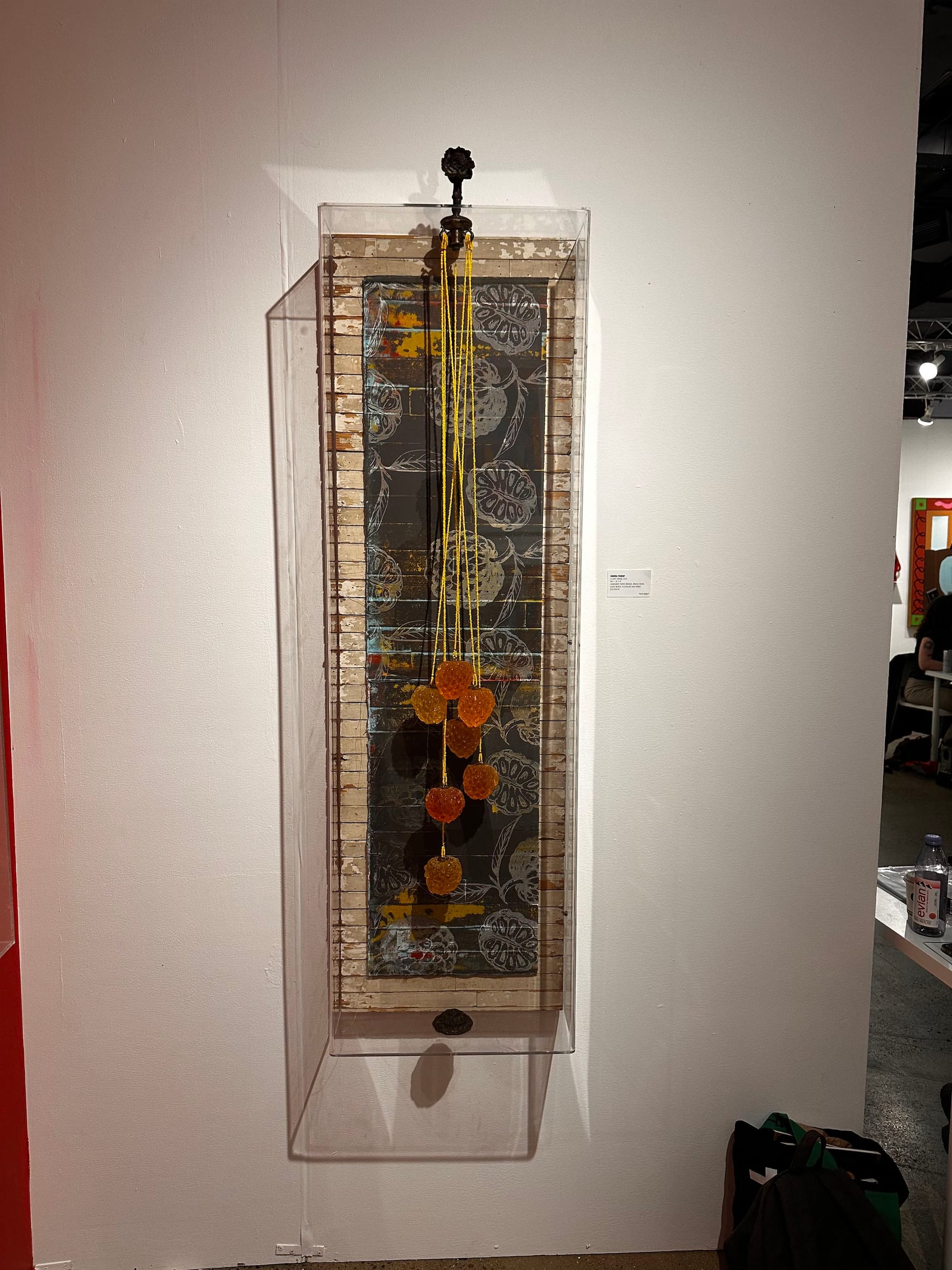
Other work that combined materials in fresh ways captured my attention. At the booth of the Current: Baha Mar Gallery and Art Center in the Bahamas, I encountered the work of Kendra Frorup. “A Light Sense” (2022) consisted of an amalgamation of prints on paper of black-and-white, cross-sectioned images of sugar apples, as Bahamians call the fruit. The piece also contains burnt orange, colored-glass versions of the same plant dangled in front of the prints via yellow, beaded wires. The work is a way to look at the actual fruit plant, moving it from the taxonomic view as a specimen to be categorized and defined to a jewel of the Bahamian ecosystem.
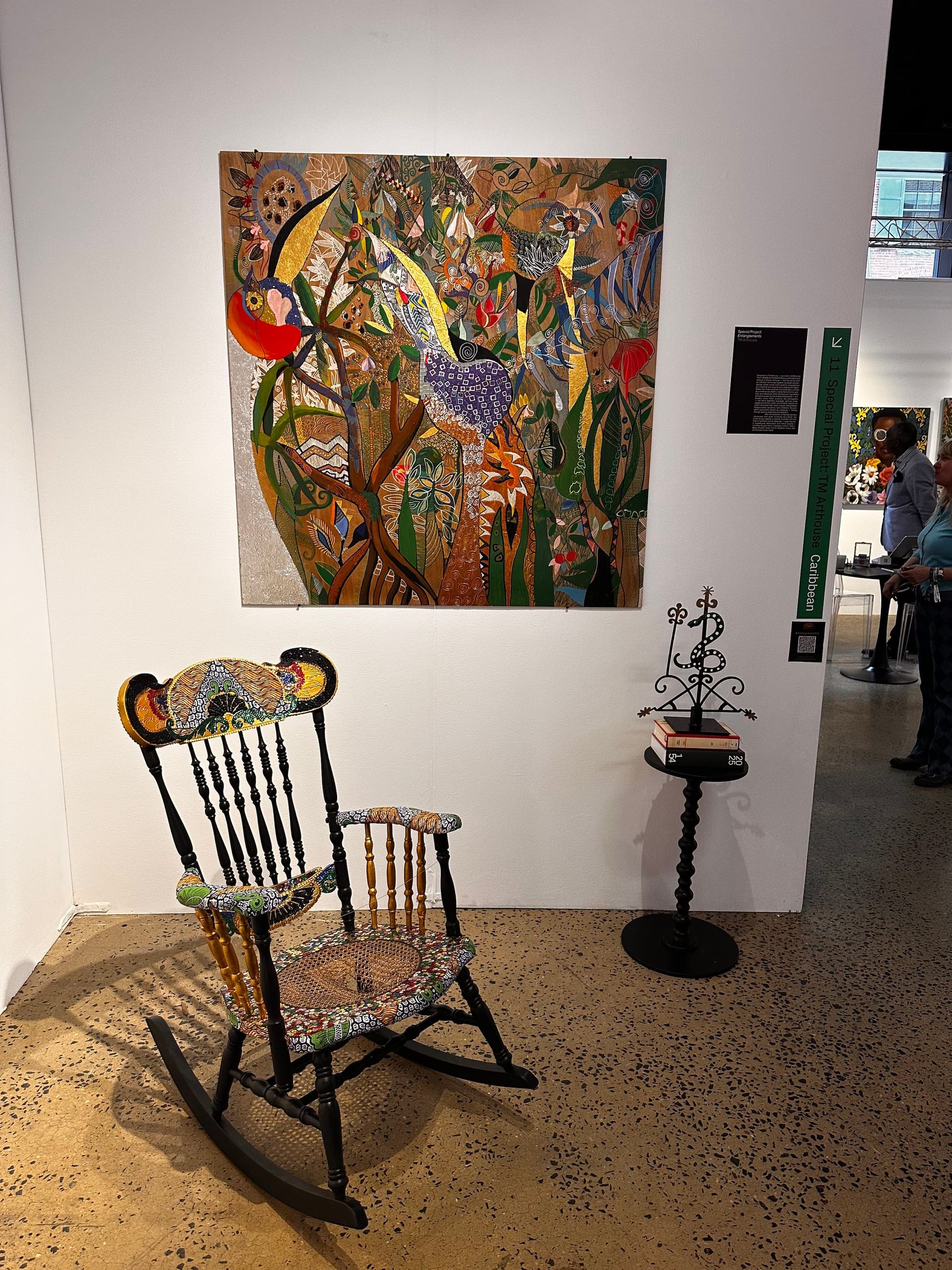
TM Arthouse showcased the work of Eymric Moderne, an artist from Martinique whose 2021 work “Les trois oiseaux en échos” — translating to “The Three Echoing Birds” — is a combination of gold leaf and acrylic paint depicting a abundantly chromatic jungle scene. Amid this humming milieu, the beaks and bills of local birds are so extravagantly decorated that it’s difficult to pick them out from the surrounding vegetation. I could only do so because the artist appliqued square glass shards to the birds’ heads, making them glint in the light. This is gorgeous work that quietly, subtly means to obscure the line between representation and abstraction.
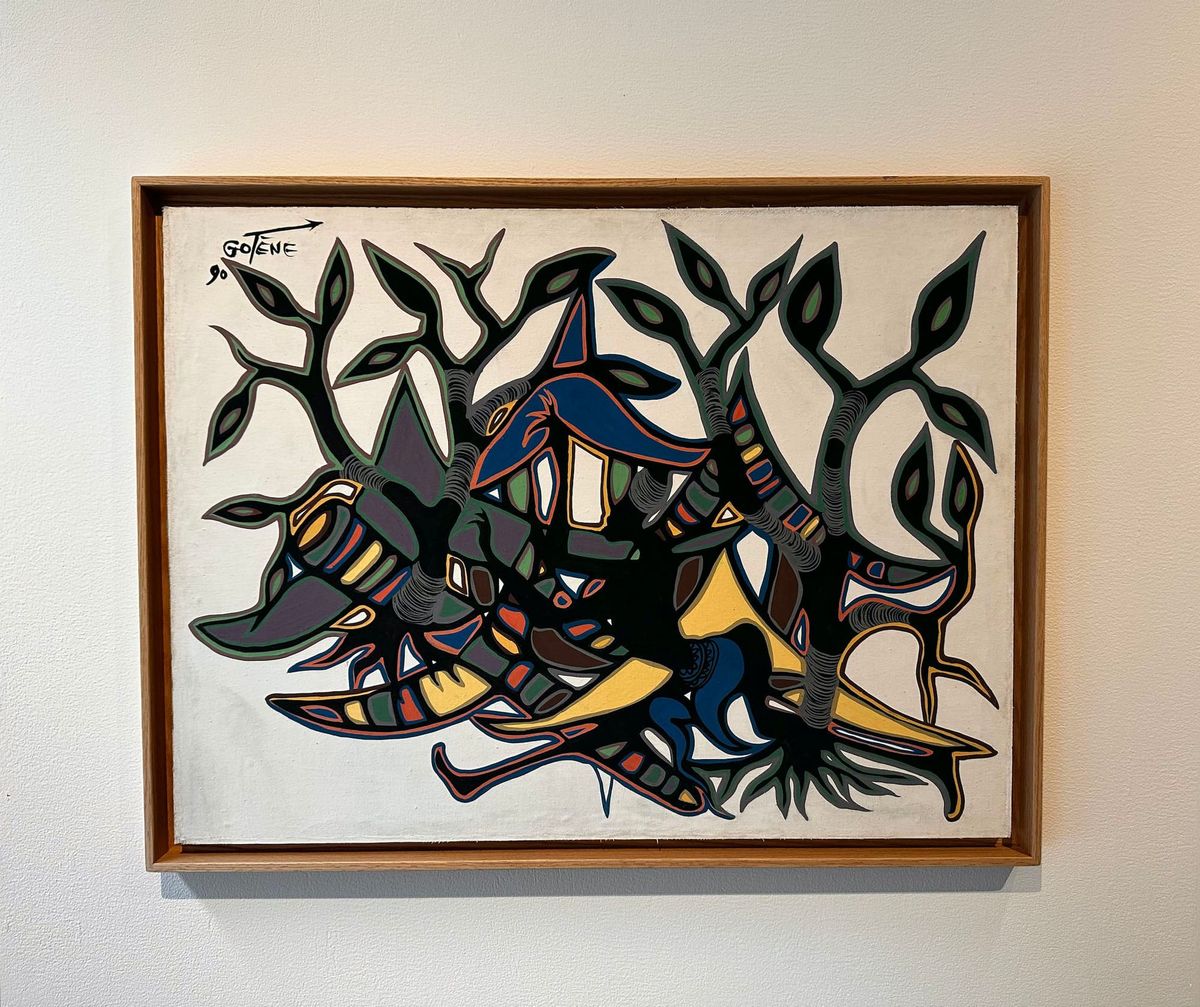
Similarly, Paris-based Loeve and Co’s posthumous presentation of work by Marcel Gotène demonstrated how the abstract and representational can usefully coexist in “Untitled” (circa 1960), an image that resembles a cross section of a jungle. Against a white background, the plants and animal forms in a palette of black, yellow, royal blue, orange, and forest green curve into each other until they are virtually indistinguishable. It reminds us that we are all together in this — aesthetically and practically.
The London based gallery Blond Contemporary showcased the work of Sophia Bounou, a French-Moroccan artist who creates paintings that might be views of an underground mine with a cache of pre-20th-century masks. In a large green painting “Viridarium” (2025), I see warrens and culs-de-sac with various flattened, highly stylized visages that morph and contort the human face to the point that it becomes alien. This work gets at the imaginative power of art to force us to see ourselves differently, from another angle, from a place that sees us as just steps away from fantastical.
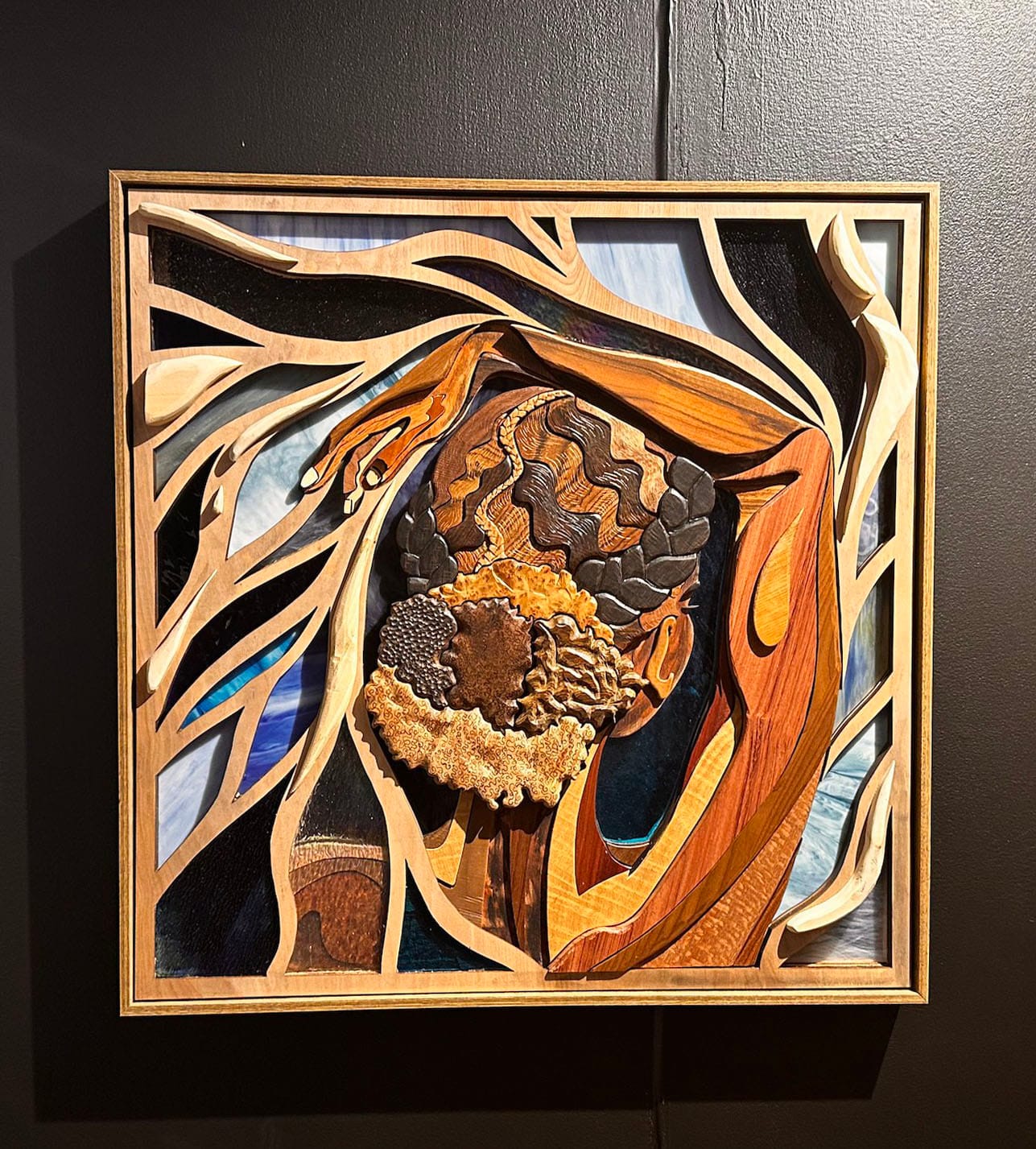
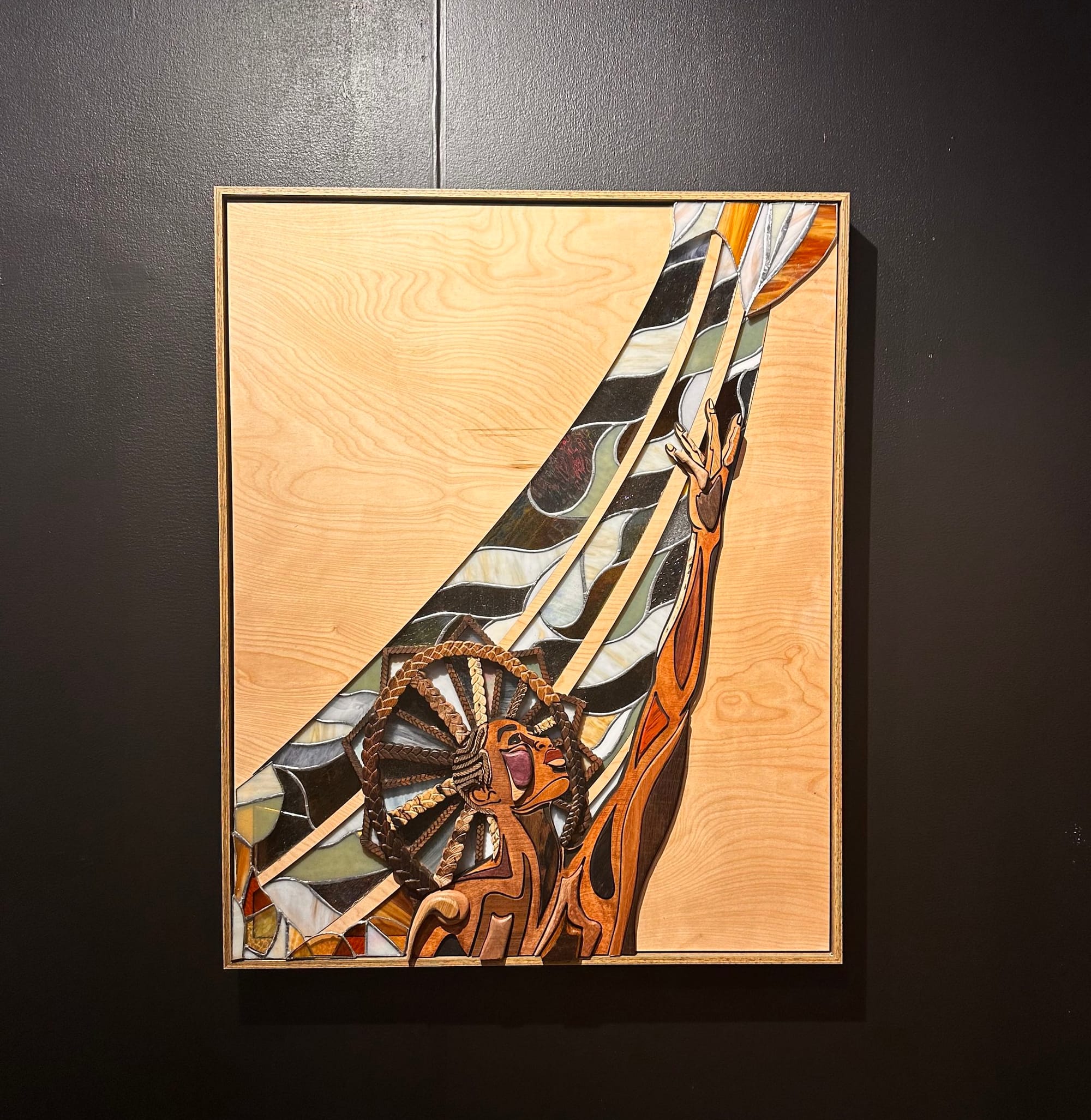
Finally, at Tanya Weddemire Gallery, I saw work by artist Candice Tavares, who was born and raised close to Philadelphia. Her work seems to belong to the genre of the Black Romantic, very much aligned with the idea that the most important representations of the lives of Black people are idealized and stylized. In “Inside” (2026), a Black woman with a variegated scheme of colors along her torso and a corona of many-hued hair around her head reaches expectantly toward something beyond herself, as if the boon will arrive any moment now.
When I visited the fair on Wednesday, I ran into Touria El Glaoui herself. She told me that the energy at the fair is quite different here in New York as compared with its Marrakesh edition, held earlier in the year. The New York fair has shrunk a bit since last year, with 20 exhibitors compared to 28 in 2025. El Glaoui surmises that because the current art market is in doldrums, the attitude here is deflated, discouraged. But then again, here there is still work that stretches out to meet us wherever we are.