The Small Miracle of Greenpoint Open Studios
The annual festival, which went on hiatus during the pandemic, welcomed visitors into the workspaces of over 250 artists in the Brooklyn neighborhood.
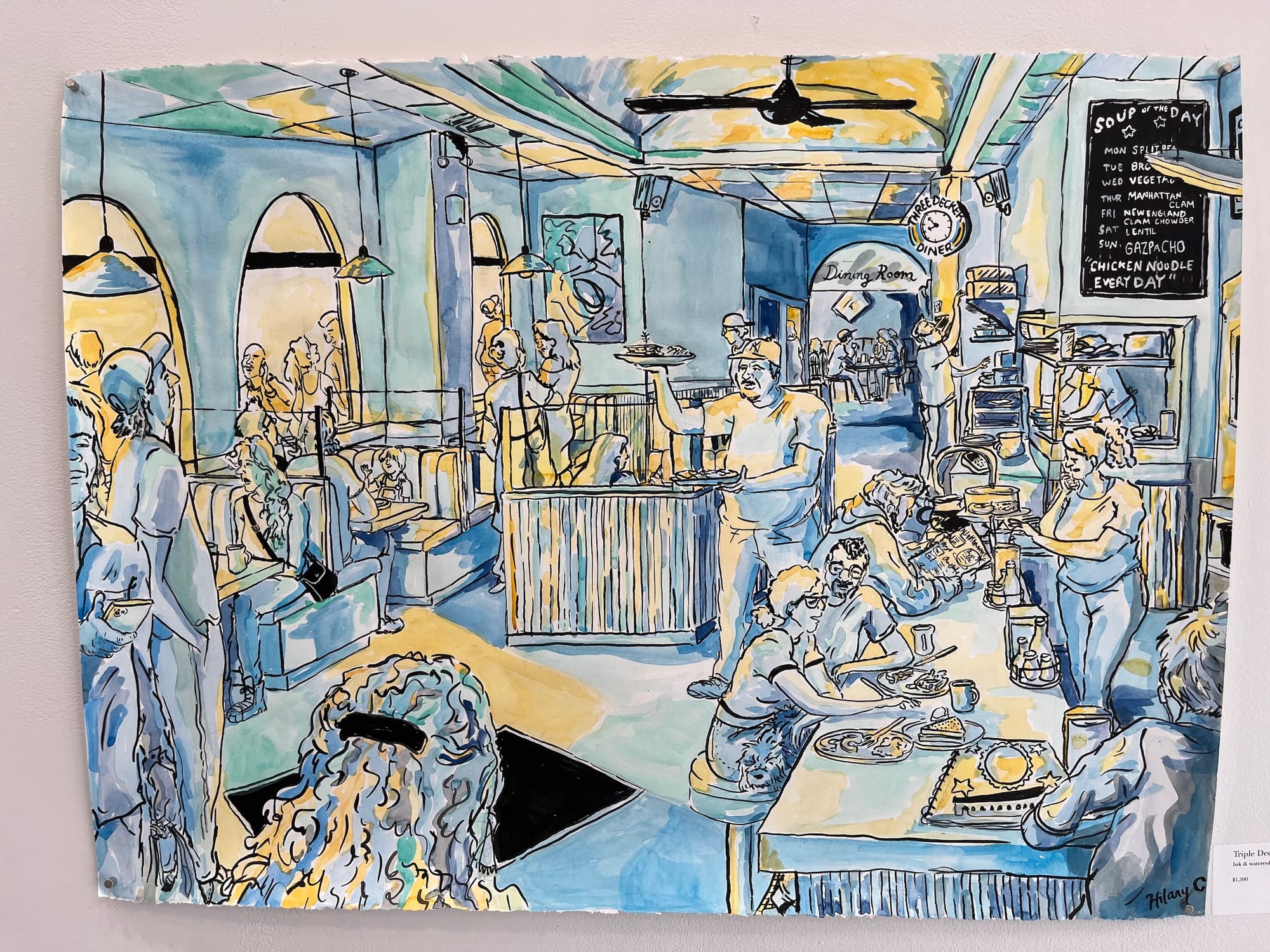
On Sunday afternoon, May 31, Hilary Fitzgerald Campbell happily greeted visitors who crammed into Yashar Gallery in Brooklyn’s Greenpoint neighborhood to admire her acerbic New Yorker cartoons.
The solo exhibition, timed to run during the weekend-long Greenpoint Open Studios, was ironically titled it’s crowded — a nod to the universal experience of navigating New York City’s cramped quarters with like-minded people. Campbell was thrilled with the reception and sold several prints, but she had a nagging feeling that there were additional drawings buried under a large pile in her studio that she could have shown. She realized she needed a flat file.
“Whenever I’m looking for a cartoon, it's like having a little heart attack. ‘Where is it!?’” she told Hyperallergic in an interview. “New York has good energy. If you’re looking for something, it will find you.”
The same could be said for Greenpoint Open Studios itself, which has delighted visitors on and off since 2011, when it began as part of the now-defunct L Magazine’s Northside Festival. Jen Galatioto, editor of the local blog Greenpointers, relaunched it three years later (Hyperallergic briefly served as a media partner).
The fact that the festival continues to run is a small miracle. During the pandemic, the open studios went on hiatus for three years until neighborhood artists revived it in 2023. Those volunteers, including Mary Younkin, Kelly Olshan, Melanie Reese, Ann Cofta, and Loretta Lomanto, organized hundreds of artists, distributed maps, and coordinated with local businesses. Now its participation has doubled to more than 260 artists.
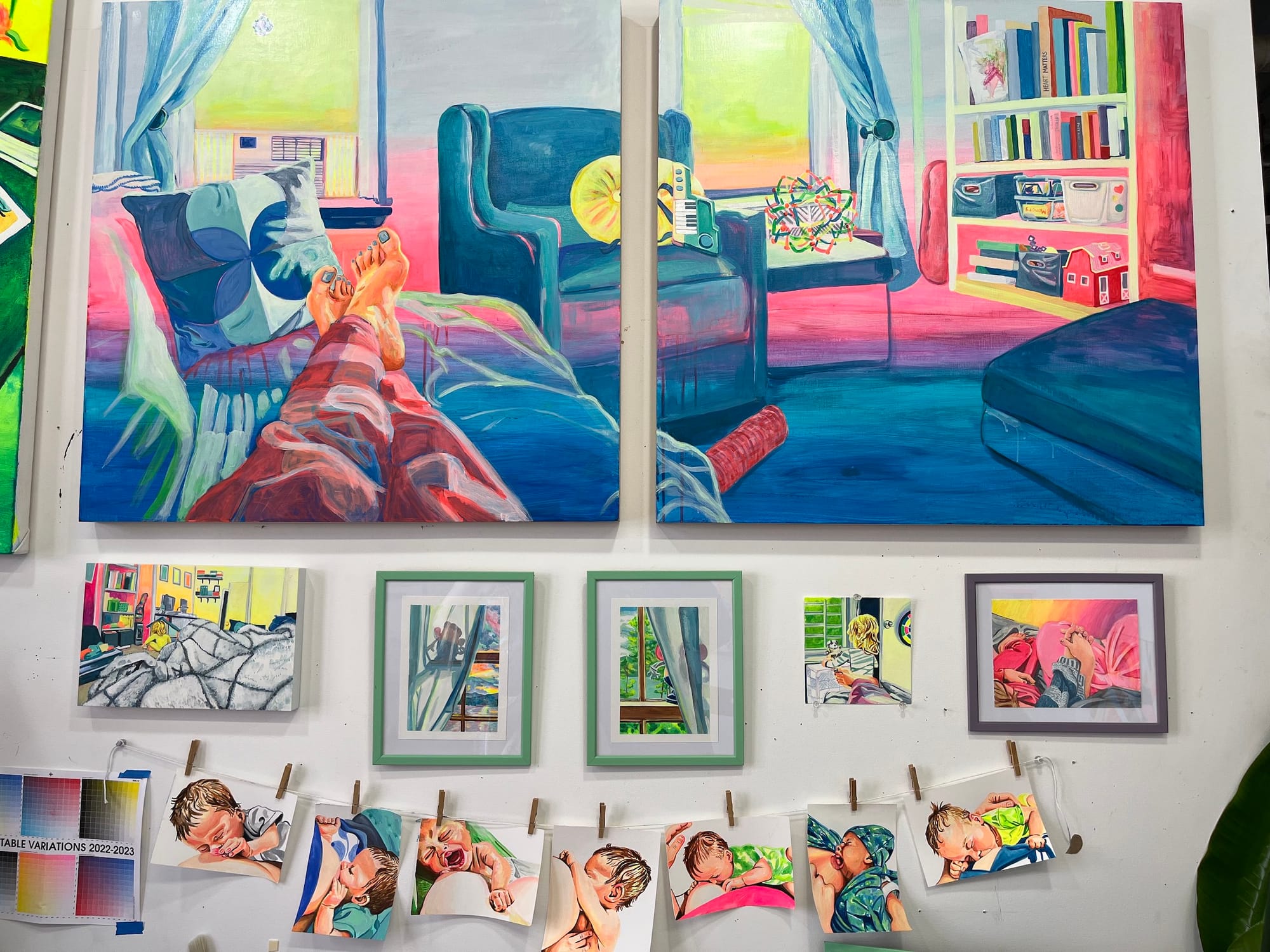
Younkin has felt connected to the event since 2019, when she met an artist moving out of his studio during the event who alerted her to its availability. Younkin took over the space, which is now filled with colorful gouache-on-paper close-ups of her perspective while breastfeeding her son.
“I went back through my camera roll and took tons of selfies when I was breastfeeding,” she said. “It’s nice to share in private what you’re doing for the community.”
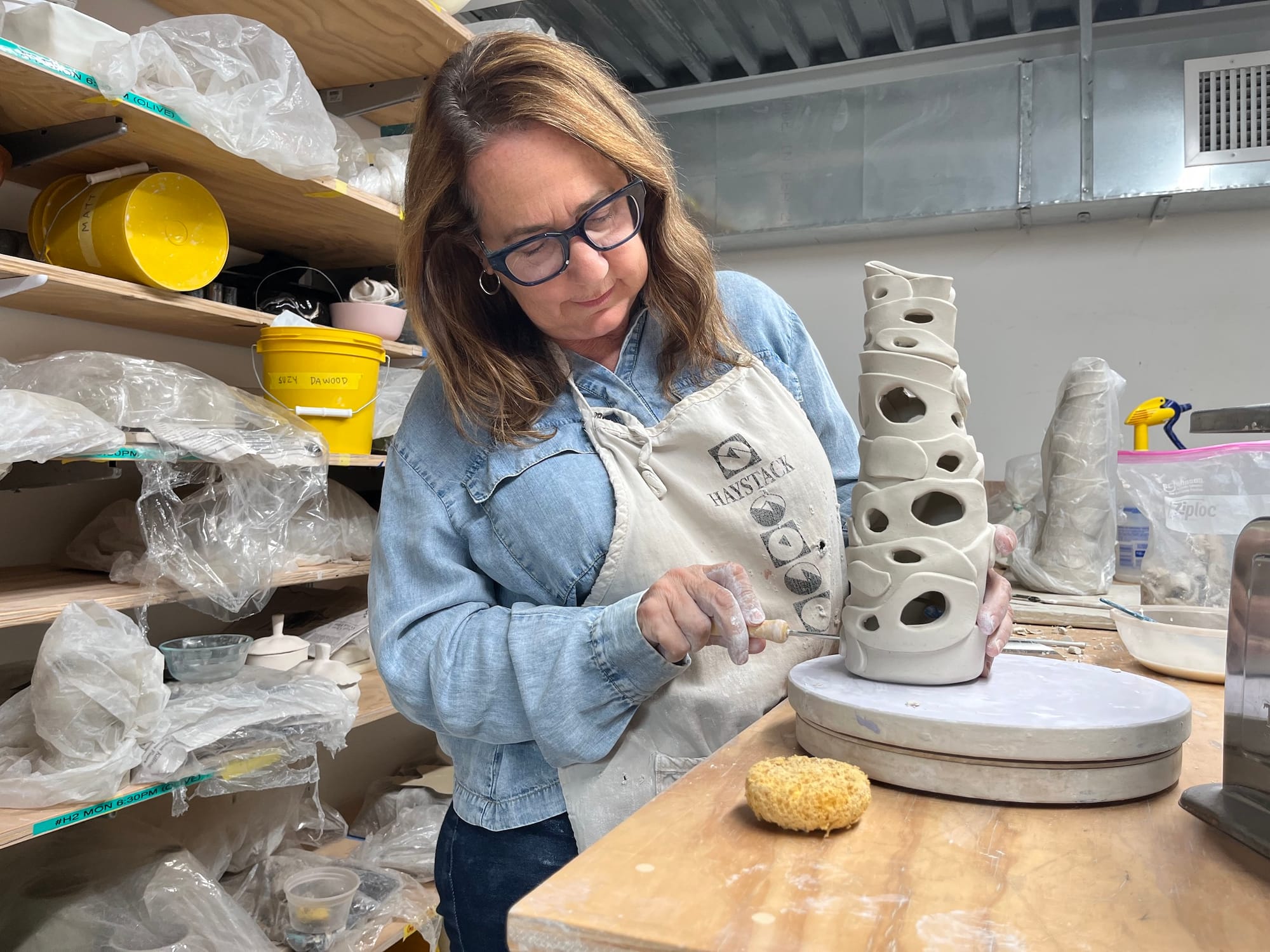
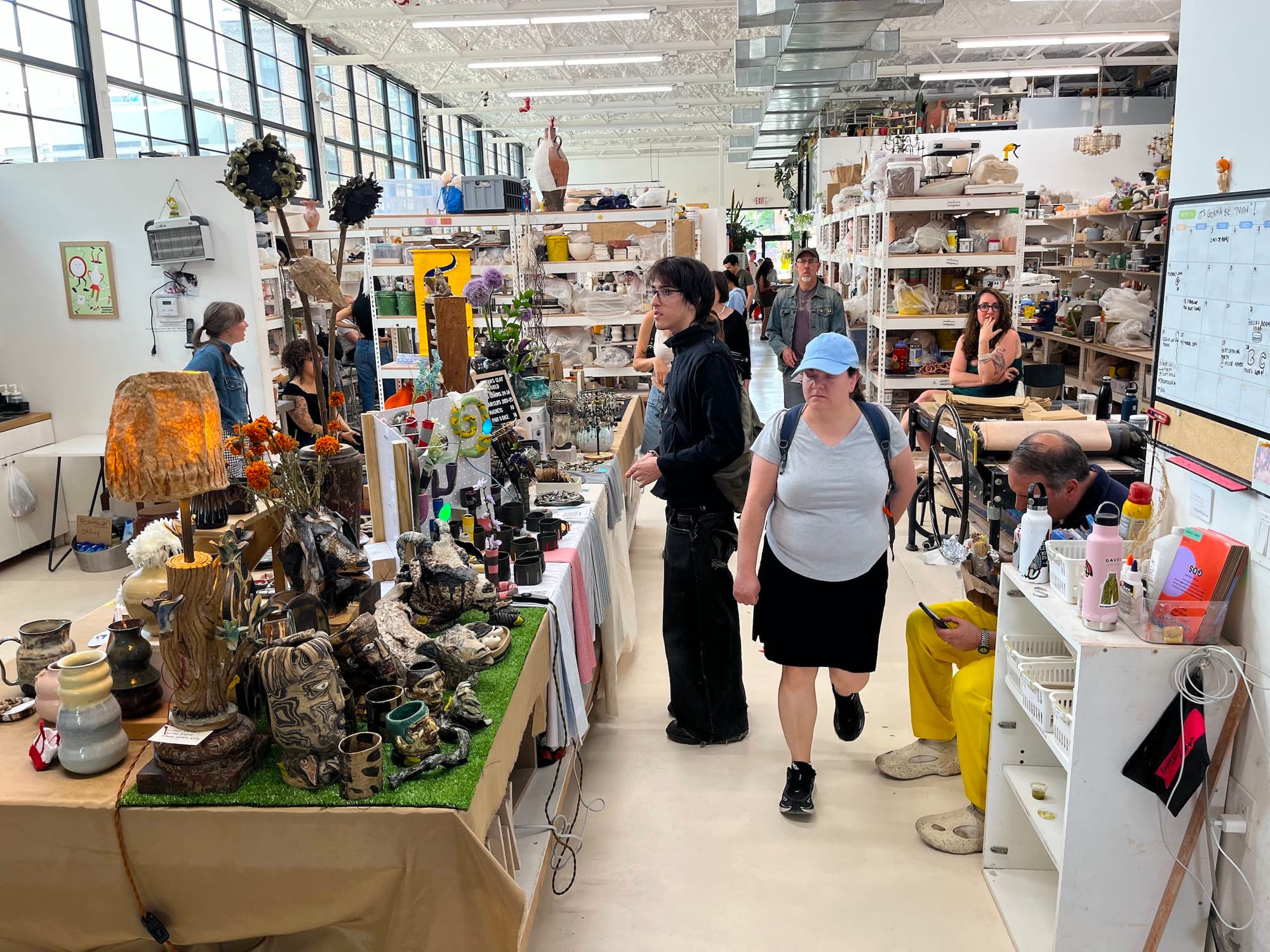
At the center of this year’s festival was the Leviton Building, a former electrical wiring factory that left the neighborhood in 1975 and was converted into scores of artist studios and small businesses, including Clay Space.
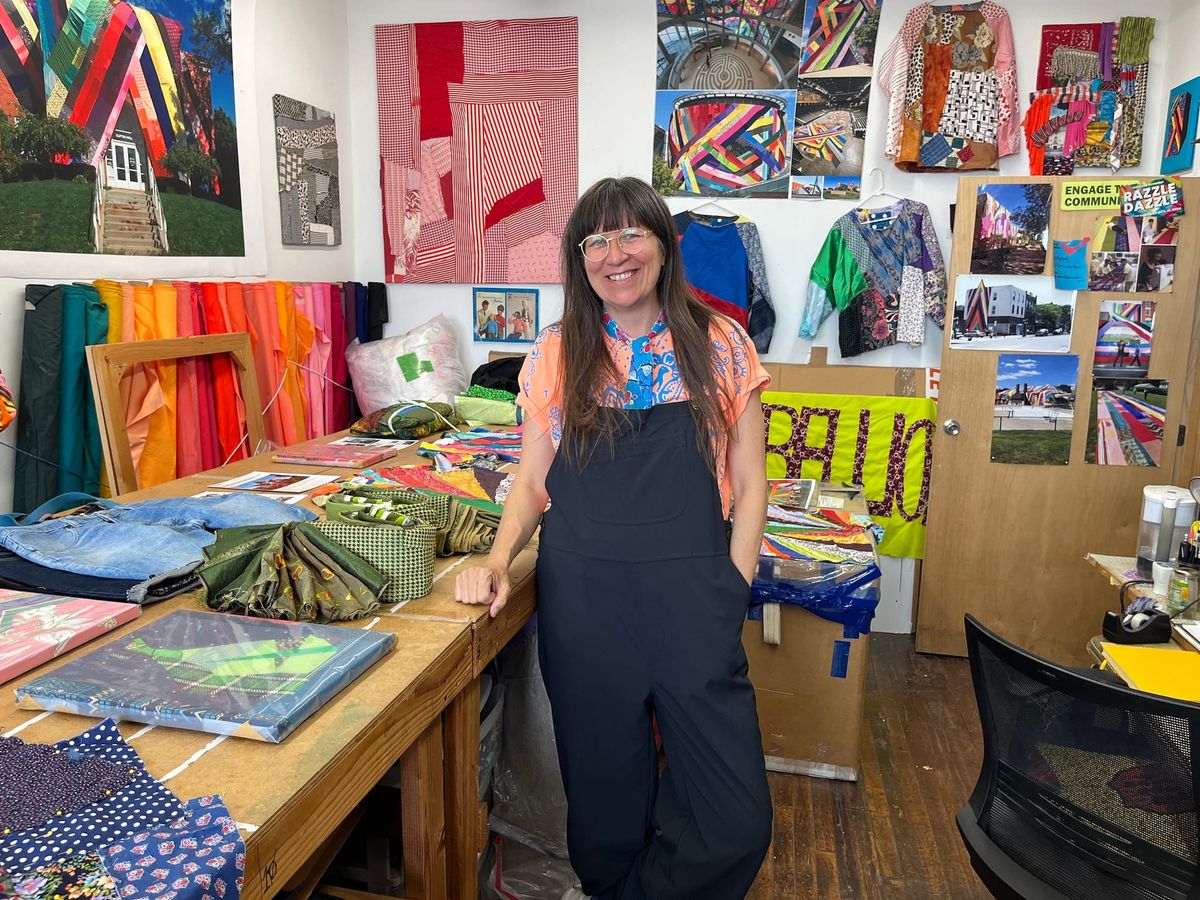
On the third floor of Building 8 on Greenpoint Avenue, artist Amanda Browder laid out swaths of fabric strips that she uses to create colossal quilts, which she then drapes over one- or two-story buildings with the assistance of around 800 volunteers. For Browder’s most recent installation, which covered five buildings in Sioux City, Iowa, in 2024, local participants stitched the strips together on the floor of a hockey arena over several months.
“I encourage people to create work beyond museum walls so they feel like they’re part of the art experience,” Browder said.
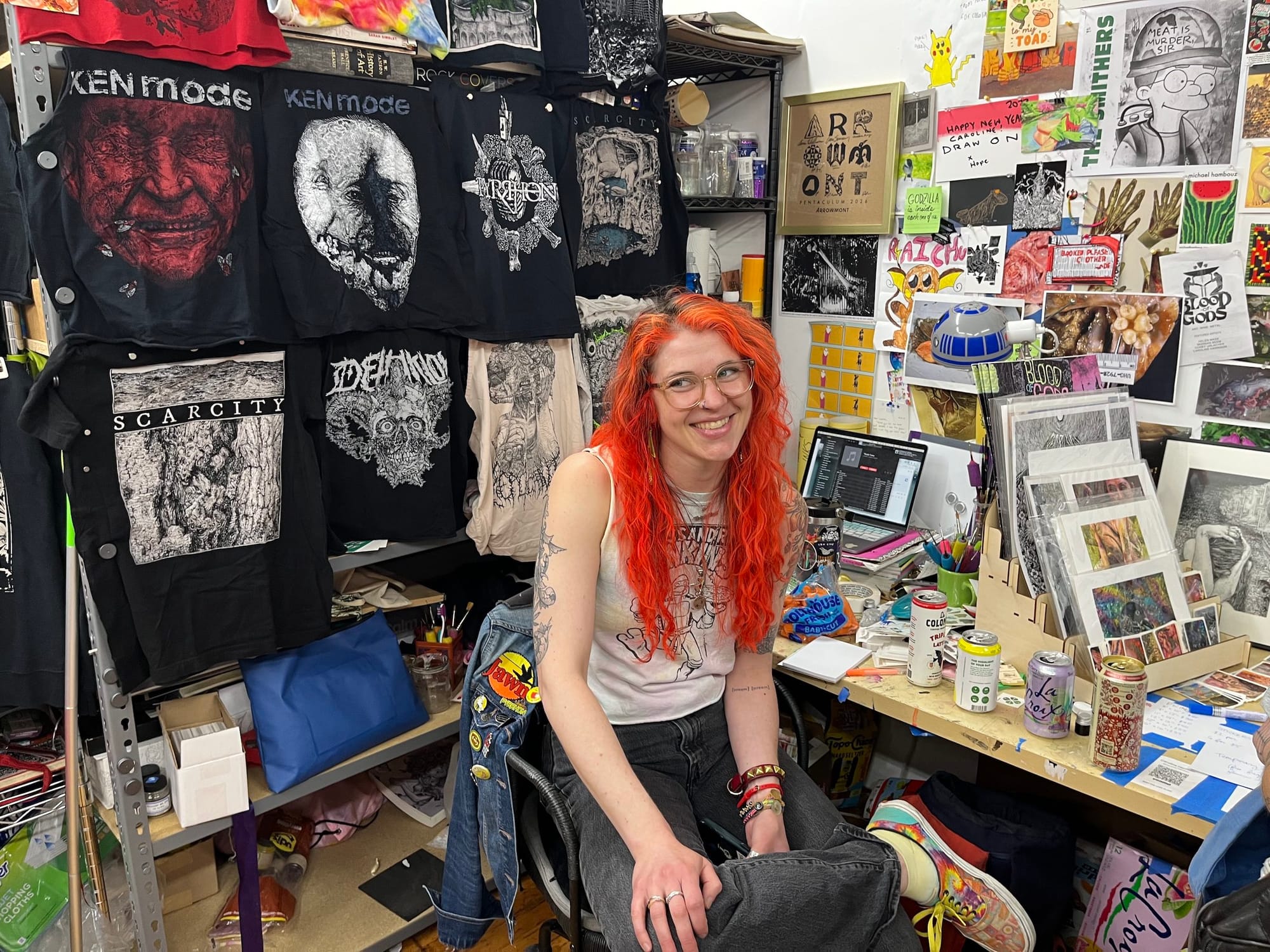
Down the hallway, Caroline Harrison hung up a large sample of intricate graphics she designed on commission for heavy metal bands such as KEN Mode and Scarcity. Nearby, filmmaker and painter Amanda Barker displayed a handful of noirish self-portraits resembling spy film stills, which she noted became a way for her to explore her identity and gender.
On the first floor, Debra Salomon was brushing a layer of white paint onto a small sculpture made with pieces of stamped tin, corrugated cardboard sheets, and piles of wood.
“I do a lot of drawings to get my brain in the vocabulary of what I want it to be,” Salomon explained. “It’s a puzzle that I put together.”
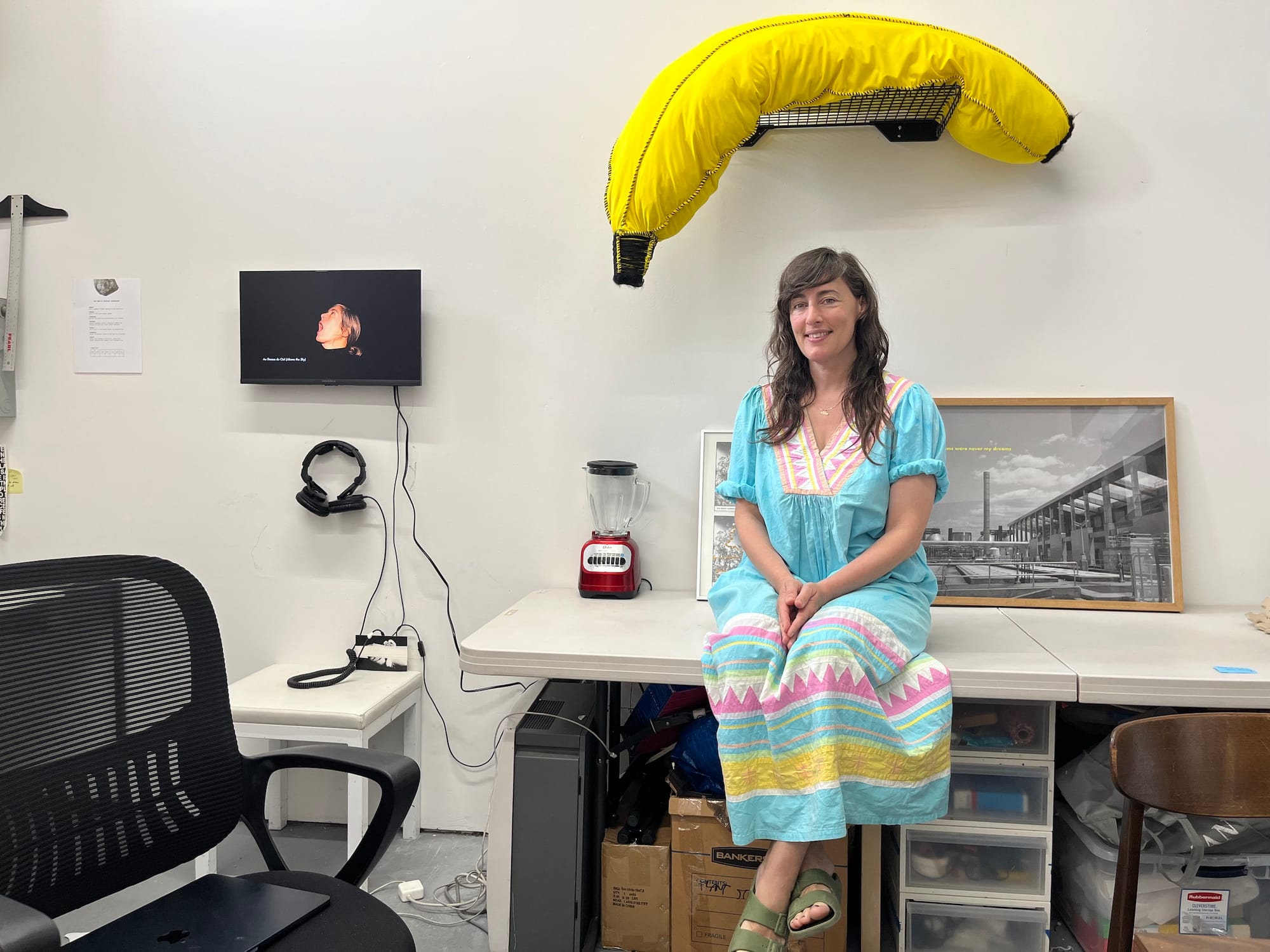
Her neighbor, installation artist Sara Shaoul, displayed a sculpture of a banana on a shelf next to one of her video works. She planned to create a series of soft sculptures and other mixed media pieces, including an oil slick and an audio of an ’80s-style breakup song playing over a video about smoothies.
“It’s about the notion of economic imperialism, when the US comes into a nation, destabilizes it, and takes over its resources,” Shaoul said.
Several other highlights of the festival were nestled in smaller converted factories scattered throughout the neighborhood. At 253 Greenpoint Avenue, Myles Hunt presented oil and acrylic portraits of compilations of facial expressions he picked up through hours of lip-reading. Just as intriguing were Katie Hubbell’s eerie paper pulp sculptures and Rochelle Voyles’s striking sculptural collages, comprising found photographs of bodies dancing, playing pool, and competing in rugby on hand-cut wood.
Around the corner, the Java Project included a group exhibition of Claire Lachow’s plastic sculptures resembling sea anemone, River Valadez’s intricate blown glass, and Zach Seeger’s impressionistic flower bouquets, curated by Good Naked Gallery’s Jaqueline Cedar. Across town, inside a warren of oddly shaped studios at 67 West, Ali Ha’s playful abstract paintings and Sophia Rauch’s painted cyanotypes on cotton canvas grappled with the complex emotions of being aware of time passing.
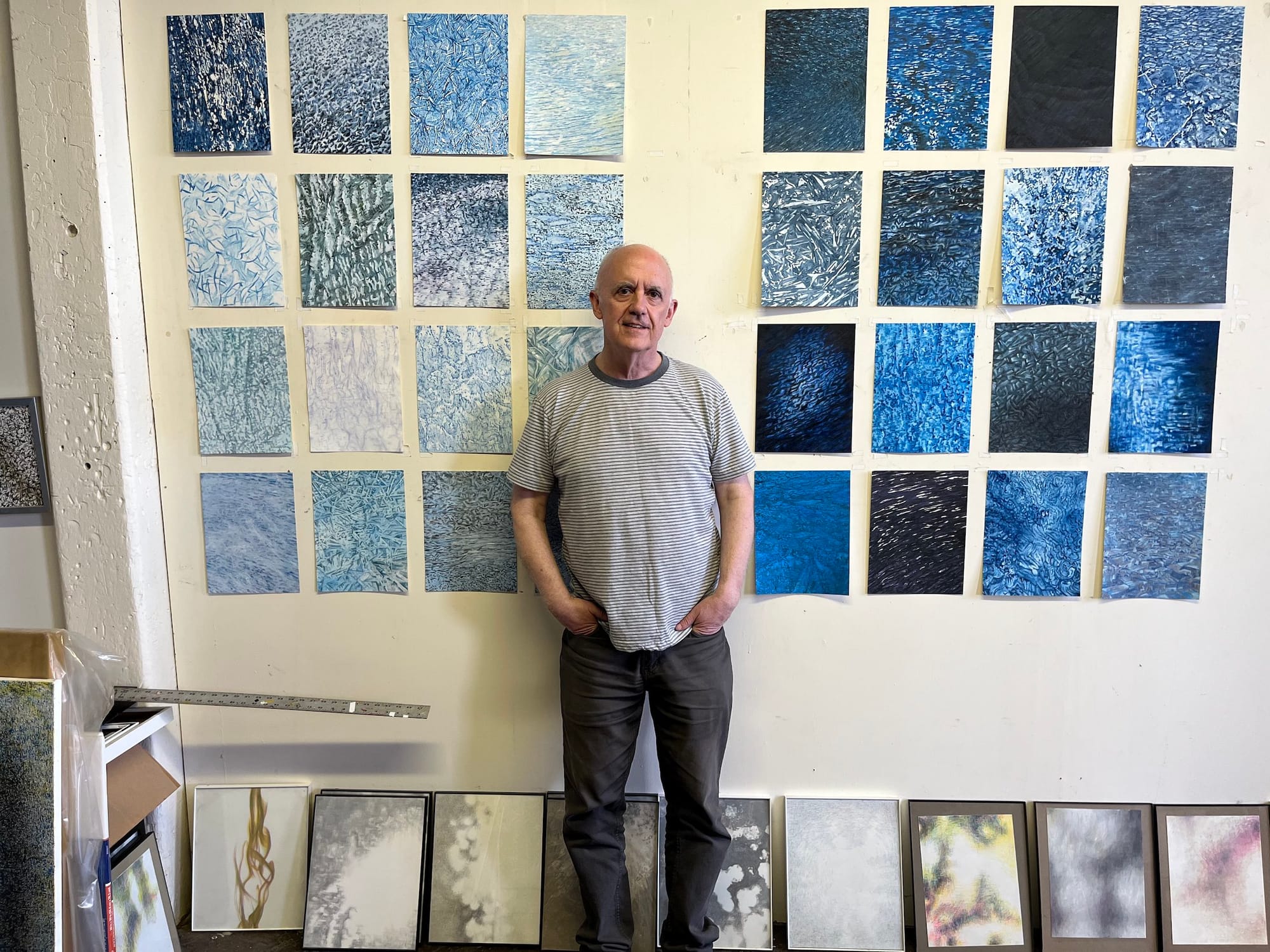
In a building overlooking Newtown Creek, Tom Koken hung a series of atmospheric oil-on-canvas paper works containing small, reticulated marks. Koken said the blueish patterns were meant to resemble ice crystals at night.
“There’s a whiff of nostalgia. It takes you into the past and you feel emotional in a few different ways,” he said. There’s the association of feeling blue, but it also feels comforting.”
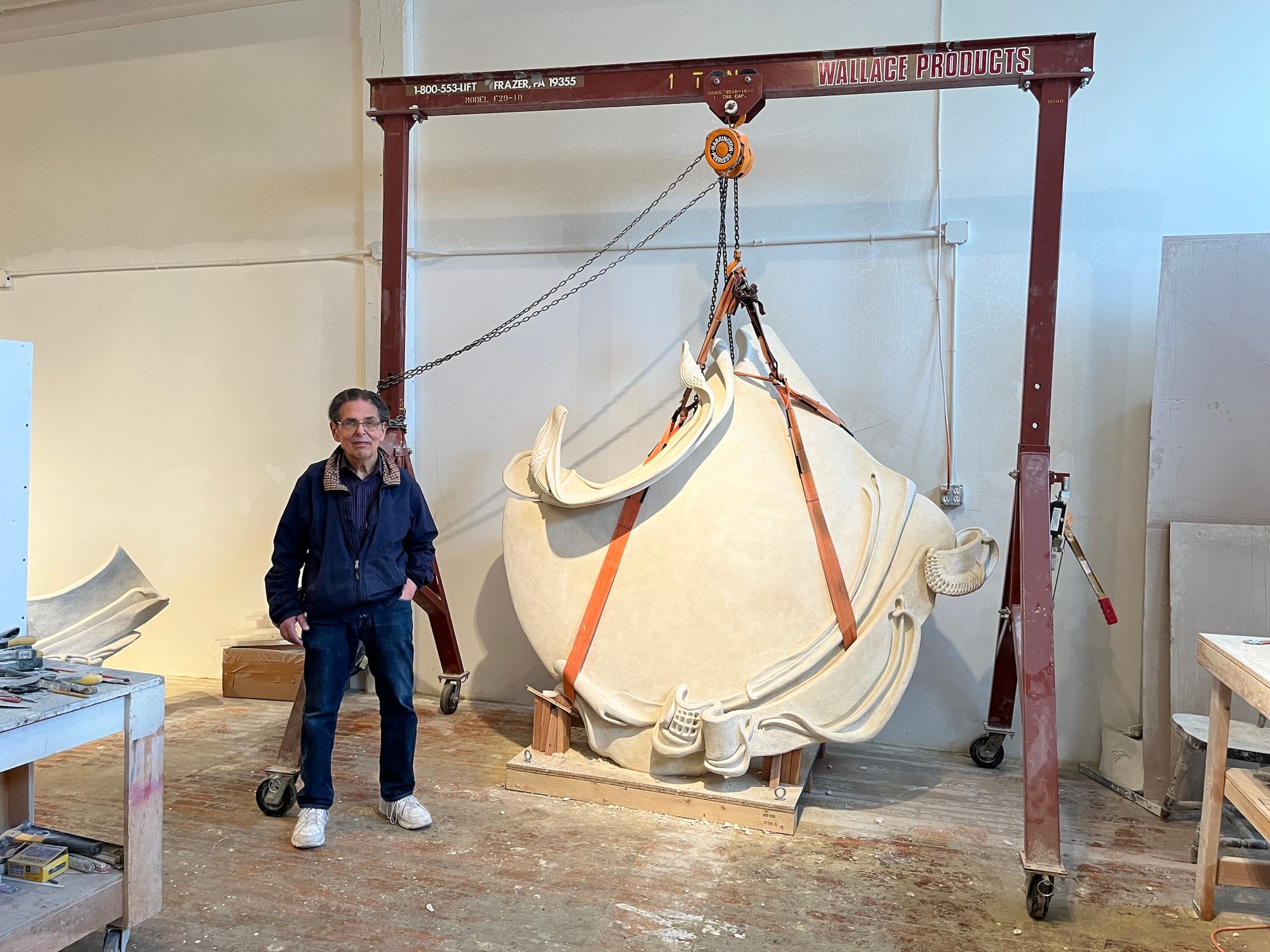
Downstairs, James Dinerstein’s massive concrete sculptures resembled chunks of the Statue of Liberty’s robe from a distance. But their smooth curves and unusual forms evoke a sophisticated yet lost civilization with its own non-verbal language. Dinerstein mixes the concrete by hand with water from 100-pound bags, which creates a lot of dust.
“I make small batches at a time,” he noted, “but when I get very successful, I will have to get my own concrete truck.”