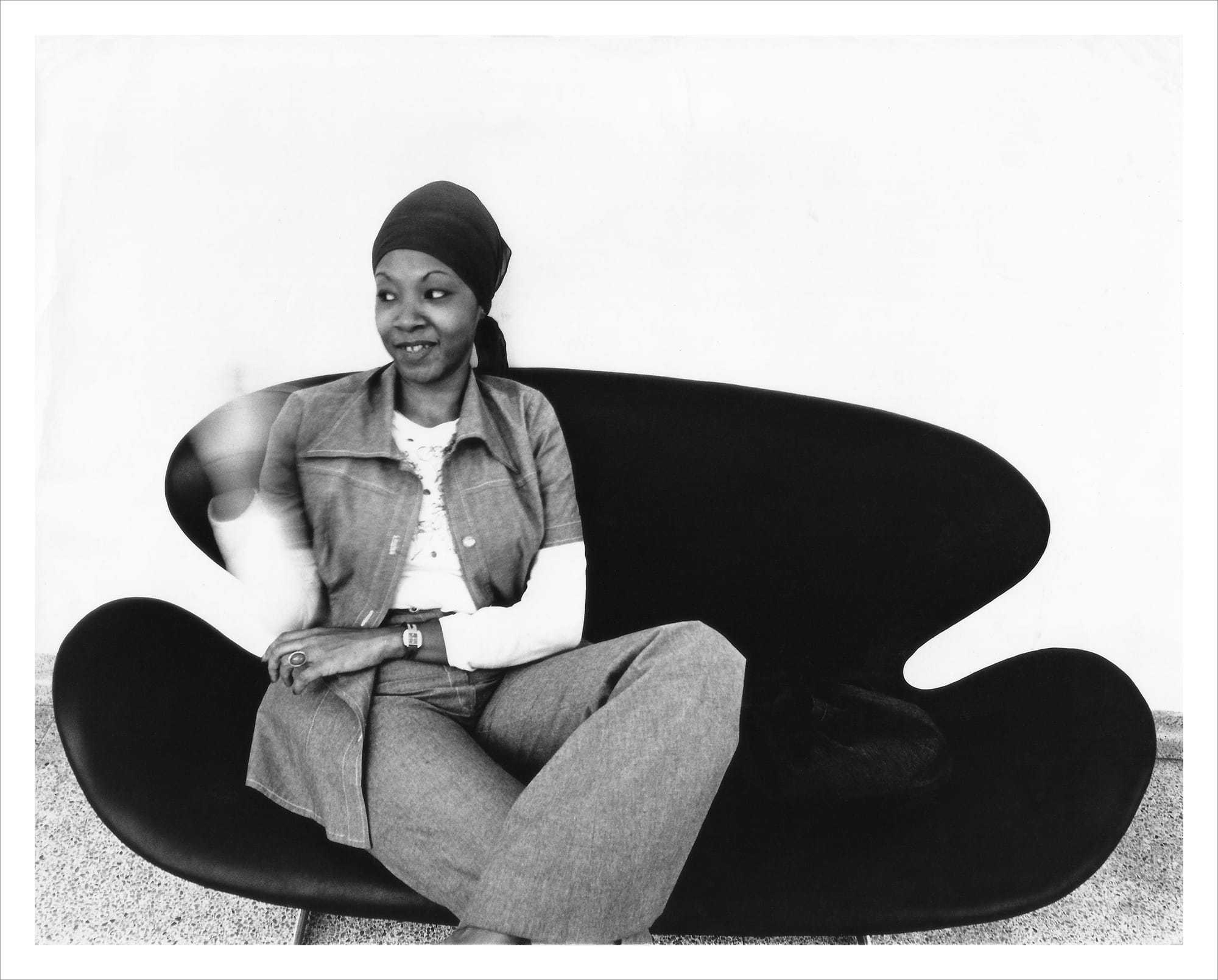
Valerie Brathwaite, Abstract Sculptor of the Natural World, Dies at 87
The artist found inspiration in the geography, vegetation, and wildlife of her home countries of Trinidad and Tobago and Venezuela.
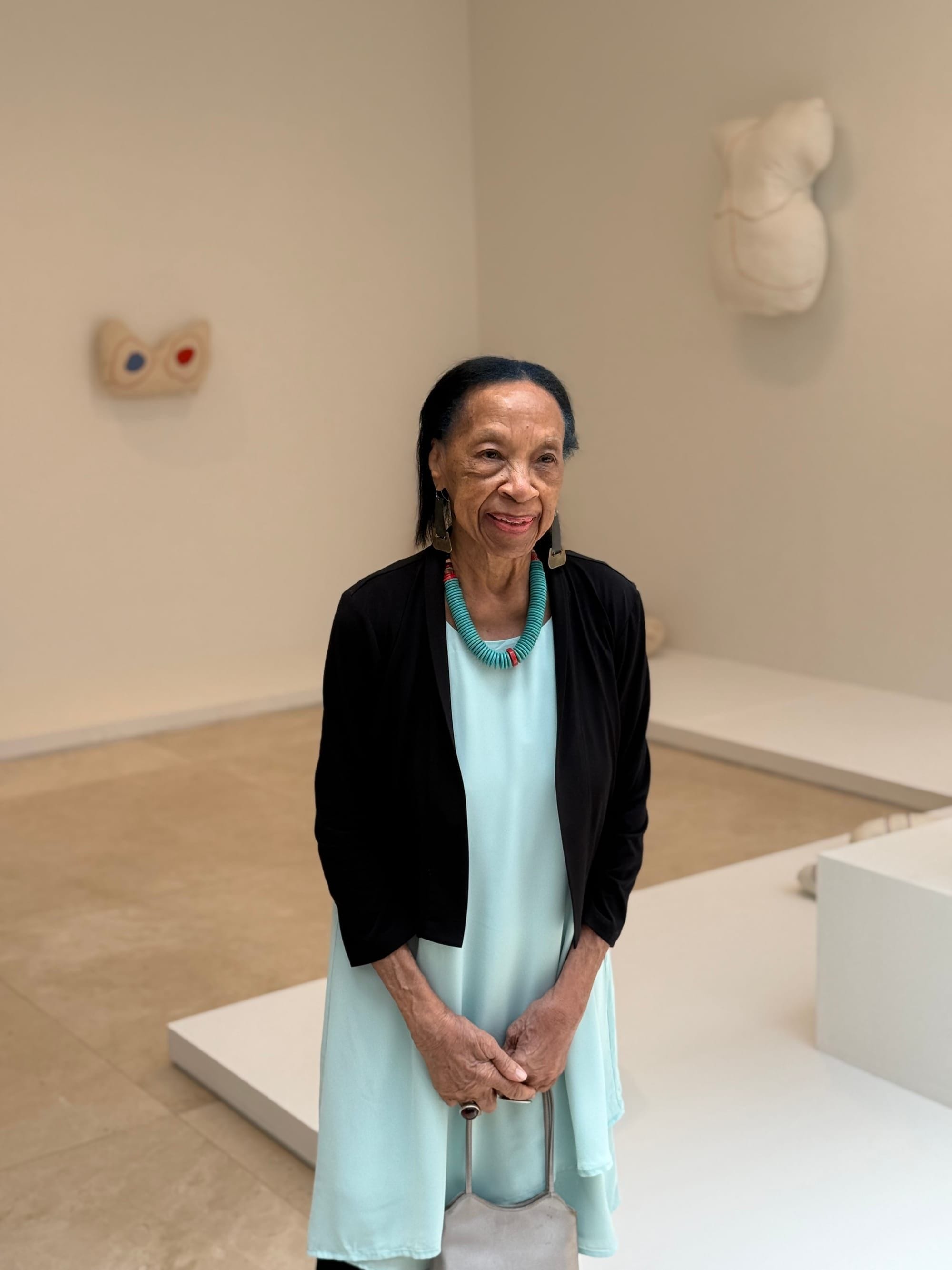
Valerie Brathwaite, the Trinidadian-born, Caracas-based artist whose undulating, organic sculptural forms reflected her love of the natural world, has died at age 87. The Museum of Latin American Art of Buenos Aires announced the news of her passing on their Instagram page on Monday, July 6.
The museum, which presented a retrospective of the artist’s sculptures and drawings less than a year ago, described Brathwaite as an “artist of extraordinary sensitivity, whose work was driven by her admiration for life and nature” in the post.
Born in San Fernando, Trinidad and Tobago, in 1938, Brathwaite left her home country in the late 1950s for the United Kingdom, where she studied art and design at Hornsey College of Art and the Royal College of Art in London. Her academic training later took her to the École des Beaux-Art in Paris, where she worked with the Russian and French Cubist sculptor Ossip Zadkine.
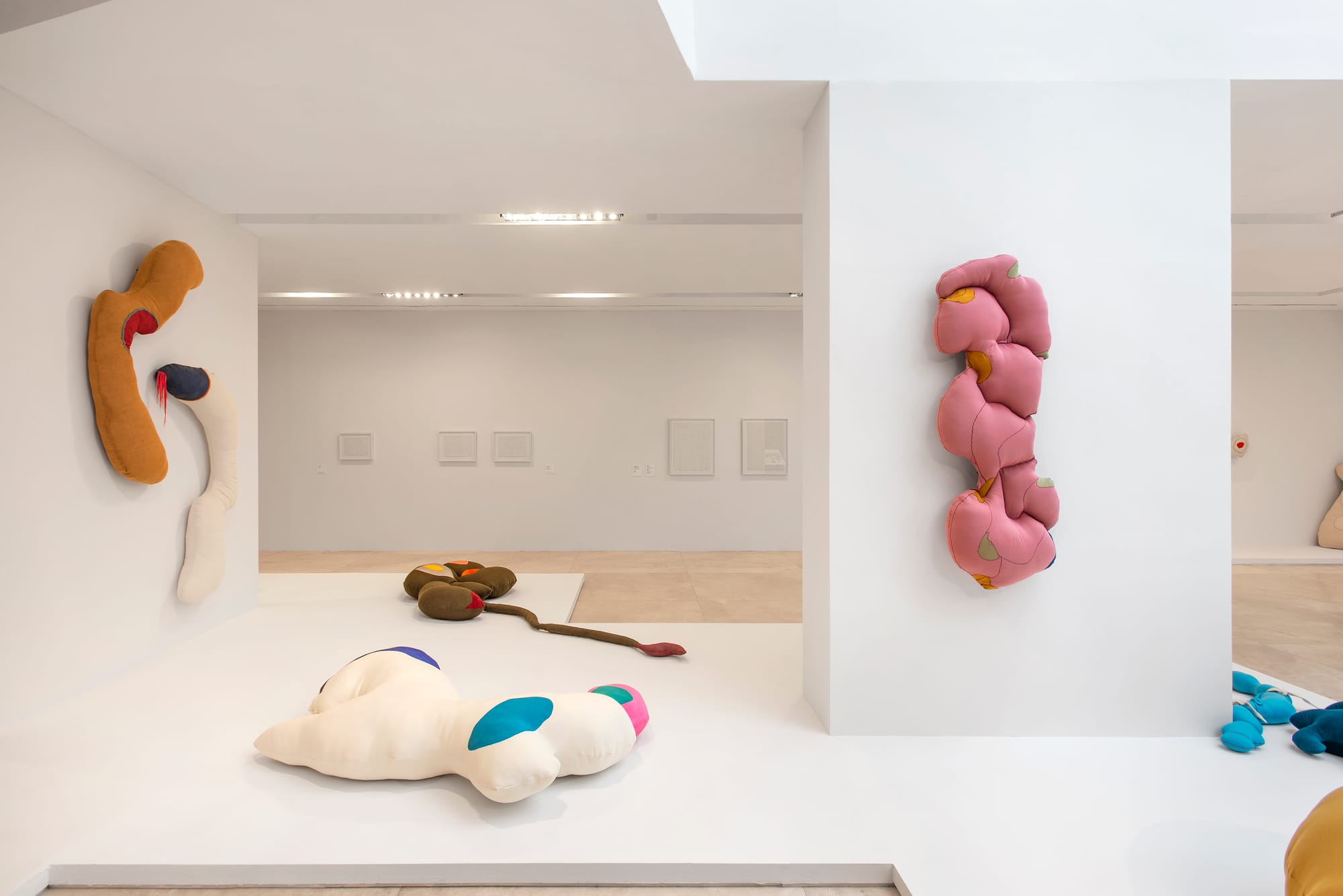
However, it wasn’t until after a 1969 visit to Caracas that Brathwaite’s practice began to germinate into the intuitive, biomorphic forms for which she is known today. During this trip, the artist befriended sculptor Gego, also known as Gertrud Goldschmidt, who encouraged her to move there. She followed the fellow immigrant artist’s advice and relocated to the Venezuelan capital within the year.
In Caracas, she quickly became acquainted with artists, critics, and curators, including Mercedes Pardo, Marta Traba, Lourdes Blanco, and Miguel Arroyo. She began developing a style irreducible to the currents of modernism and conceptual art around her, consisting of polychromatic drawings and sculptures. These works, which attracted early art-world attention, recombined existing organic forms or imagined new ones inspired by the flora, fauna, and geology of her two homes in Trinidad and Tobago and Venezuela.
“[Both countries share] a common history, which is why Venezuela was always a reference for me,” she told Contemporary And América Latina in a 2024 interview. “I remember sitting with my parents and siblings during some vacations, watching the lights of Venezuela from Trinidad.”
Critics identified this geographical aspect of her work as early as the 1970s. In an exhibition catalog essay for Sculptures by Valerie Brathwaite — the artist’s first solo museum show, presented at the Museum of Fine Arts in Caracas in 1975 — Juan Calzadilla argues that by focusing on horizontality rather than verticality, Brathwaite “gives sculpture a new ‘aesthetic of the crawling,’ eschewing tradition and placing ‘the terrestrial’ at the core of South American culture.”
This sense of horizontality carried through to many elements in her practice. Ranging from acrylic paint, concrete, MDF, plaster, clay, metals, and stuffed fabric beginning in the early 2000s, Brathwaite’s materials of choice often rejected hierarchies of medium in sculpture. Similarly, her tendency to display works either directly on gallery floors or on low, planar platforms reaffirmed the objects’ closeness to the earth rather than adherence to any particular academic or art historical lineage.
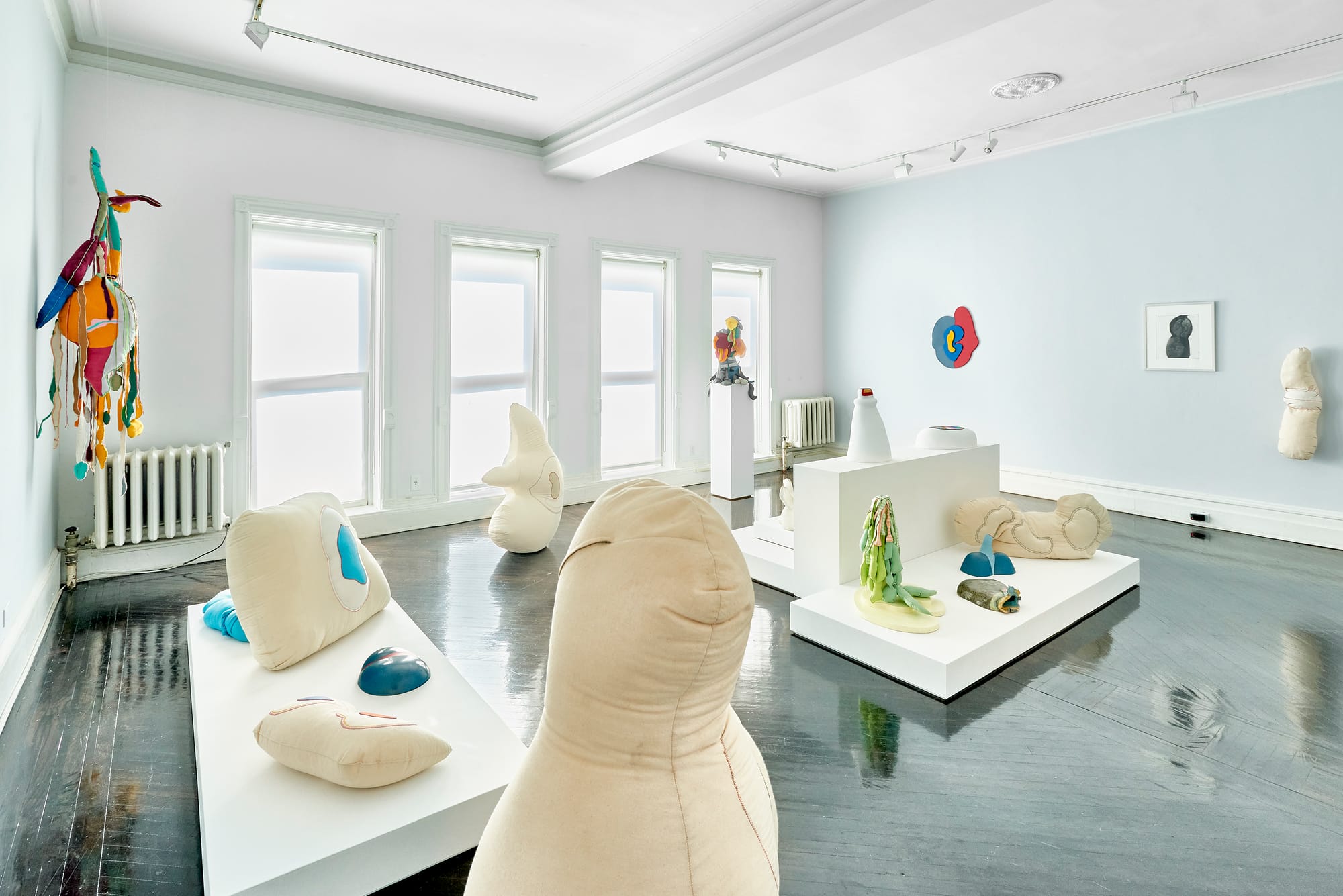
Though her work shares aesthetic similarities with the voluminous forms of Barbara Hepworth, Jean Arp, and Louise Bourgeois, the artist forged a naturalist sensibility that was entirely her own.
In Brathwaite’s own words, she was fascinated with “the overwhelming beauty of mountains, rocks, stones, exotic plants, women’s breasts and legs, male torsos, sunsets, and the marvelous bodies of animals,” and saw sculpture as a way to express the sensuality of the natural world.
The fluidity between the artist’s interior desires and the exterior worlds occasionally bled into music, too. A self-described “Sculptress & Dj,” Brathwaite began developing what the Museo Reina Sofía describes as “a rich sound world shaped by an experimentation and the use of scratching that invoke the rhythms of jazz and freestyle” in the 1990s.
In the same 2024 feature in Contemporary And, writer Nohora Arrieta Fernández identified the musical quality that extends across all of Brathwaite’s work, describing its unceasing nature as akin to flowers blooming and volcanoes erupting.
“If there were one single word to describe her, it would be truth,” Henrique Faria and Eugenia Sucre of the New York gallery Henrique Faria Fine Art, which represents Brathwaite, told Hyperallergic.
“Let the music play,” they continued. “Keep dancing, even when there is no music, Valerie Marie.”
The artist’s friends and family held a memorial for Brathwaite in the East Cemetery in Caracas this afternoon, July 7.