A First Look at the Art in the New Obama Presidential Center
With works by Idris Khan, Maya Lin, and more, the $850M campus will be a public art destination for Chicago’s South Side, if it can live up to its community.
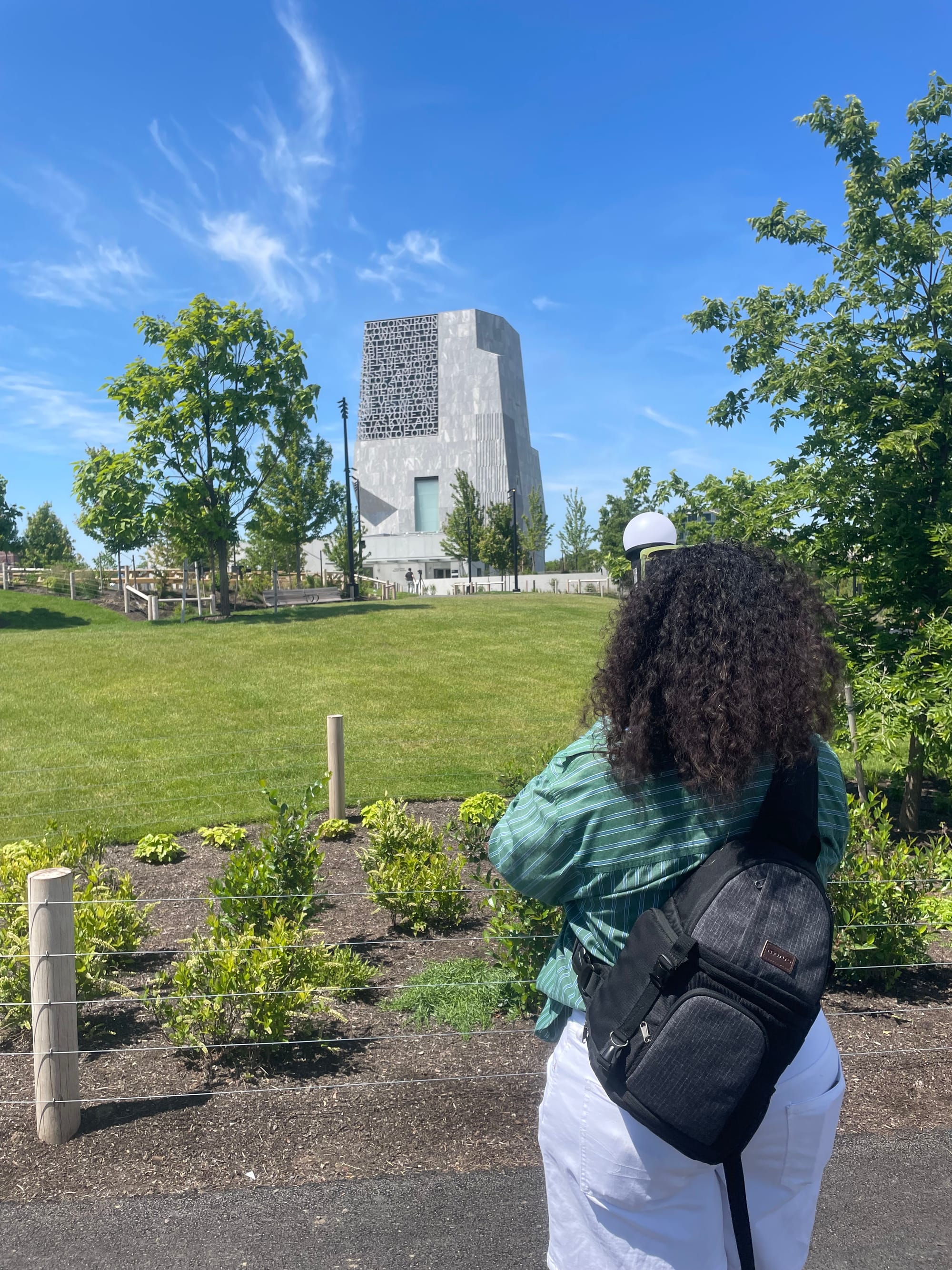
CHICAGO — On the sunny morning of Wednesday, June 3, the blue skies and stretches of greenery made the formidably geometric “Obamalisk” building seem almost inviting. Over the last five years, the rolling hills of Jackson Park have been reshaped to accommodate the structures that now make up the Obama Presidential Center, set to open to the public later this month.
Spread across the new $850 million campus, the legacy of Barack and Michelle Obama is embodied in educational, recreational, and civic spaces. Below the mammoth stone tower designed by Tod Williams Billie Tsien Architects, the Home Court, with an NBA regulation-size basketball court, and a new branch of the Chicago Public Library sit among a playground, a fruit and vegetable garden, a plaza, and various convening areas.
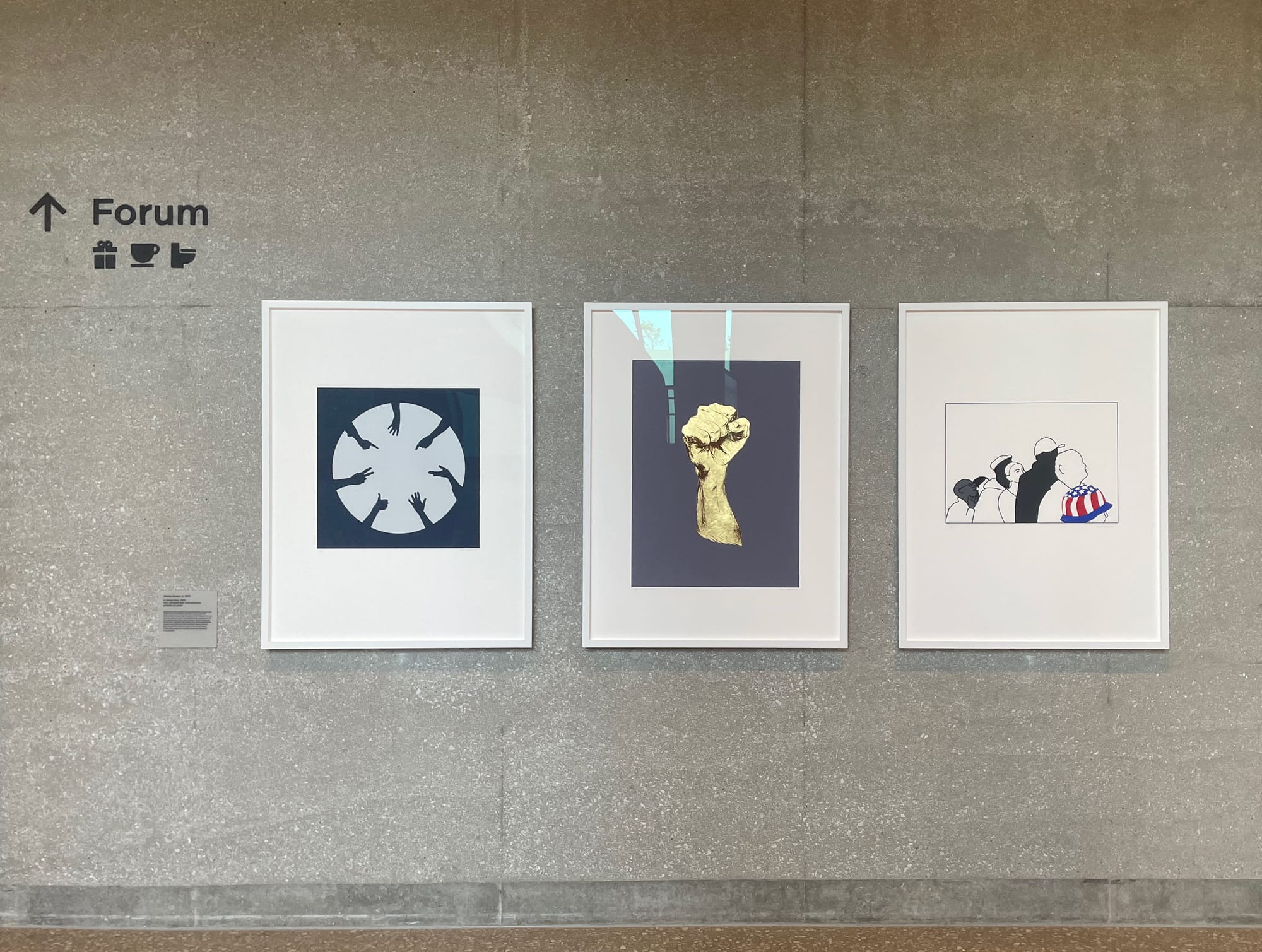
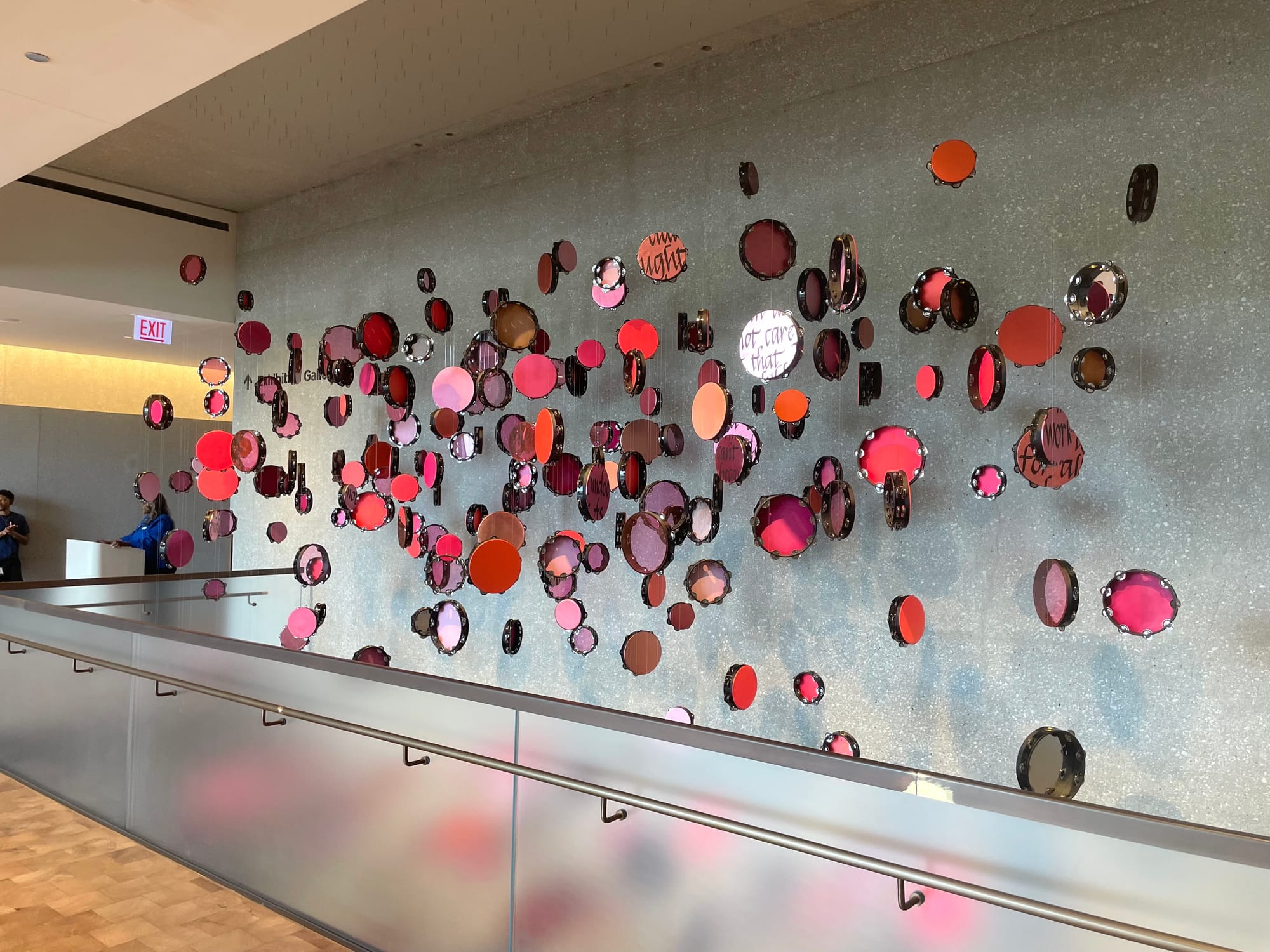
The center also boasts more than 28 commissioned works by notable contemporary artists, including Idris Khan, Theaster Gates, Lorna Simpson, María Magdalena Campos-Pons, and Maya Lin. Curator of Commissions Virginia Shore, Curator of Collections Crystal Moten, and Museums Director Louise Bernard assembled to create a collection that both supports the Obama narrative and contributes to the broader tapestry of public art on Chicago’s South Side.
Weaving fine art into a presidential story is not necessarily a natural fit. But perhaps no modern United States president has been as closely associated with the visual arts as Obama. From Shepard Fairey’s iconic campaign imagery that drew Pop Art comparisons to the celebrated portraits by Kehinde Wiley and Amy Sherald, the Obama political era paved the way for contemporary artistic reimaginings and introduced a new generation to both politics and fine art. The curatorial team at the Obama Presidential Center continues that intertwining of art and civic engagement.
In recent years, after generations of segregation and divestment, Chicago’s South Side has seen a surge in public art projects. New murals on buildings, sculptures in train stations, and installations in vacant lots stretch from the South Loop to the far South Side. More importantly, the trajectory of that development has been shaped by socially progressive, civically minded, and community-engaged art led by locals, like artist and MacArthur “Genius” grantee Tonika Lewis Johnson. Creators and critics across the city are no longer content with art that merely beautifies.
The Obama Presidential Center, just outside of Hyde Park, is not a standard library for a former chief executive. Because its primary purpose isn’t archival, it has the opportunity to be something else entirely. With its athletic and recreational offerings, forum space, and winding walking paths, the indoor-outdoor campus is designed more like a community center than a traditional presidential institution. Its spaces invite Chicagoans of all ages into a shared environment for learning, gathering, and engagement, with art serving as a central feature.
The center is joining a decades-long conversation with community organizations integral to Chicago's cultural landscape. The Hyde Park Art Center, the Southside Community Art Center, and the DuSable Black History Museum and Education Center are all within miles of the new campus.
“My mantra around the Obama Presidential Center has been ‘a rising tide lifts all boats,’” Jen Tremblay Chambers, the co-executive director of the Hyde Park Art Center, told Hyperallergic. “I am excited for it to bring much-deserved visibility to the cultural hotbed that is already thriving on Chicago's South Side.”
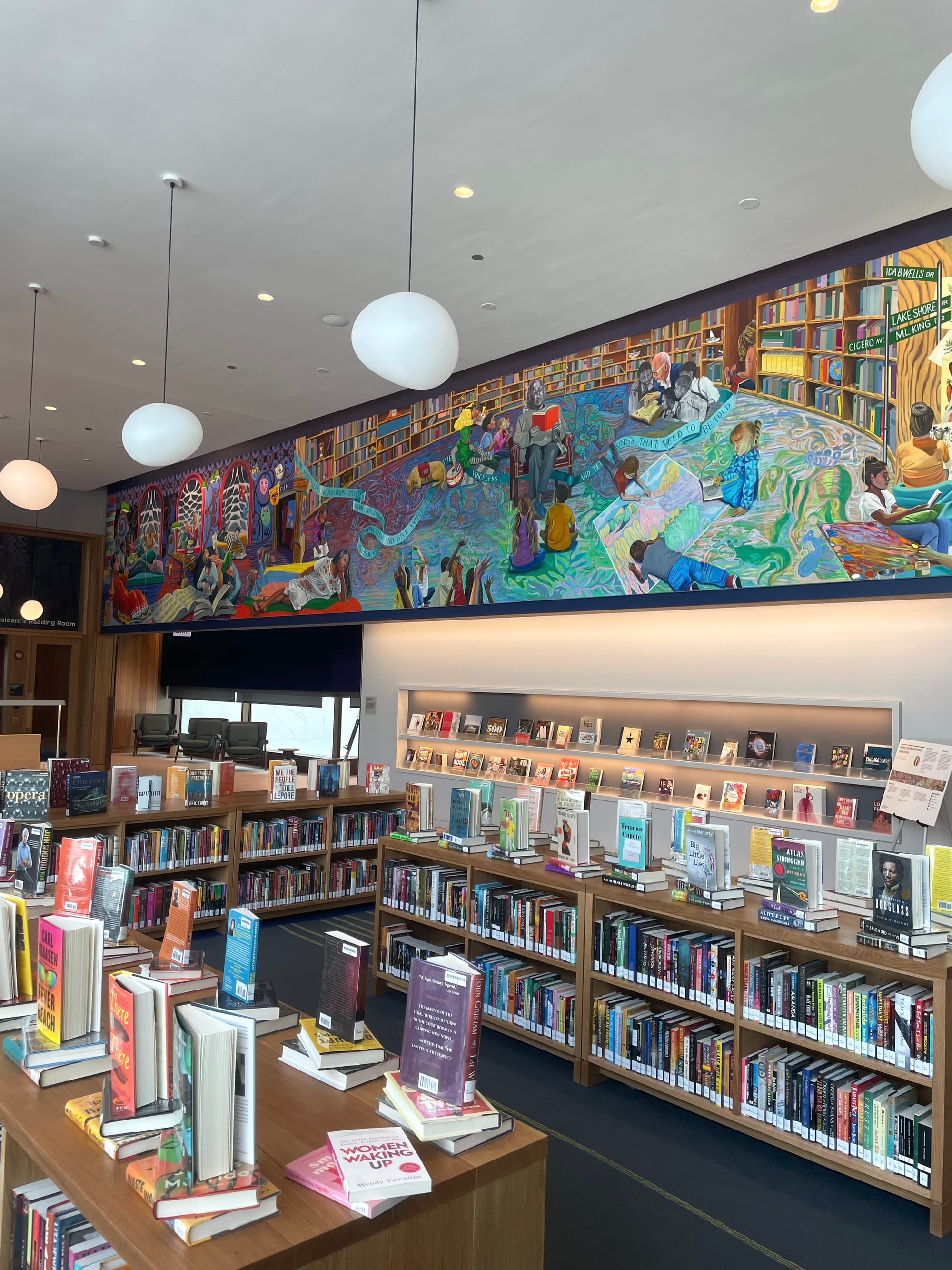
But the project has not been without its concerns. Whenever a neighborhood is transformed into a tourist destination, there’s going to be pushback. From groundbreaking to opening day, the beloved Jackson Park became an eyesore and a construction site, while traffic on Stony Island became nearly impassable chaos. Beyond that, housing in Hyde Park was already at a premium; the addition of the Obama Center has only brought that issue into higher relief. This monument to one man’s greatness has the potential to bring higher rents and an influx of Airbnbs, decreasing an already limited housing supply and increasing already high property taxes, pushing out long-term residents.
“I hope that the center really makes an effort to bring in the surrounding South Side community, because it's not enough to say that community members are welcome,” Devon Vanhouten-Maldonado, a South Side resident and executive director of the local arts organization SkyART.
“Similarly, I hope the foundation has a strategy for bringing more resources to the South Side through partnerships with philanthropy and government, so that organizations already doing the work in these communities benefit from all the attention and investment in our backyard,” Vanhouten-Maldonado said.
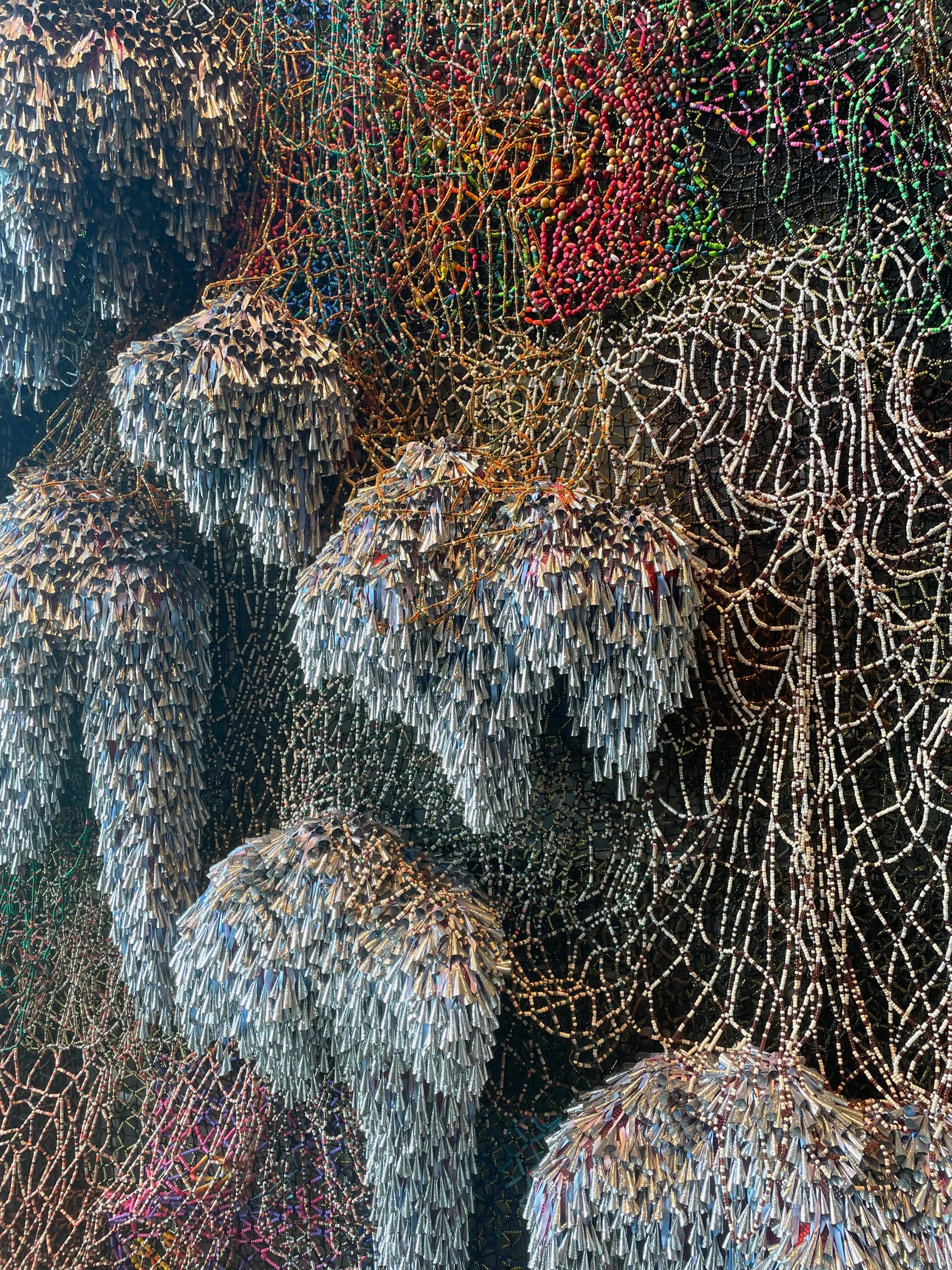
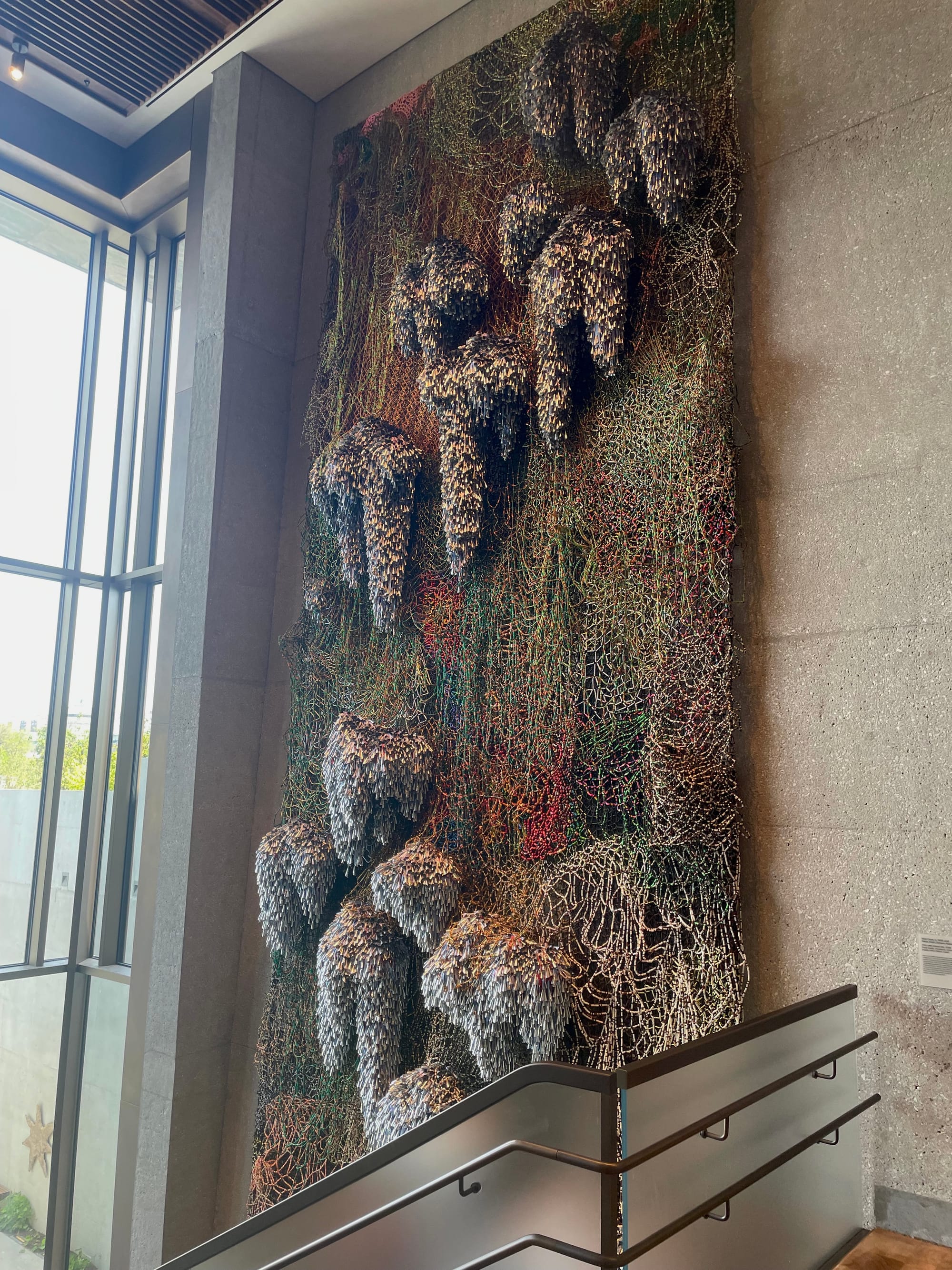
Nick Cave and Marie Watt, "This Land, Shared Sky" (2026) (photo Jennifer Torwudzo-Stroh/Hyperallergic)
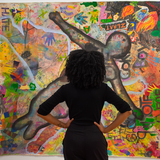
Jack Pierson’s “HOPE” (2026) is the first artwork you see when you walk into the Obama Presidential Center Museum, four pieces of mismatched marquee letters spelling out the word that drove the 2008 Obama campaign. Around the corner, in the atrium, Mark Bradford’s overwhelmingly beautiful “City of the Big Shoulders” (2026), a painting spanning three stories, offers a bird’s-eye view of Chicago, capturing the city that launched Obama’s political career. Yellow crosshatchings zigzag across the panels like train tracks, while small multicolored squares line the map like houses and neighborhoods.
Chicago artist Nick Cave and Marie Watt of the Seneca Nation bring together their distinct styles in “This Land, Shared Sky” (2026), an intricately layered, large-scale, multicultural tapestry in the museum’s atrium. Cave repurposes shoelaces and nylon into multicolored nets interwoven with Watt’s amorphous metallic sculptural forms of jingle beads. Together they become a dense installation that may first appear difficult to parse, yet coalesces harmoniously, representing the interconnected histories of Indigenous and Black communities.
But carefully curated art and world-class exhibition design can only depict parts of a political legacy. For some, the Obama era calls to mind political optimism and social progress. But during its two terms, the Obama administration expanded warrantless mass surveillance of Americans’ Internet searches. In 2012, it introduced Deferred Action Against Childhood Arrivals, known as DACA, but Obama was also dubbed the "Deporter in Chief" by critics of his immigration policies. He negotiated the Iran Nuclear Deal in 2015, yet the military under his administration also dramatically expanded the use of drone strikes. As a tribute to Obama's presidency (and not-so-subtle propaganda), these less-glorious moments are understandably glossed over or completely omitted.
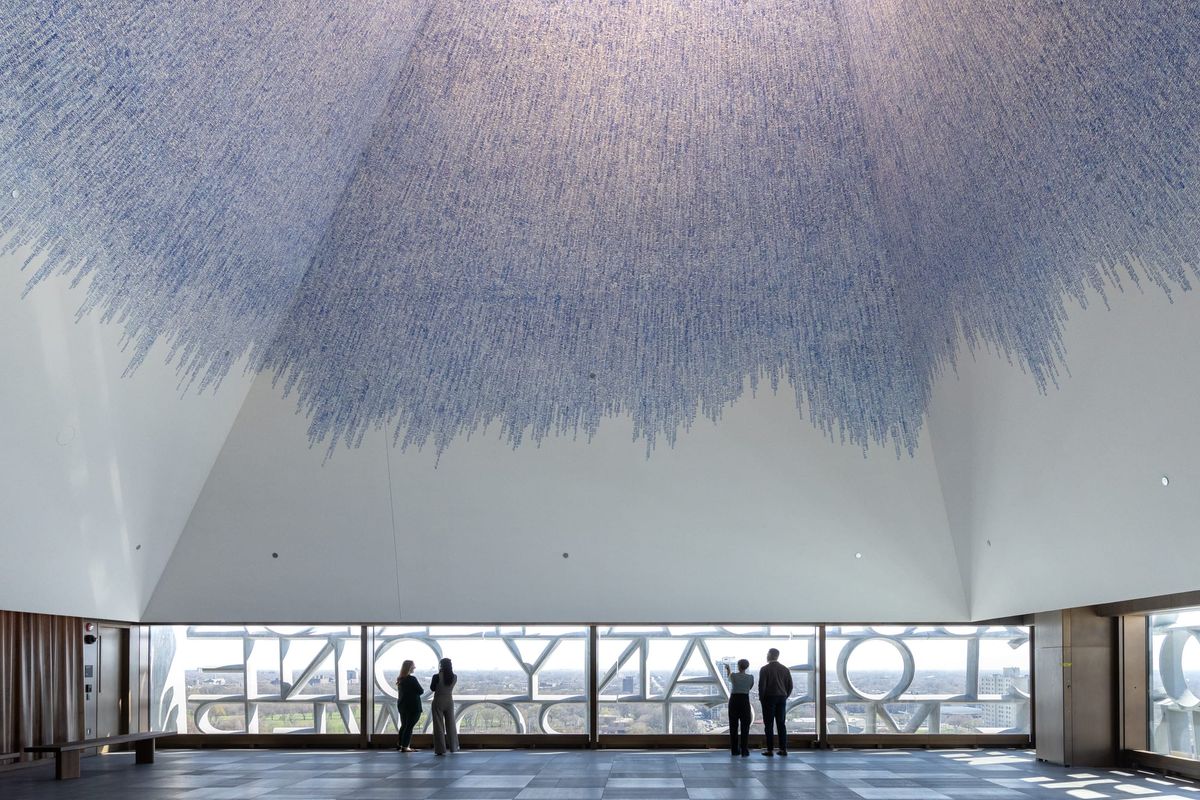
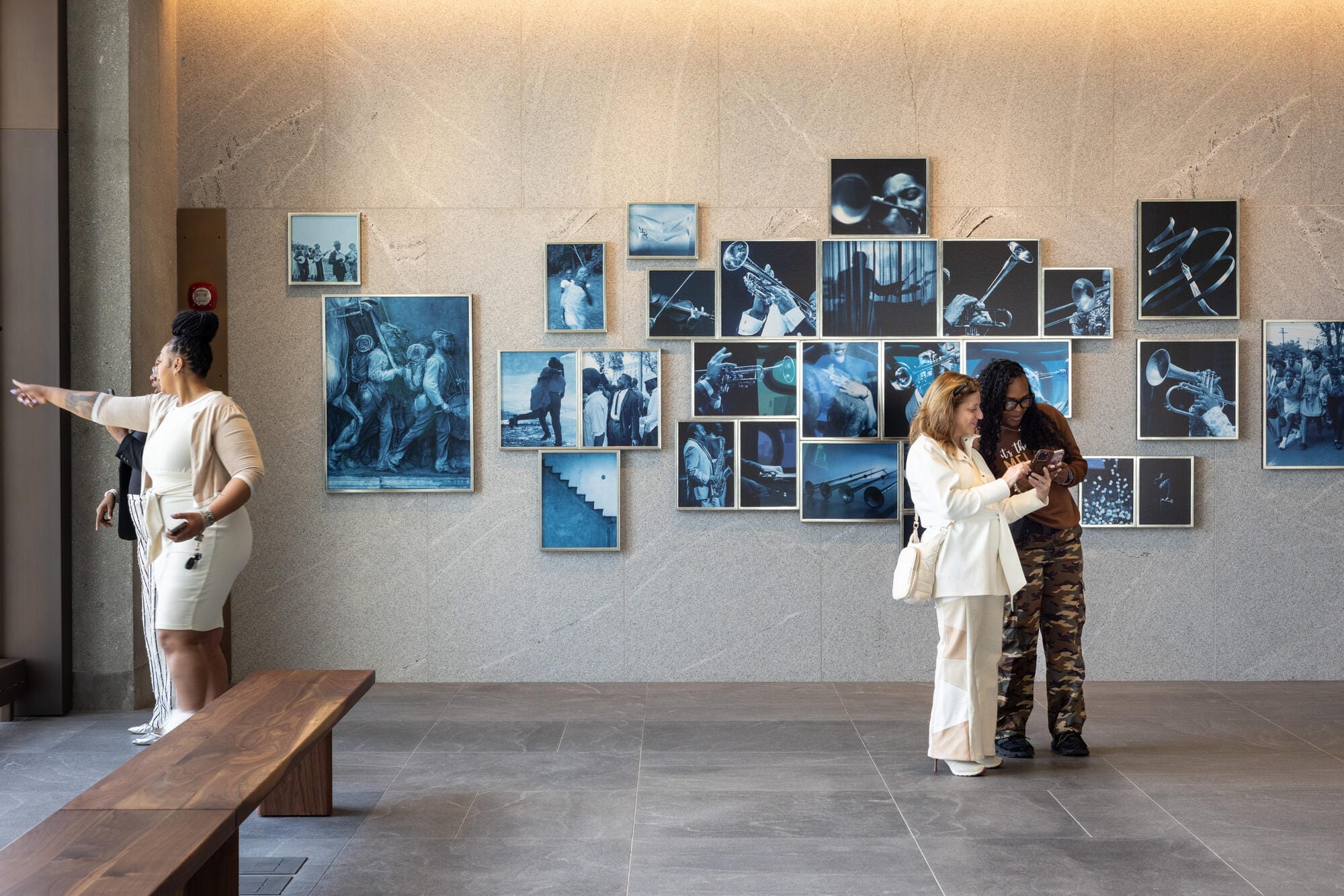
The presidential narrative draws to a close in the Nelson Mandela Sky Room. The eighth-floor gallery overlooks the campus and houses another collection of works by notable artists, including Carrie Mae Weems's “The Cool Blue Wind,” a collage of jazz photography. On the adjacent wall hangs Jenny Holzer's “Freedom Riders.” But the literal centerpiece of the gallery is Idris Khan’s “Sky of Hope,” a text-based installation composed of words from President Obama’s 2015 speech at a ceremony for the 50th anniversary of “Bloody Sunday” in Selma, Alabama. The words overlap and streak upward toward the white skylight above. Rendered in blue ink, they are largely indecipherable and equally difficult to photograph. The only way to capture the work, to truly take it all in, is to lie on the ground and look up toward the sky.
Speaking with Hyperallergic, local writer and organizer Maira Khwaja, director of public strategy at the Invisible Institute just a few blocks away, had a few simple wishes for the new center: “That it can be free for Illinois residents. That it's not overly policed. And the kids from Hyde Park Academy across the street can play and use the space whenever they want.”