Alice Tippit’s Mischievous Erotics
The artist’s mixed messages suggest a deep skepticism about the ability of language to adequately express human experience.

CHICAGO — I often felt like I was undergoing psychological testing while visiting Rose Obsolete, Alice Tippit’s solo exhibition at the DePaul Art Museum. The show includes a trio of murals, a neon sign, and an extensive set of word drawings, but its core is made up of 23 smallish oil paintings that function not unlike a Rubin’s vase or one of the other ambiguous images developed by Gestalt psychologists in the early 20th century. Do you see a rabbit or a duck, two faces or a candlestick, a young woman or a crone, the therapist asks, and the answer says something not only about human perception but also about you.
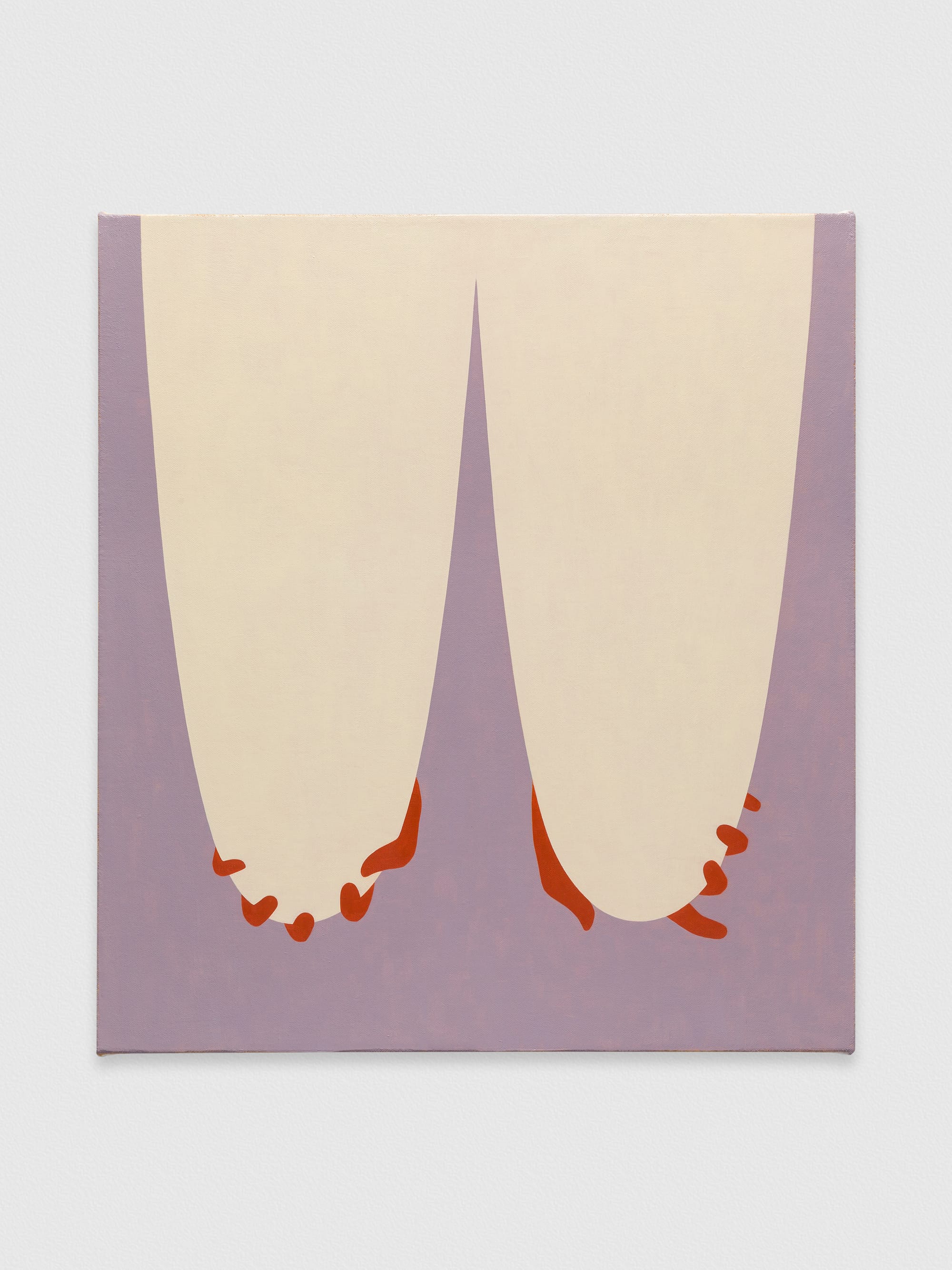
Tippit, who was born in 1975 outside of Kansas City and has lived in Chicago since 2006, makes pictures that look deceptively simple. Most center a single subject, comprised of just a few elements, rendered flat and often symmetrical. Brushwork is invisible, edges sharp, color idiosyncratic, style illustrational. She paints them in a single day, without the assistance of tape to get those sharp edges, though they can take up to a year to develop. Actually, they’re exceptionally well executed, with disarmingly subtle layering, but you have to get right up close to notice. Do. While there, stay awhile. Instead of rabbits or crones, Tippit’s meticulous compositions toggle between snakes and smiles, blouses and pears, curtains and bodies, often passing through a third or fourth option in between, never settling anywhere for long. I’m definitely not sure that other viewers see the same things as I do.
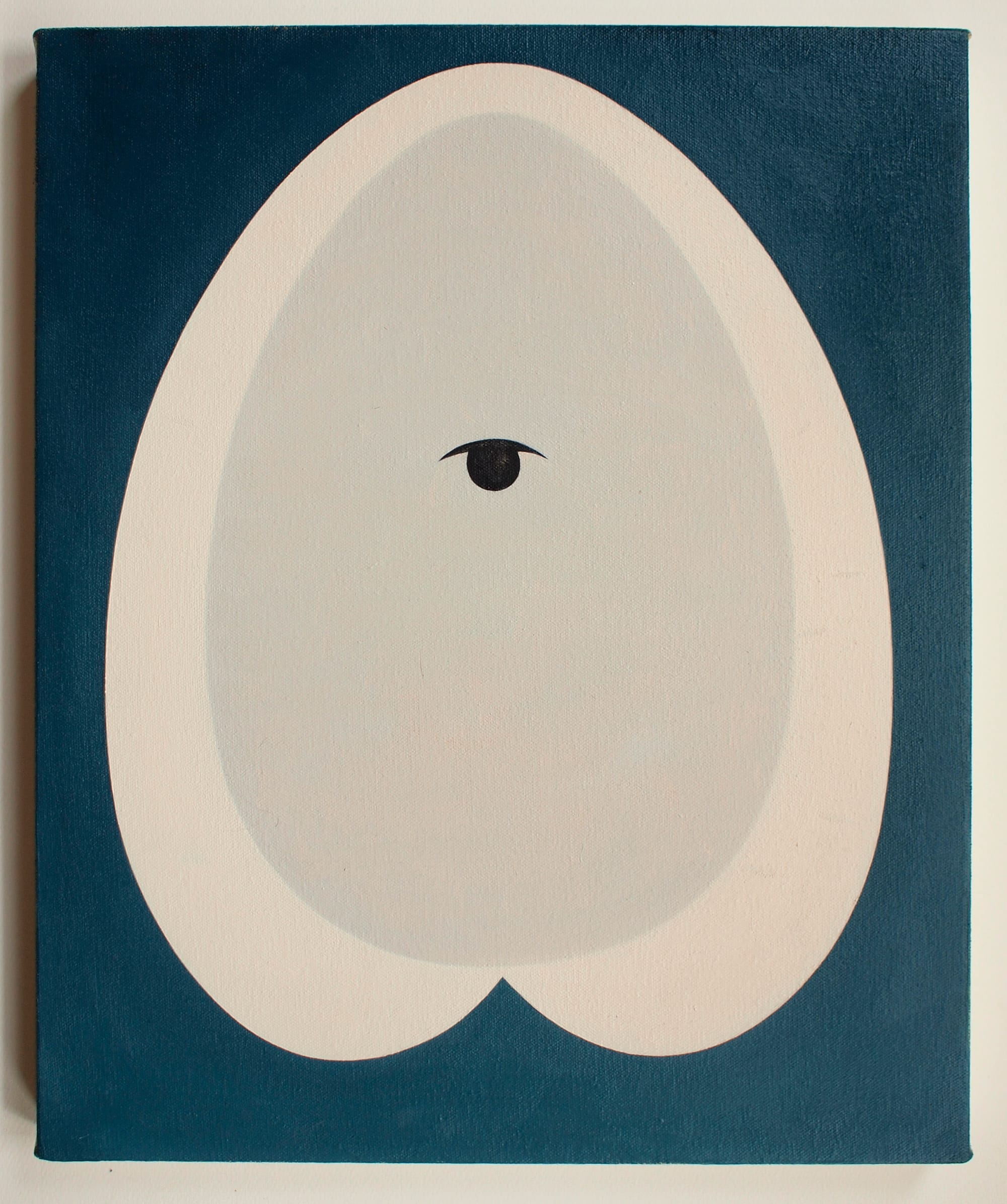
Sometimes I’m not even sure what I’m seeing. “Monitor” (2015) contains an eye, an egg, and a white-collared navy blouse. Or maybe the egg is a head seen from above. Or the collar is a bum, or an overturned heart. “Umber” (2024) traces a giant letter “U,” as in a child’s alphabet book, and also a big empty pit in dark ground. Perhaps it’s a long ocher serpent with a forked tongue or, if upturned, a faceless person with a head of jet hair, or a golden portal in a black wall. “Follow” (2019) is an inverted tree stump, it’s a spotlight, it’s a cigarette, it’s the crotch of a very pale woman. Choosing among Tippit’s mixed messages feels like a dare uttered from a place of deep skepticism about the ability of language — both visual and verbal — to adequately express human experience. Show me someone who believes in singular fixed meanings, and I’ll show you someone who’s dead inside.
Envisioning how the imagery in a painting would look if it were hung upside down might seem loutish. But Tippit has been known to rotate the paintings in her studio, so I say fair game. Having the exactingly printed exhibition catalog helps, it being easier to manhandle than mental images. With one easy flip, breasts become thighs, an eye morphs into a little nose-mouth, a mustache-bowtie turns into a set of eyes, a plunging neckline is a huge nose, a decorative collar converts to a monstrously toothy maw, a bulging sack is recast as a hot air balloon.
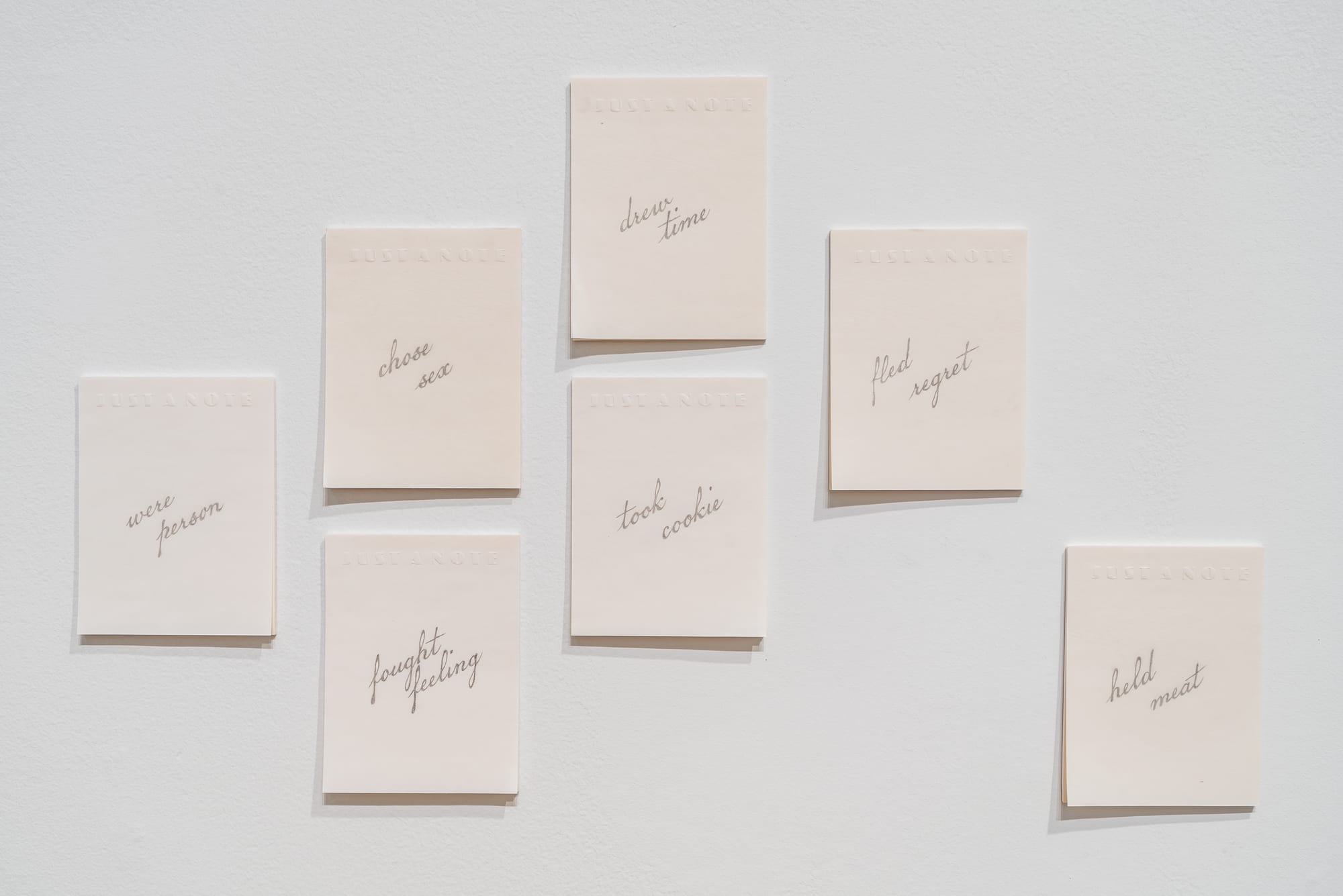
Other games can be played here, too. My favorite involves Rose Obsolete (2024–25), the series of 46 notepad drawings that lends its name to the show. On each top sheet appear two words in a lovely old-fashioned cursive — sneakily, they are not written, but drawn and penciled in. Nonsensical, provocative, and profuse, the couplings do with language what the paintings do with visuals. The title itself is just such an arrangement: Does it indicate an obscure flower, or a person who awoke to premonitions of uselessness? I enjoy matching Tippit’s paintings to her word pairs, as in the children’s educational exercise, but with multitudinous answers. For example, a line could be drawn from the nearby canvas “Flush” (2015) — a Picassoid head or a giant tomato with a black calyx, an irregular shape carved out of the right side doubling as a human profile or a bite — to the words “fought/feeling,” “blew/early,” “fled/respect,” or even “was/love.”
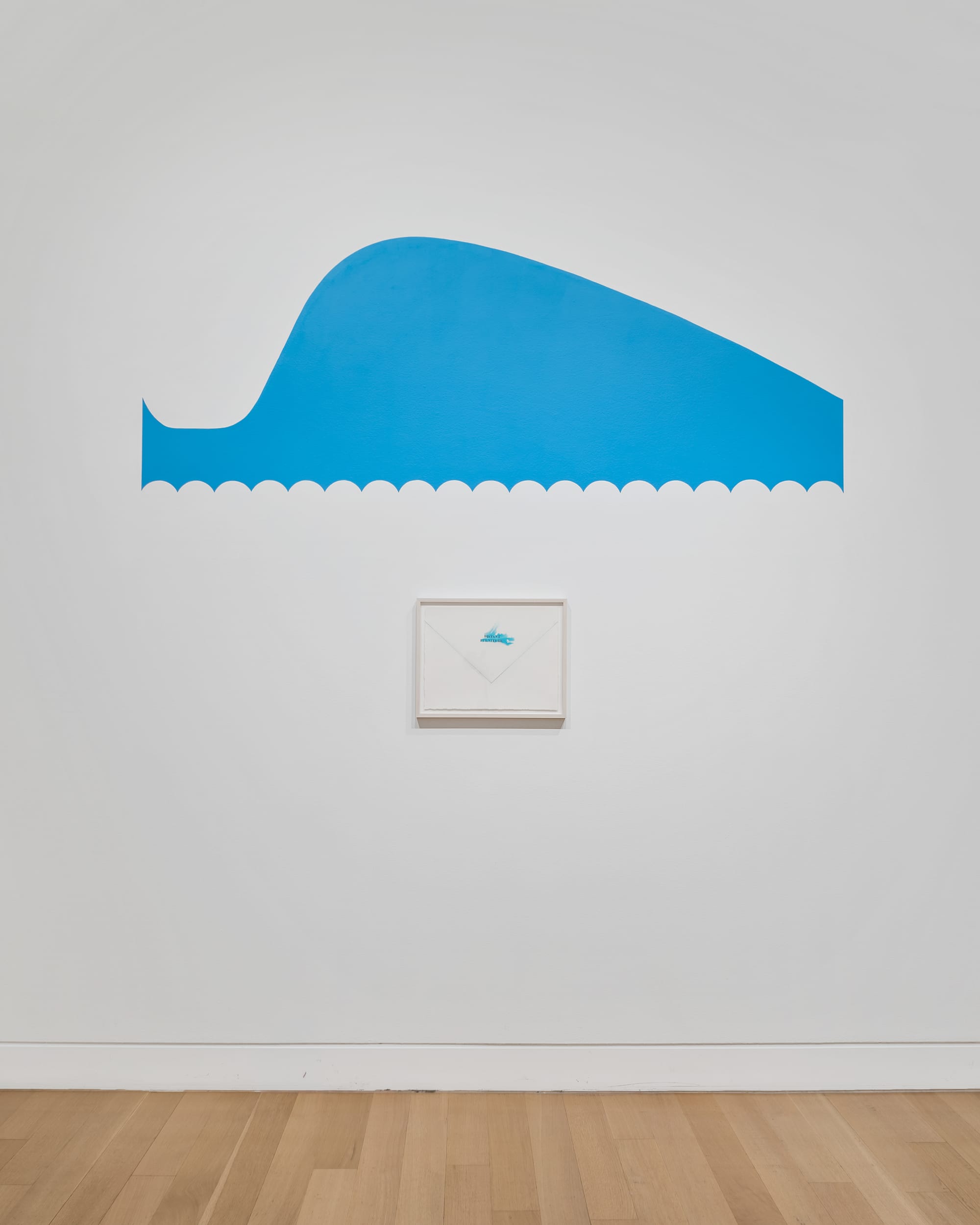
Mischievous erotics and dark humor simmer throughout — or maybe a psychotherapist would say it’s just me — but certainly Tippit’s oeuvre offers lessons in subliminal design. Color, shape, cropping, proximity, and orientation are revealed as elements with great potential to prompt association, insinuation, slippage, and various messaging. “Attic” (2021) demonstrates how to generate heaviness by placing a rounded black form against a lighter terracotta ground. Its scalloped top edge, when open, connotes drapery; sealed, it suggests fingertips. In the large wall painting “Clue” (2024), a similar edge runs along the bottom of a swooping sky-blue silhouette; reversed and elongated, it instead cuts like a serrated knife. Or caresses like a white duvet, implied by the figure’s particular curves, or waves like an upended ocean against a whale, implied by both shape and hue. Beneath this mural hangs a drawing with the words “DISTANT/FURNITURE,” adding the association of a smashed vase to the mural’s intimations.
Rose Obsolete is Tippit’s first solo museum show, an artistic milestone that the DePaul Art Museum (DPAM) has crucially granted many fine local artists over the past decade. Those opportunities are about to be lost — along with DPAM’s presentations of some of the most politically incisive and culturally inclusive group exhibitions in the region, and its shepherding of one of the more notable collections of Chicago artworks — due to the unexpected and appalling news of its impending closure.
The president of DePaul announced in February that the university would shutter the museum on June 30 as “part of our responsibility to ensure long-term financial sustainability.” The news has been greeted with outrage from board members, professors, and students at the school, as well as supporters from the community beyond. Budget shortfalls, says the administration; foul priorities, say others. The language may be contradictory, but the math is unambiguous: The university is planning to begin construction this summer on a new $60 million athletic complex but DPAM’s annual operating cost is only about $745,000, with DePaul covering $420,000 and the rest raised through private fundraising. Some very powerful people and the systems they control believe that art, and the museums designed to support it, rose obsolete.
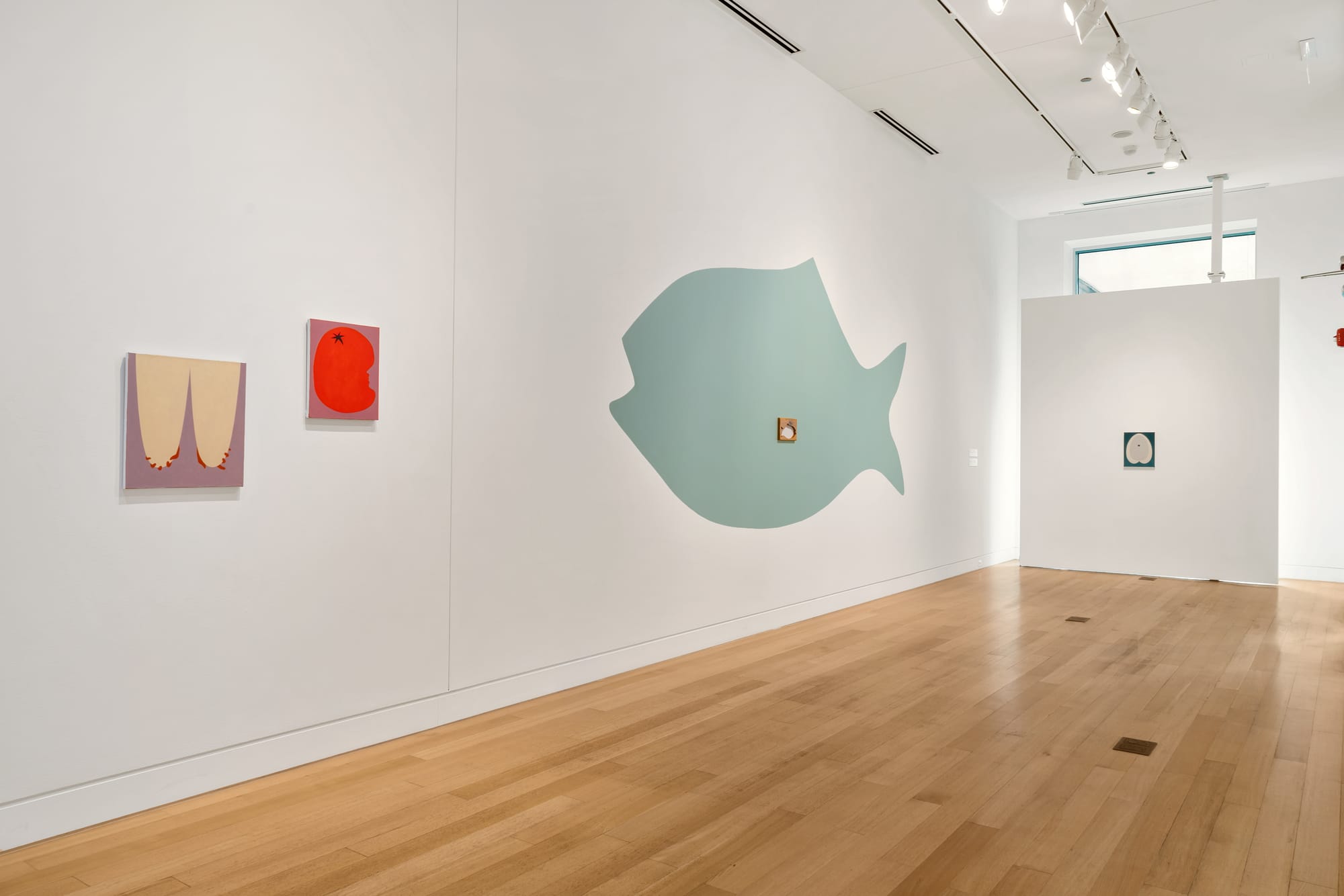
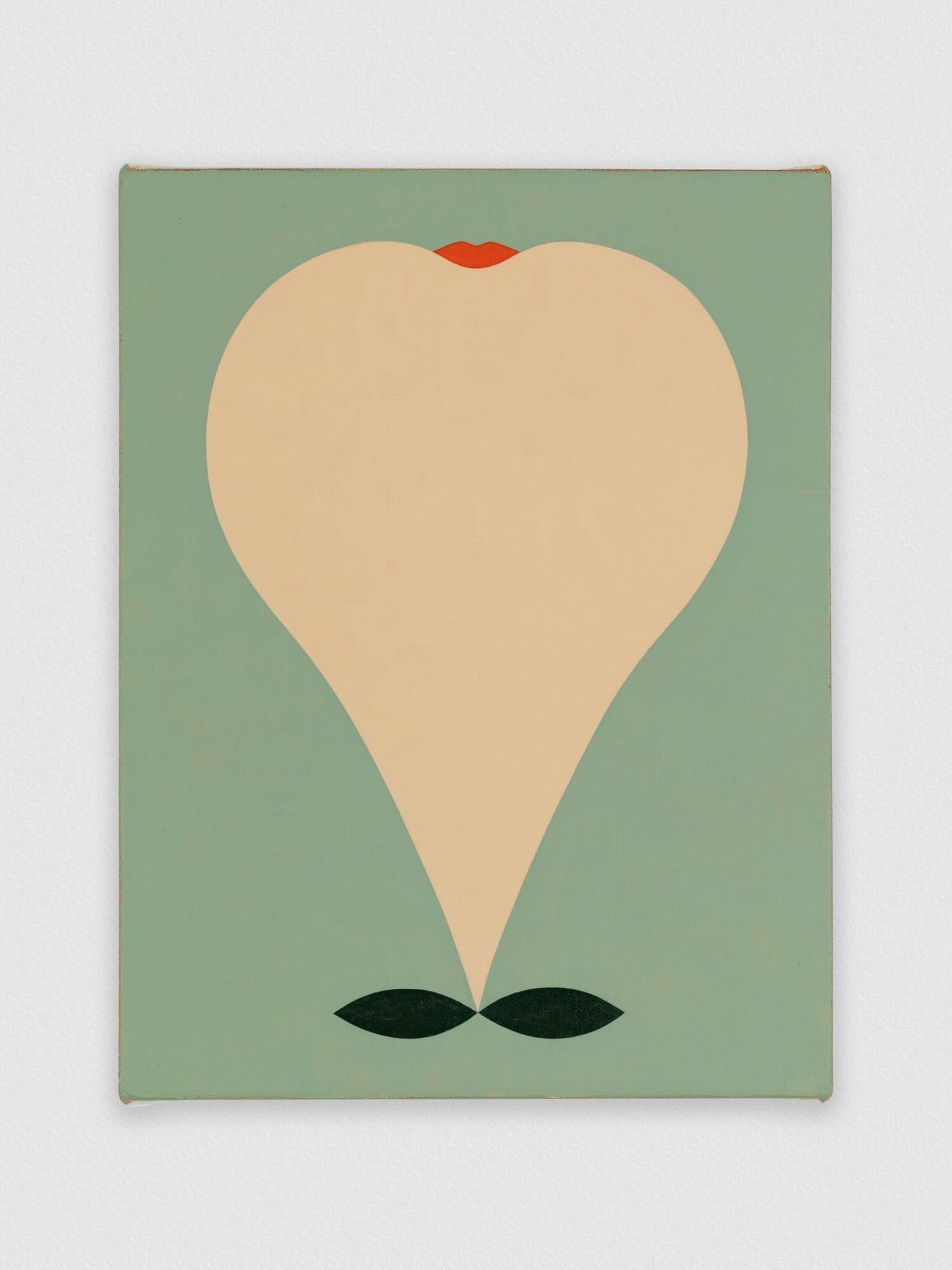
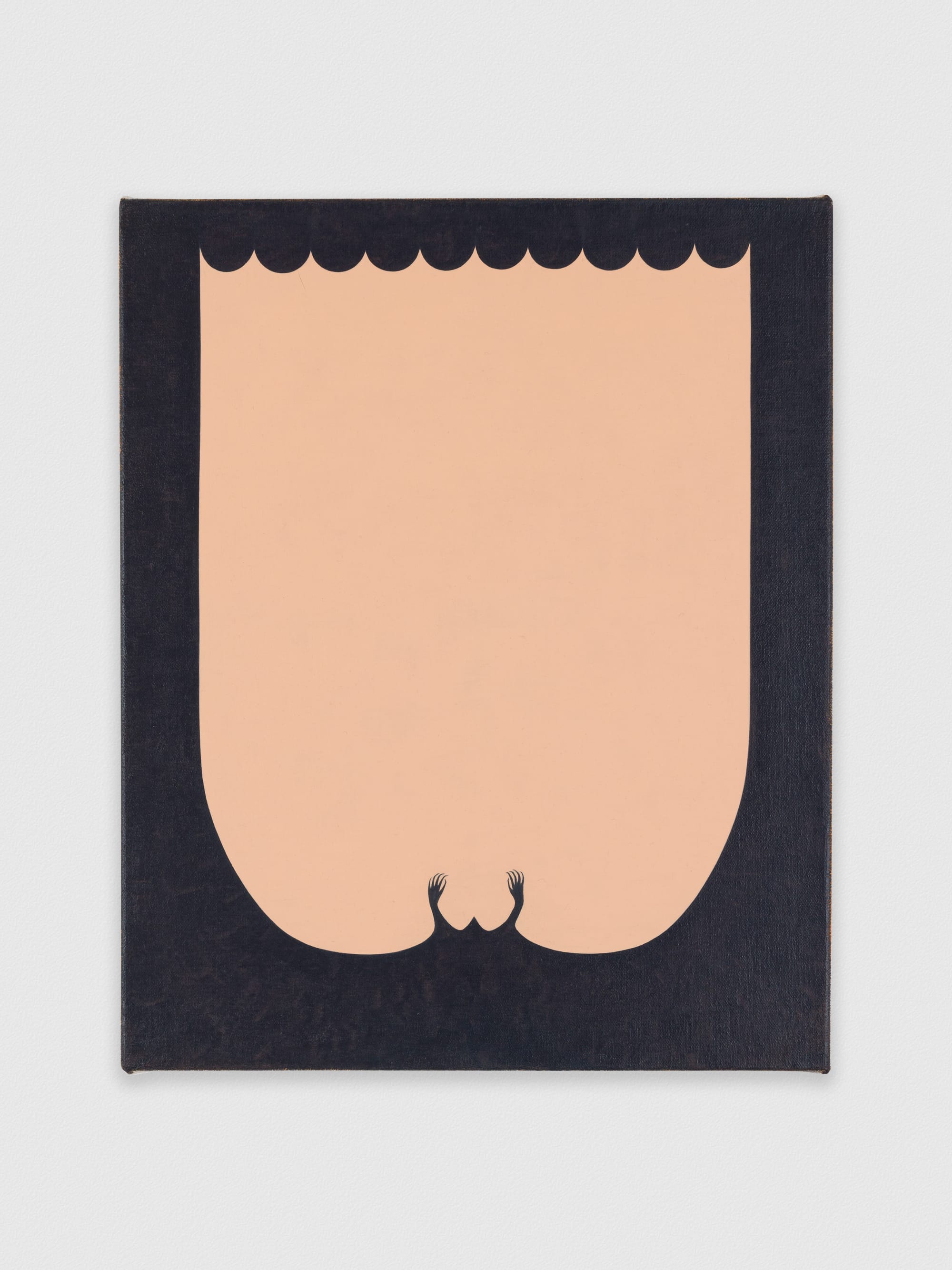
Left: Alice Tippit, "Fool" (2022), oil on canvas (photo courtesy Mary Hammon Quinn); right: Alice Tippit, "Oubliette" (2023), oil on canvas (courtesy the artist)
Alice Tippit: Rose Obsolete continues at DePaul Art Museum (935 W. Fullerton, Chicago, Illinois) through June 21. The exhibition was curated by Ionit Behar.