Danielle Mckinney's Portraits of Black Women at Rest
Each figure in her paintings luxuriates in the dreaminess of space belonging to her and her alone.

I met visual artist Danielle Mckinney at the edge of the world in a place where survival required my invention of a counting game: over the course of nine months, how many Black people did I encounter weekly?
Hemmed in by the North Sea on one side and medieval ruins on the other, I was freshly 23, just months into a yearlong master’s program on Scotland’s east coast, and alone — yet even this was not a word big enough. Lonely and desperately so, I spent much of my time abroad, and since then wondering how I might name that inexplicable sense of being a walking, talking open wound: a young Black woman abroad tortured by a dual sense of being hypervisible and passed on, passed over, daily like a ghost no one recognizes. Gradually coming undone by the endless intimacy of my own company, in that time privacy was both salvation and vice, and my room a generous purveyor of both. However tiny, dusty, and always too warm my apartment was — it was mine: a space small enough, private enough, to hold my life in its most minor key, to allow the total giving of myself over to a feverish need to disappear.
Some three years and a lifetime later, Mckinney’s exhibition Forest for the Trees, currently showing at Chelsea’s Marianne Boesky Gallery, returns me to that tiny Scottish apartment where, sinking without words to name the weight, her portraits of solitary Black female figures became the lifeline that lifted me out. Shucking the gaze, turning inwards to herself, even on exhibition, the unshakable constancy of each figure luxuriating in the dreaminess of space belonging to her and her alone vibrates with an immutable sense of being alone but never lonely. In that small room and beyond it, Mckinney’s work opened a window towards the possibilities and ambivalences of solitude and private, domestic space for Black women, where being by and with myself did not also have to mean miserable.
“Lonely, ain’t it?”
“Yes. But my lonely is mine.”
—Toni Morrison, Sula (1973)
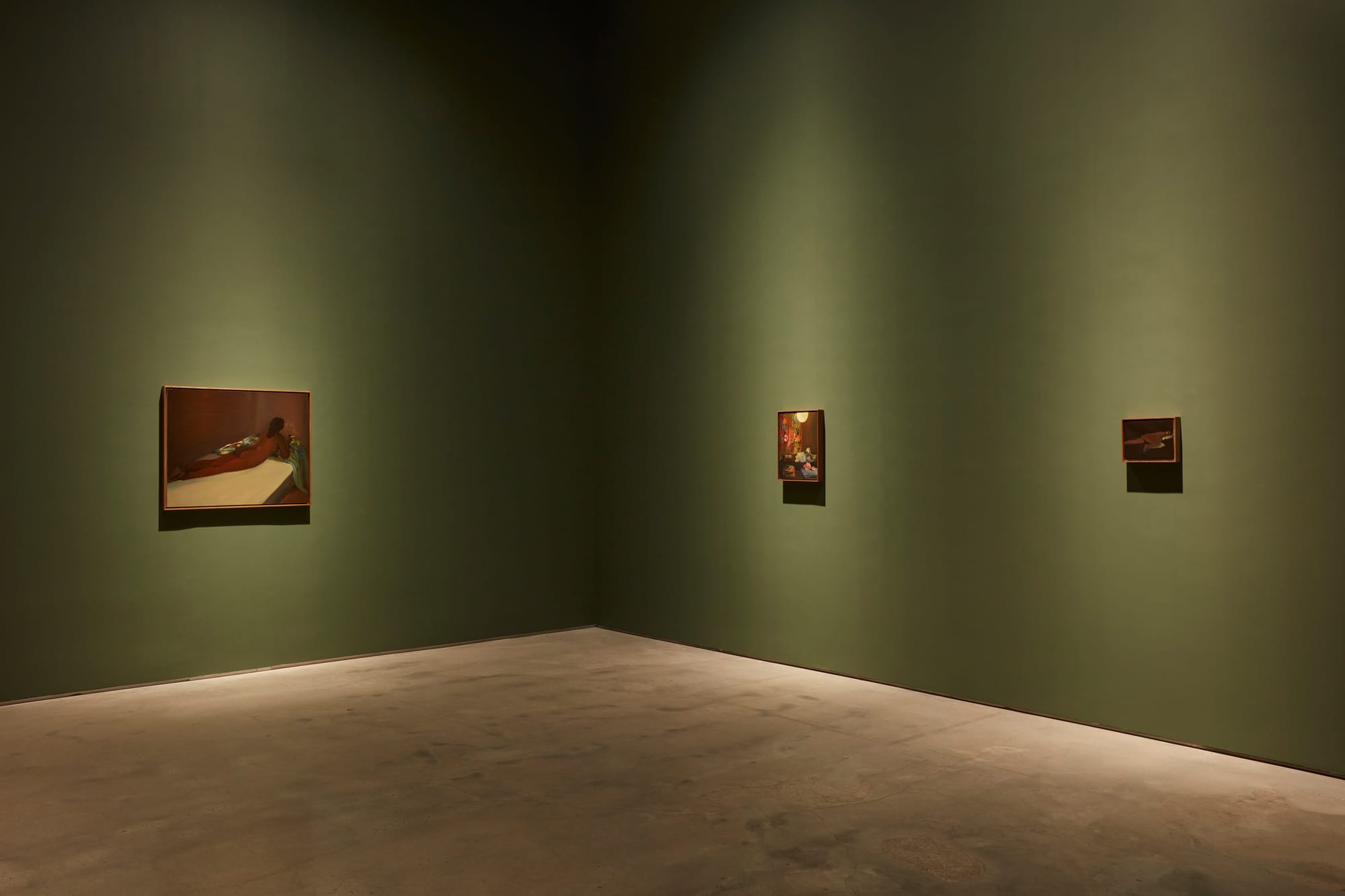
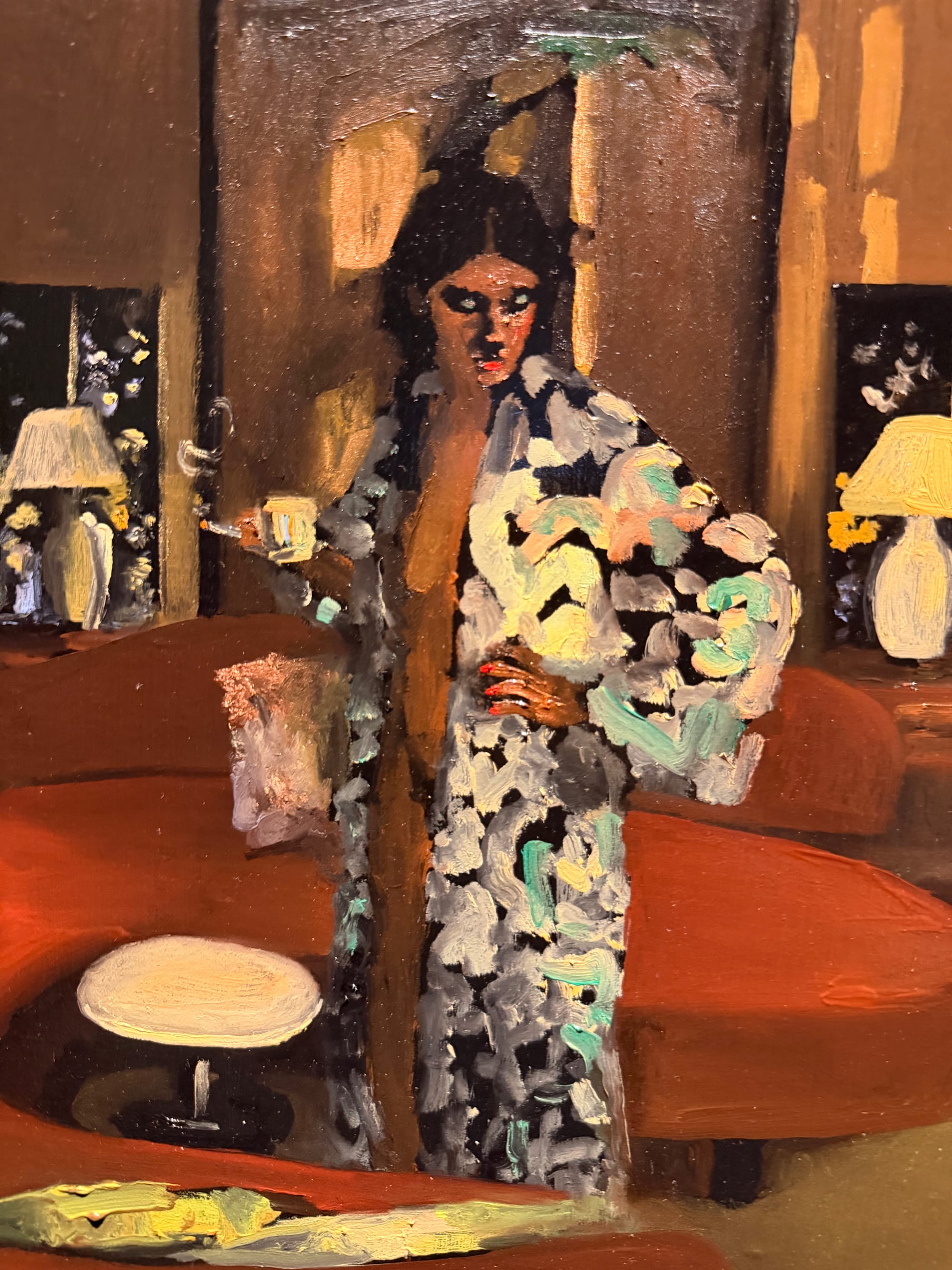
Set against and alongside ongoing demands on the political and ethical energies of Black women during the everyday crisis of today’s political, cultural, and social climate, Mckinney’s vision in Forest for the Trees splits: the first room sports a series of loosely defined figures in watercolor. Watercolors, Mckinney shared during the May 30 artist talk with Norton Museum of Art curator Rachel Gustafson, lent a kind of “freeness” to the human form. (The exhibition coincides with a survey of Mckinney’s work at the Norton, running through October 4). Away from the watercolors, down a rich green hallway towards the larger gallery space, Mckinney’s oil-based portraits depict women within varying scenes of leisure and repose as they all turn away from the demanding eye or, perhaps, just turn inwards to the self.
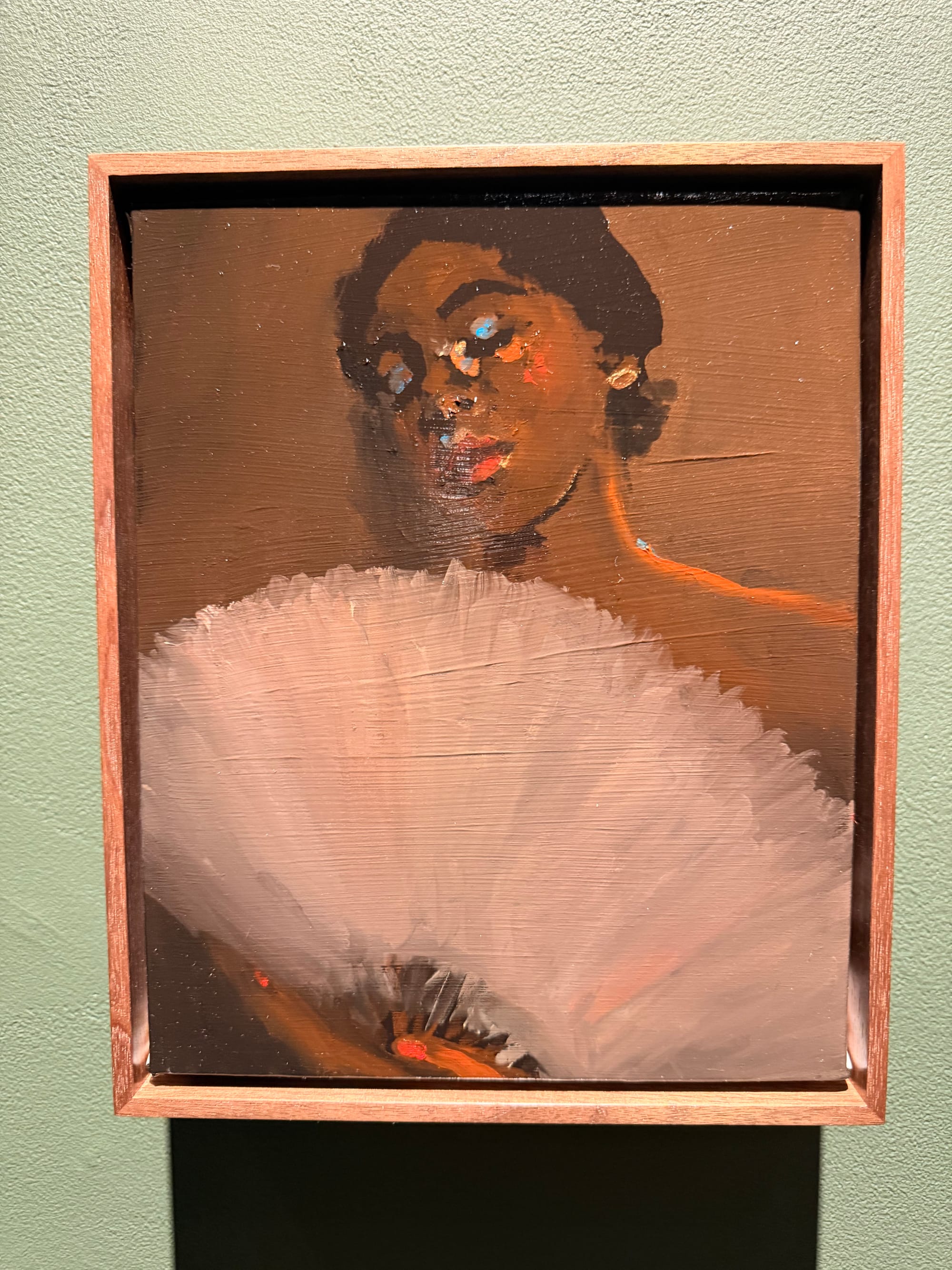
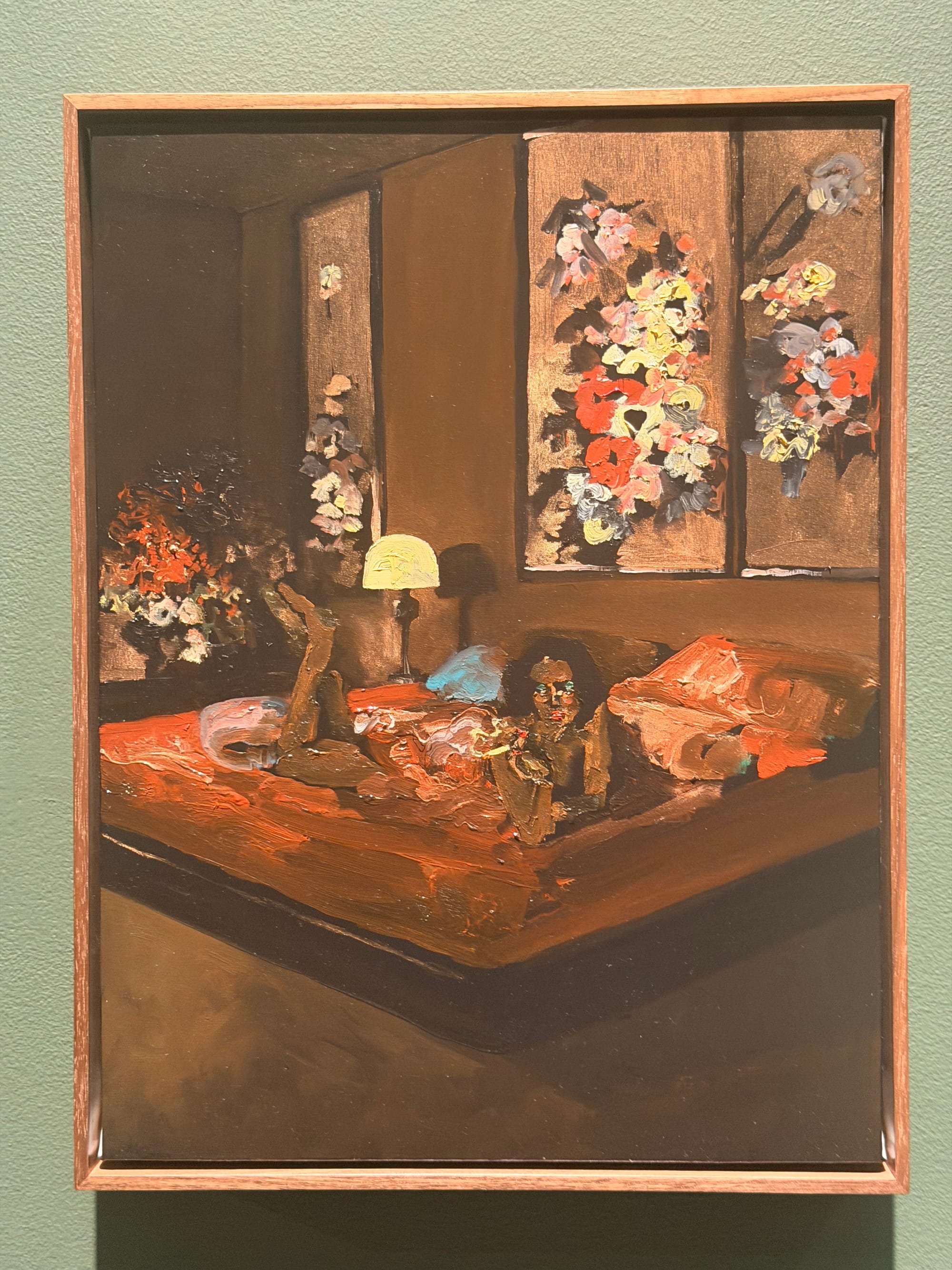
Left to right: Danielle Mckinney, "Make Believe" and "Milk and Honey" (both 2026) (photos Channelle Chevelle Russell/Hyperallergic)
Across the series, Mckinney’s trove of symbols further reveals a cinematic fascination with indulgence and adornment in otherwise spare, singular portraits. Where hands are present, figures sport invariable sets of bright red nails, a motif Mckinney largely accredits to her taste for “a touch of color.” Eyes within the portraits are obscured and further adorned by metallic accents and shades of teal, brushes of pink and spots of shimmering foil. Alongside red nails and accented metallic foil, cigarette smoke often spirals up wisplike within these portraits, creating warm meditative scenes further underlit by a steady effusion of lamplight and glimmering light fixtures.
At the end of the artist talk, Mckinney shared her somewhat conspiratorial sense that her pieces would keep getting smaller and smaller. In her attention to scale, I couldn’t help but remember that small room at the edge of the world where I first met her, when my feelings, too large and still yet too remote from me, demanded a space intimate enough to hold them. I am older now and the rooms of my life much larger — yet when I am alone, seeking the familiar comfort of my own intimacies, Mckinney’s portraits return me to those scenes of the solitary Black feminine self at rest, where notions of solitude and privacy remain just that: solely my own.
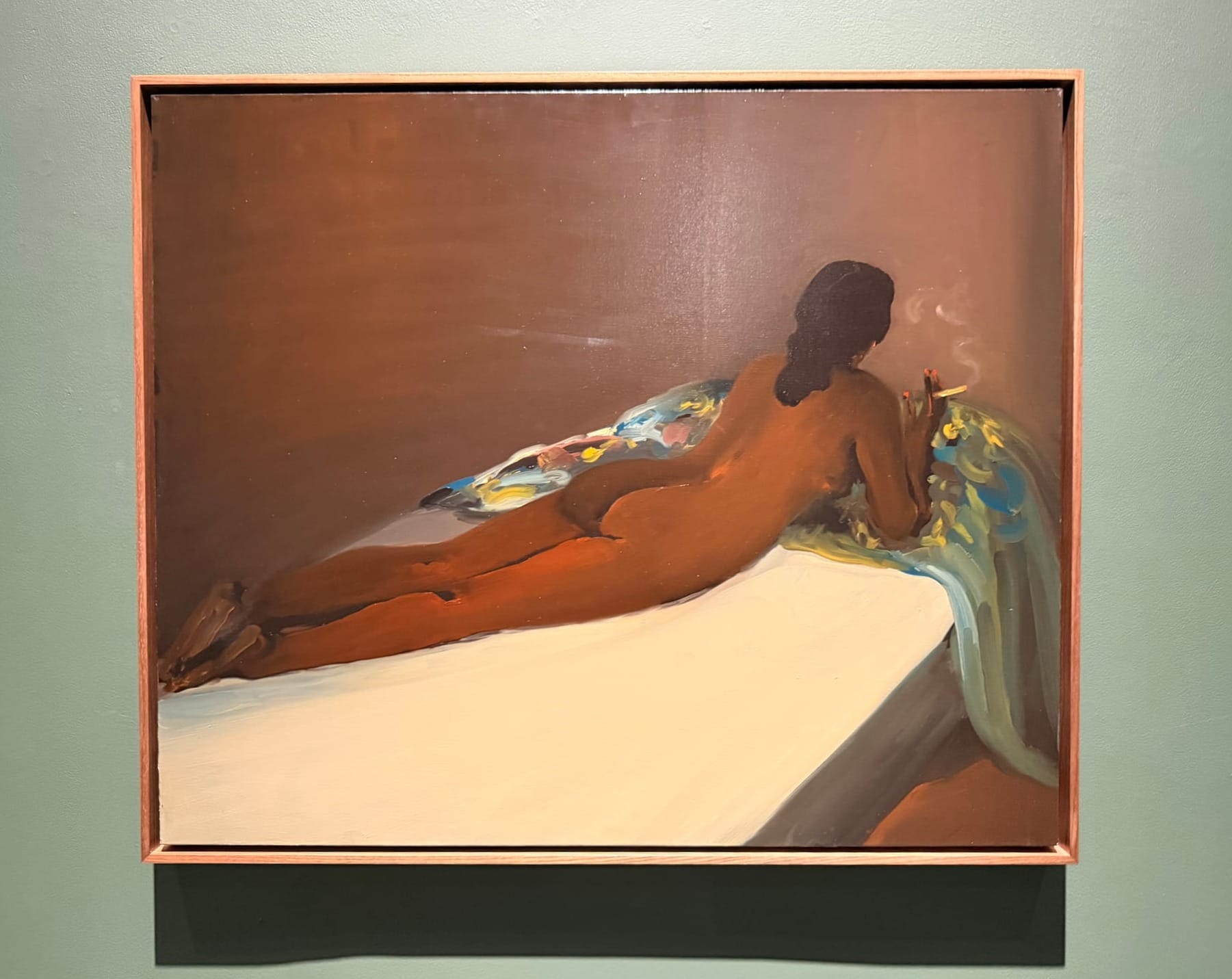
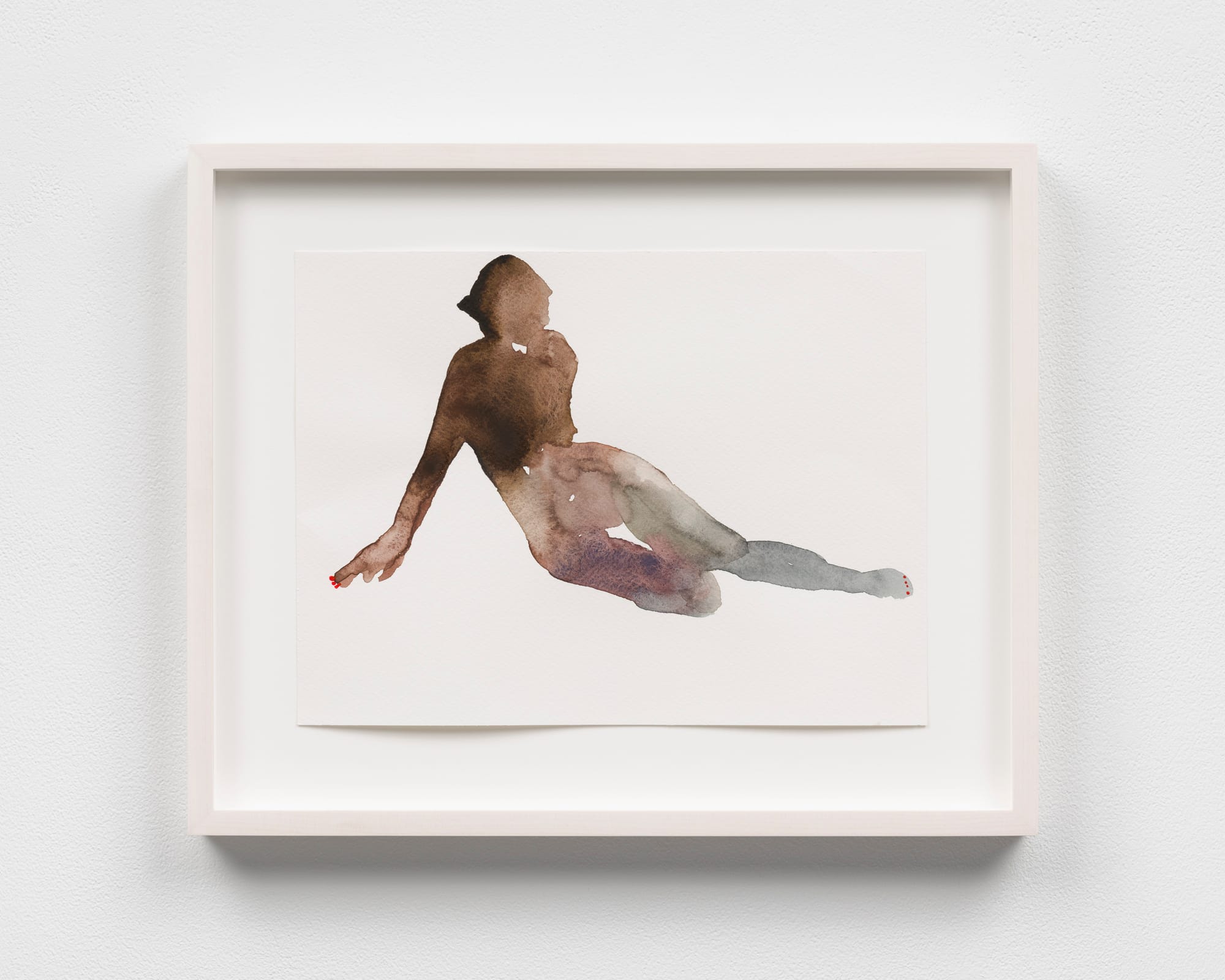
Danielle Mckinney, Forest for the Trees continues at Marianne Boesky Gallery (509 West 24th Street, Manhattan) through June 13. Danielle Mckinney: Shelter continues at the Norton Museum of Art (1450 S Dixie Hwy, West Palm Beach, Florida) through October 4.