The Black Photographers Who Exposed My Own Brainwashing
An exhibition at The Getty gave me the peculiar feeling of peeking behind a curtain in my own house and discovering new things about a topic I thought I knew well.
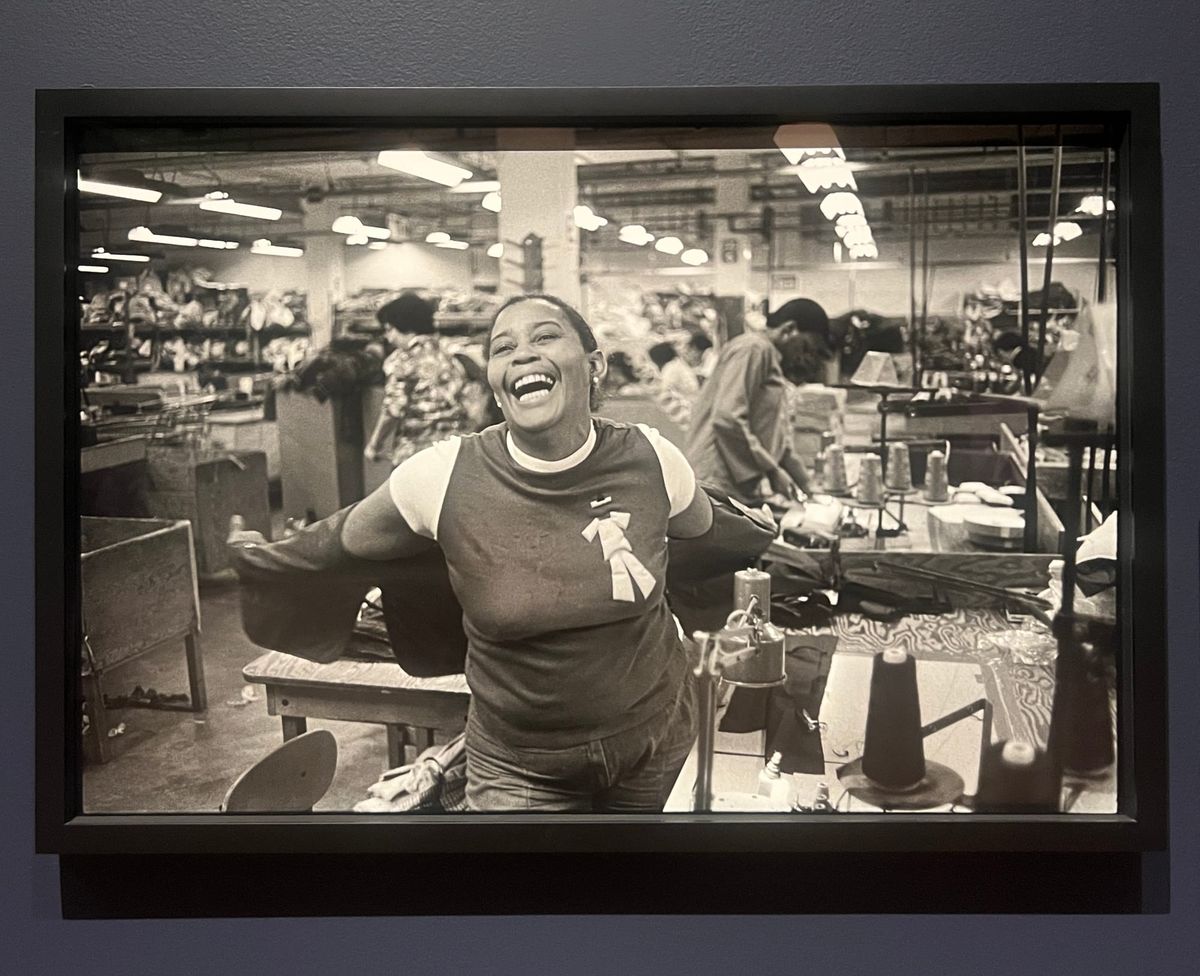
LOS ANGELES — “I’m a victim, brother. I’m a victim of 400 years of conditioning. The man has programmed my condition. Even my conditioning has been conditioned.” These lines — from a scene in Chameleon Street, Wendell B. Harris Jr.’s 1989 Black comedy drama — looped in my head as I took in Photography and the Black Arts Movement, 1955–1985 at the Getty’s West Pavilion. The exhibition gave me the peculiar feeling of peeking behind a curtain in my own house and discovering new things about a topic I thought I knew well.
The film scene, made famous by its use as the opening of “Brown Skin Lady” (1998) by the rap superduo Black Star, plays out as two men discuss how their restrictive expectations of Black beauty are the result of being “brainwashed” by society. Perusing the artworks featured at the Getty, I couldn’t help but feel something similar myself, but for different reasons.
Photography and the Black Arts Movement shines a light on those who literally reframed the Black American image, making its public presentation one of pride, beauty, strength, and artistic daring. Across over 200 photographs, the traveling show immerses viewers in the process of shaping change with pictures, the weight of artistic choices. Rather than focus on the works of the Black Arts Movement itself, the exhibition shows what it meant to document that movement, to immortalize the decisions its artists made along the way and, perhaps, offer context as to why they made them.
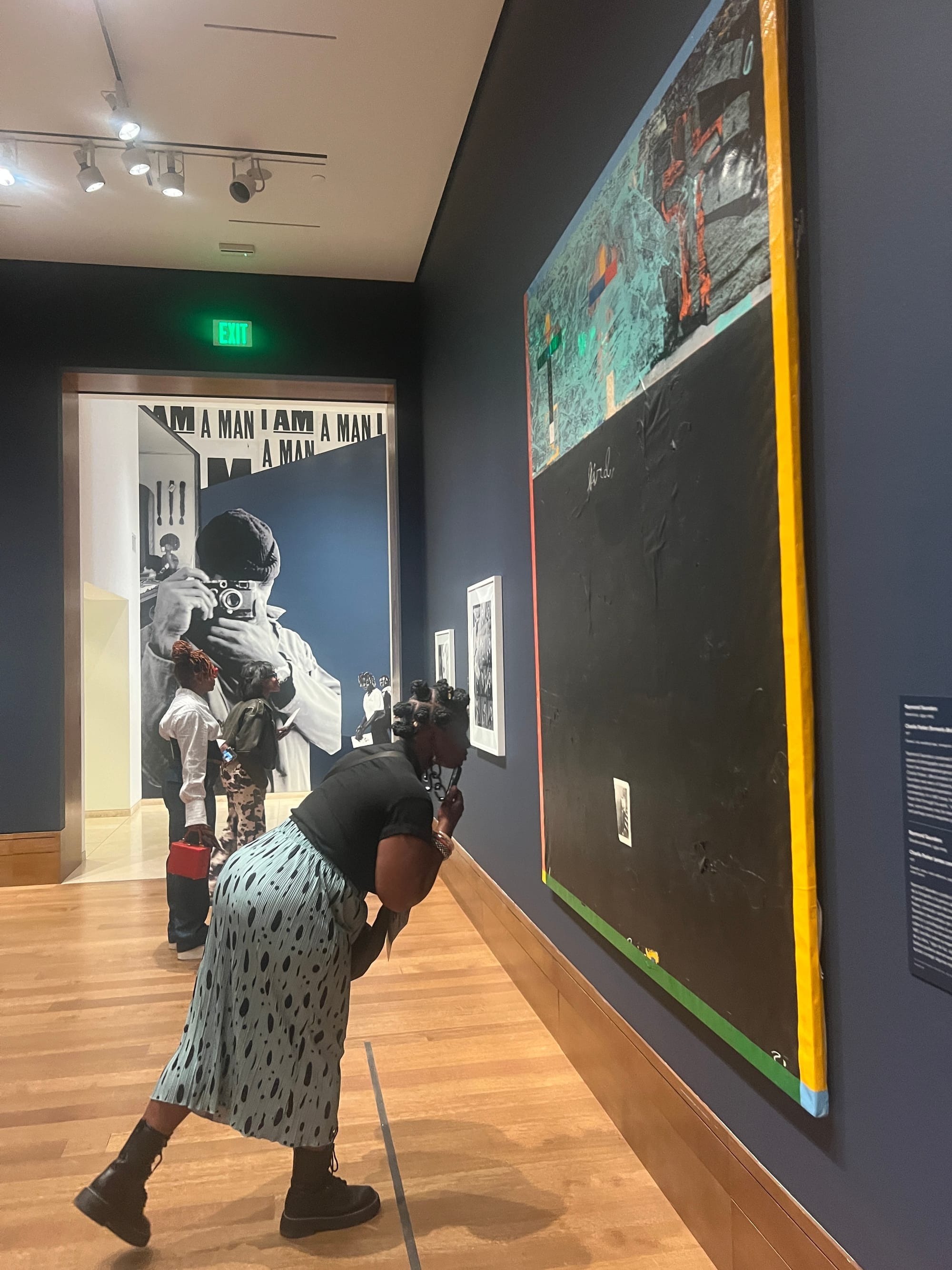
The exhibition is broken into eight themes: “Picturing The Self/Picturing The Movement,” “Fashioning The Self,” “Representing The Community,” “About Looking,” “Activism,” “In The News,” “Transformations in African Americans and Culture,” and “California Connections.” These themes are in conversation with each other, showing a demographic at a moment in which it seized the right to speak for itself, in its own voice. And that demographic has opinions about style and beauty, how it wants to be perceived, the kind of future it wants to usher in. As the show demonstrates, Black photographers eloquently packaged those statements into pictures to be printed, framed, and seen worldwide.
The show emphasizes the essence of photography's power: the pervasive belief that photographs are evidence. Photography serves as proof of existence, and in many cases, it lays bare the conditions of that existence. For Black folks, documentation has been one of the most effective tools in their liberation, as photographs cry out against the oppression of human beings. Captured images — moving and still — have played a critical role in the long list of “say their name” souls: Emmet Till, Rodney King, George Floyd, Sandra Bland, Philando Castille, Sonya Massey, and on and on. This exhibition holds the roots of that Black American photographic history while exalting the agency that the medium provides. It reminds viewers of the power we can wield in our own lives and how we are represented.
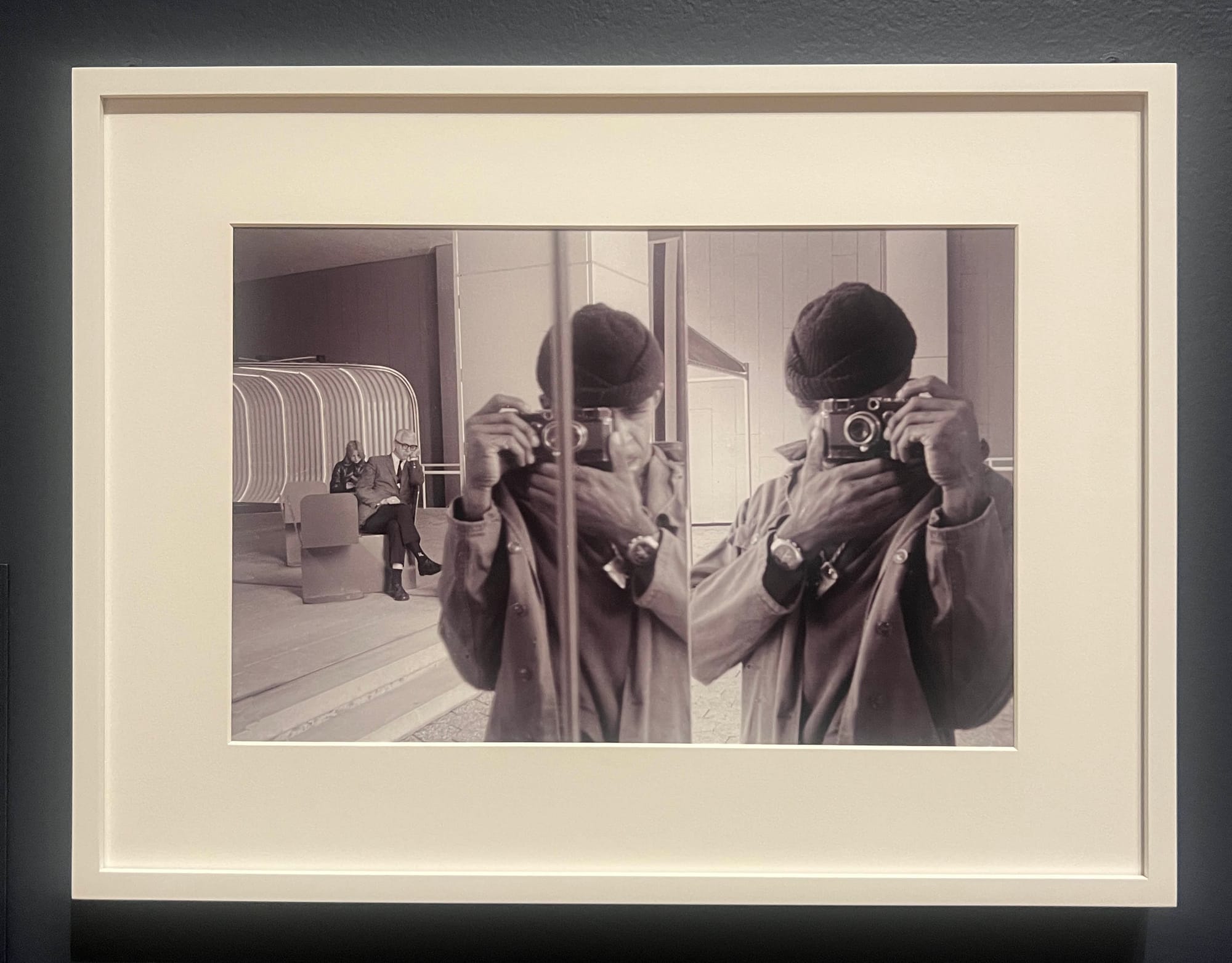
The exhibition features work by better-known Black photographers like Gordon Parks and Carrie Mae Weems, but this collection also highlights numerous other photographers who molded the steps upon which today’s Black image makers climb. It gives flowers to the individuals who framed iconic album photos, street photographers, abstract and experimental photographers, photojournalists, and more.
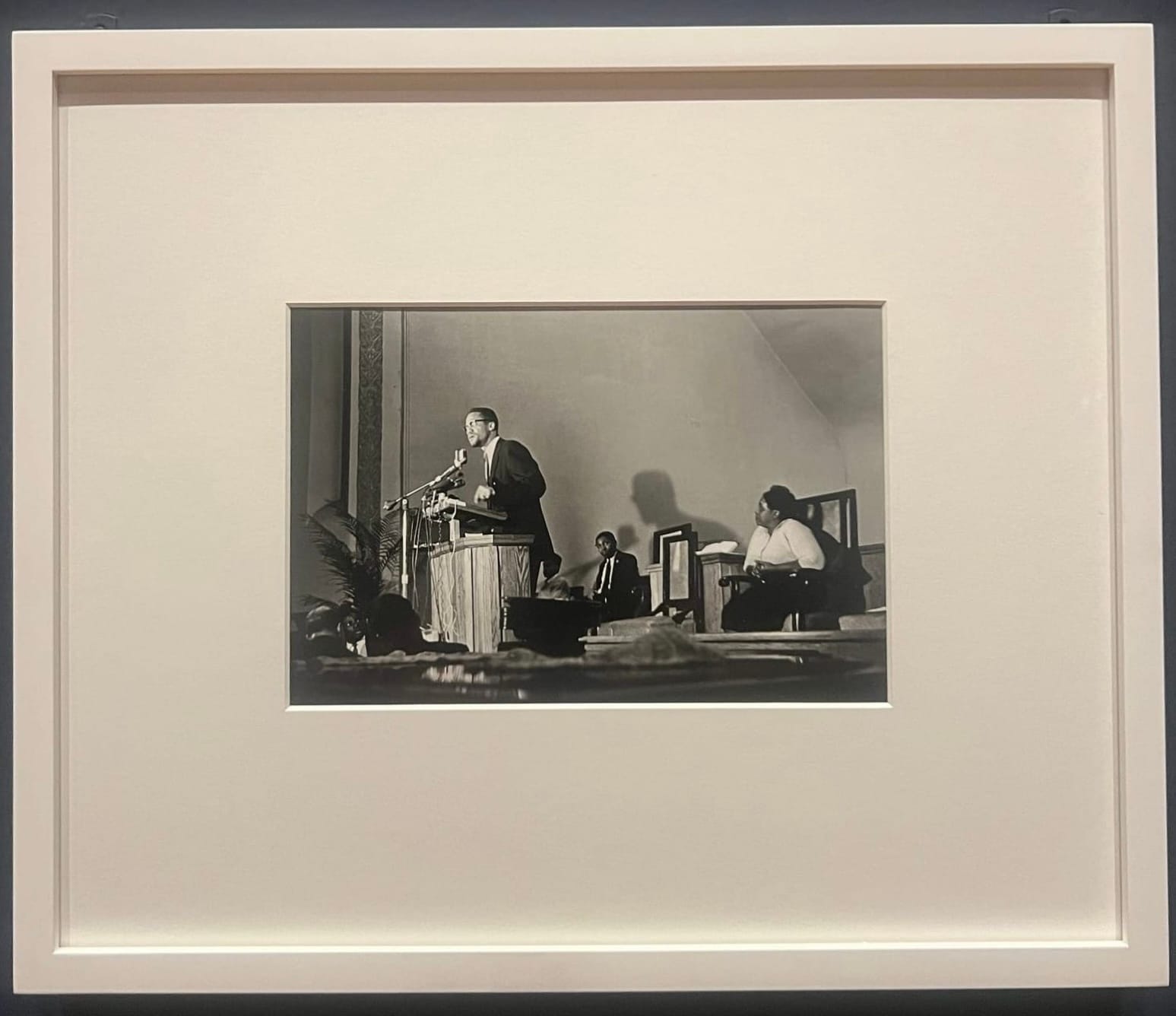
Photography and the Black Arts Movement packs a punch for its compact size. It encompasses a critical three-decade span from 1955 to 1985. (For context, that’s from a decade before minorities had the right to vote to the year Oprah Winfrey’s talk show achieved national syndication.) Through its works, one sees the evolution of an aesthetic of lionization. Photography serves as the medium through which we can see Malcom X’s righteous resolve behind a podium in 1964 — as shown in an image by Doug Harris — alongside the joy he exudes engaging with school children in 1961 (captured by Richard Saunders’s photojournalistic lens). We witness the spectrum of girlhood innocence, from an advertisement-ready, straight-haired little girl with a doll in Barbara DuMetz’s “Kraft Foods Advertisement” (1977) to Anthony Barboza’s “Watts, Los Angeles” (1970s), which depicts a gaggle of friends in beaded, boxed braids and casual jeans yukking it up on the street.
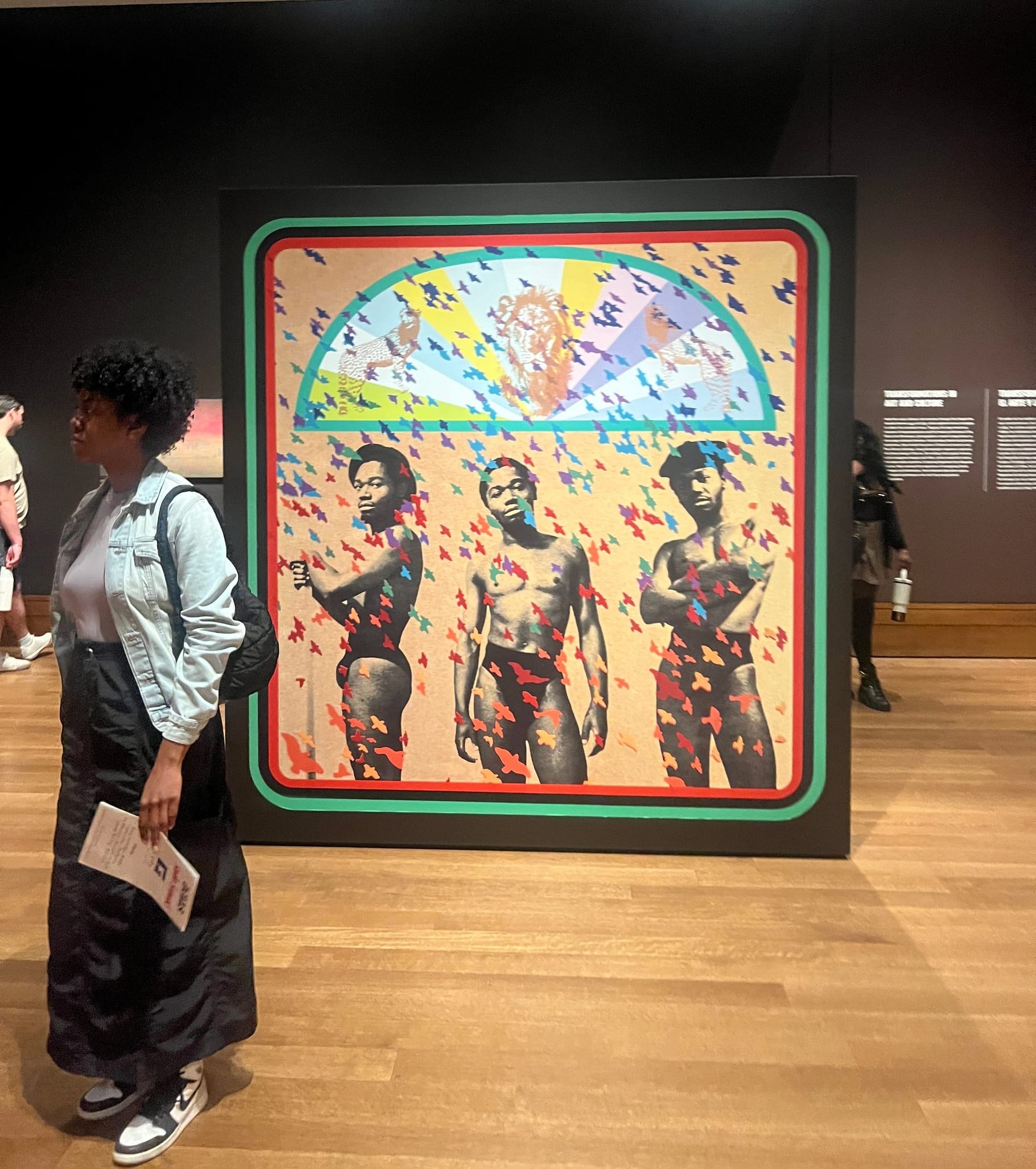
We see the progressive change in how a community sees itself. More importantly, as in Kwame Braithwaite’s “Untitled (Portrait, Reels as Necklace)” (1972) — which propels a vision of Black beauty while simultaneously displaying the tools needed to honor it — we see a community demanding the ability to make itself seen.
This is what I meant by bringing up Chameleon Street and my own brainwashing earlier. My idea of impactful Black photography from that time was so narrow, focused solely on TIME magazine cover images and the recognizable names I’ve been inspired by, rather than the whole host of individuals whose efforts collectively made those names recognizable. This exhibition provides a space to consider how art is dangerous, as Toni Morrison once said. It has the power to shake you out of whatever you’ve accepted as normalcy. This collection of works documents a piece of the roadmap for how Black artists, visionaries, and regular folks shaped their image in order to realize their imagined future. Photography has two purposes: first, to show; second, to continue showing. A stolen moment in time is rarely just for that time. These photographs are summoning us once again.
Photography and the Black Arts Movement, 1955-1985 continues at The Getty Museum (442 South La Brea Avenue, Los Angeles) through June 14. The exhibition was organized by the National Gallery of Art, Washington, DC.