How AIDS Activists Turned Graphic Design Into a Weapon
In the 1980s, a band of fed-up young men wheat-pasted New York with graphically stark flyers, posters, and stickers, demanding action.

In the mid-1980s, as the AIDS crisis simmered hotter and hotter in the apartments and bathhouses of New York, a band of frightened, fed-up young men took to copy shops around town. They were watching friends, partners, and lovers waste away with a mysterious virus, blamefully dubbed the “Gay Plague” by some. These kids knew what they were doing when they took jobs at Kinko's. Clandestinely running the printers after hours — a so-far-indifferent corporate America owed the public more than the cost of a couple print-outs, they reasoned — they produced graphically stark, zanily colored flyers, posters, and stickers. In other words, a PR toolkit. Then, they wheat-pasted New York with abandon, demanding action.
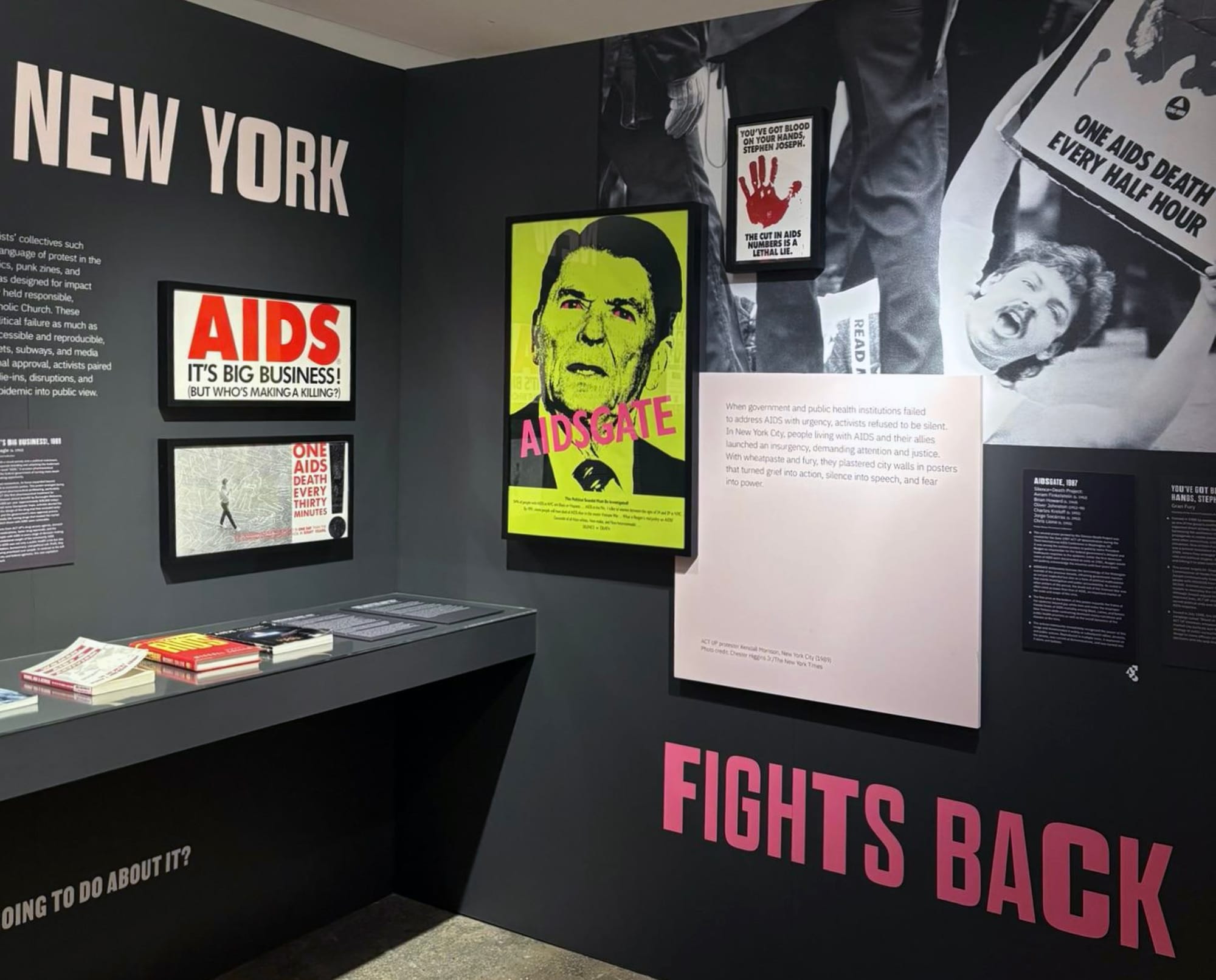
Ian Bradley-Perrin, curator of Love and Fury: New York’s Fight Against AIDS at Poster House in Chelsea, showcases an apparatus for advocacy. The exhibition, set in this jewel of a museum’s small but sizzling subterranean space, traces how graphic designers — many of whom were themselves affected — wrestled AIDS into the hearts and minds of America. “Those activists figured out who the gatekeepers in the media were,” said Bradley-Perrin, an HIV-positive, socio-medical historian. “They imagined how we can create visuals and images that will grow our numbers but also speak to the general public.”
Poster House presents the story in four parts. It can be viewed in either direction because, as Bradley-Perrin puts it, “In the context of AIDS, everything was happening all at once.” The first explores early grassroots efforts to educate and champion safe sex. The wall space further down shifts to action-focused designs and colors generated by feisty agitprop groups like the AIDS Coalition to Unleash Power (ACT UP) and Gran Fury. The aim: Target political inaction and unequal access to healthcare. The last two parts, “The Power of Design” and “The City that Danced for its Life,” illustrate tactics for mainstreaming activism to generate funds, grow gala culture, and even bring joy.
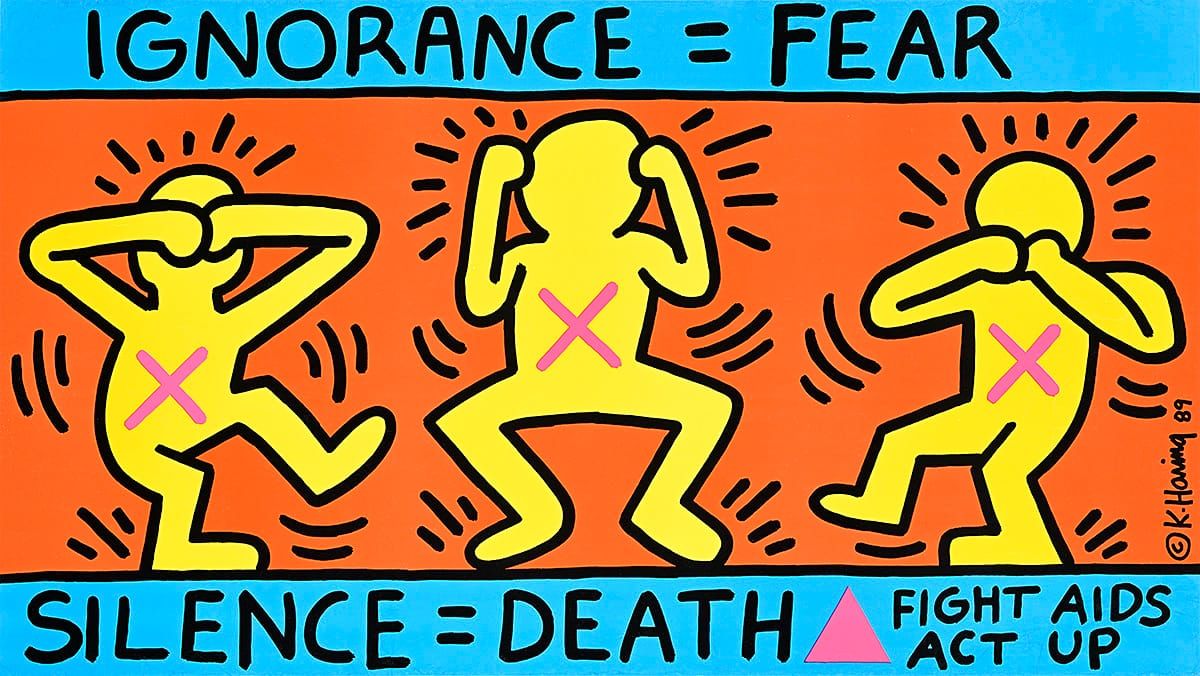
One of the quintessential works, created by a design group aiming for undeniable impact, blares “Silence = Death.” Its completely black background with a central pink triangle, a repurposing of the Nazi symbol for LGBTQ+ prisoners, leaves an impression of charged foreboding. Keith Haring took this message a step further with his classic “Ignorance = Fear” poster, featuring three bold-lined figures with crossed-out tummies and raised dukes, set against neon orange and cobalt blue, New York’s classic color scheme. It’s nice to see these two posters among the hits in the show, as without them, the NYC story of the AIDS agitprop machine would have felt incomplete.