In Two Chicago Exhibitions, Liberation Takes the Floor
Shows at MCA Chicago and Wrightwood 659 chart a path from colonial dispossession to the possibilities of dance, music, and community.

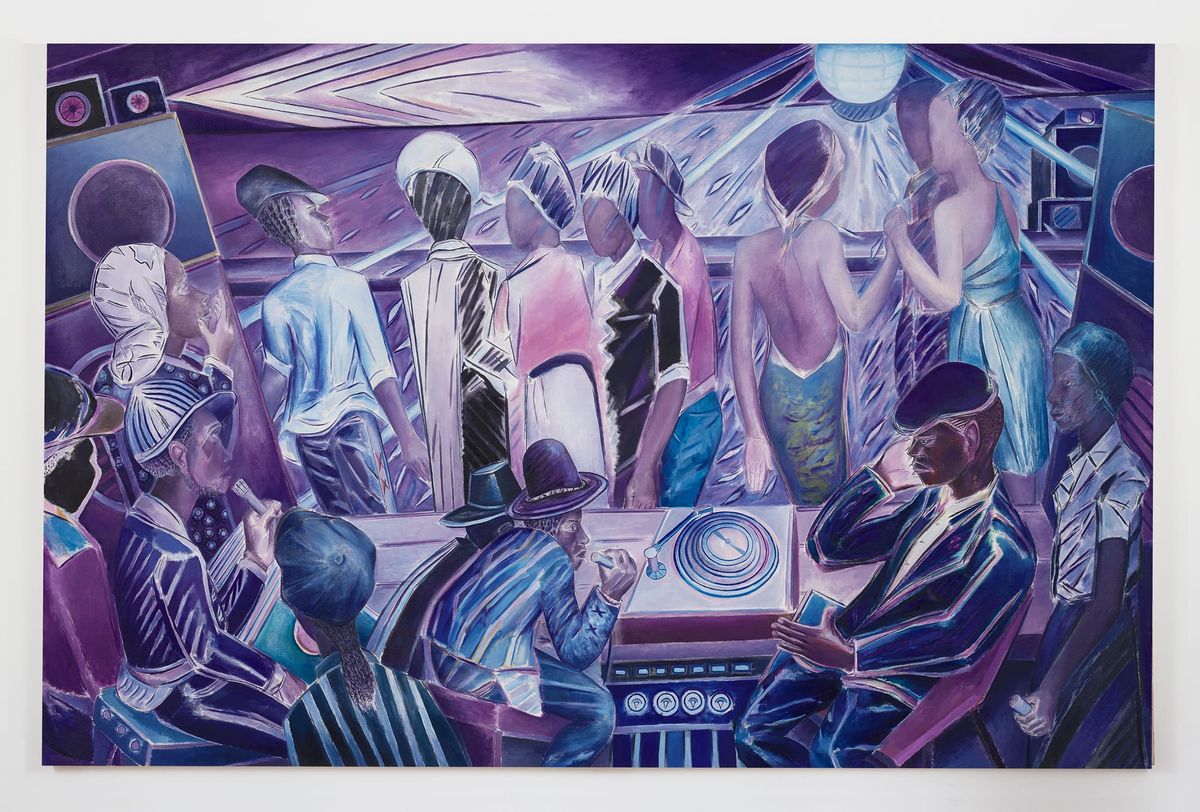
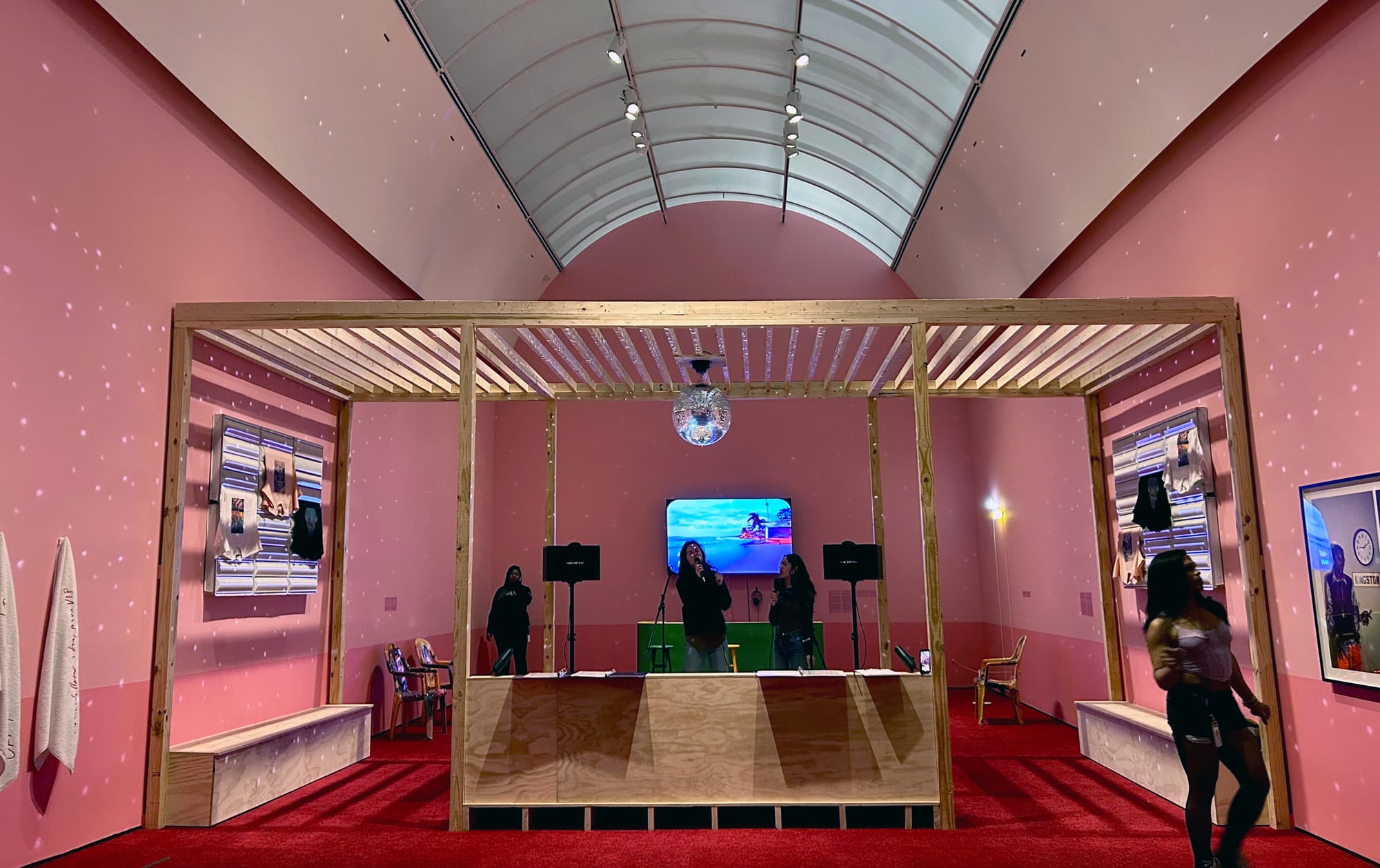
CHICAGO — An eerie, operatic, disembodied chorus floats to the front of Dispossessions in the Americas: The Extraction of Bodies, Land, and Heritage from La Conquista to the Present at Wrightwood 659. This is “Coro de plantas extintas” (2020) by the Ecuadorian artist Saskia Calderón, a video performance mourning the loss of endangered and extinct plant species. Ten minutes down the coast of Lake Michigan, another exhibition also opens with sound: A honeyed voice croons a Selena song from somewhere deep inside of Dancing the Revolution: From Dancehall to Reggaetón at the Museum of Contemporary Art Chicago. Is this a recording of Selena herself, or someone skilled singing karaoke? It is, as it turns out, “Karaoke El Nuevo Horizonte” (2014/25) by Puerto Rican artist Radamés “Juni” Figueroa; as part of the work, visitors can sing karaoke (dancehall, reggae, reggaetón, salsa, and other Caribbean genres) during the museum’s free hours.
The moods here are strikingly different, but the two exhibitions pair artfully, complementing each other’s sensibilities and scope. “Coro de plantas extintas” sets the tone for Dispossessions in the Americas as solemn — mourning something taken, in this case, autonomy. “Karaoke El Nuevo Horizonte,” on the other hand, with its glittering disco ball, Miami windows, and flamingo pink paint, celebrates something given — joy and togetherness — as does Dancing the Revolution as a whole. Dispossessions in the Americas poses a problem: The expansion of European colonialism since the turn of the 16th century catalyzed widespread dispossession in the form of deprivation of land, culture, and language across the Americas. The show's more than 40 works critique and unsettle this problem; they begin to rock at its foundations. Dancing the Revolution, meanwhile, keeps rocking the colonial boat until it capsizes. It offers a solution to the problem that the former poses: Dancehall and reggaetón, explored by around 50 contemporary artists, comprise a revolutionary practice for collective liberation.
The works in Dispossessions in the Americas range from bearing witness to the deprivations of colonialism to poking holes in the fabric of its consequences. “Burial Pyramid” (1974) by the late Cuban artist Ana Mendieta — known for her singular “earth-body” sculptures — feels, at first glance, the most passive. It was also, to me, the most moving. For three minutes and 17 seconds, on Super 8 color film, Mendieta lies nude and supine beneath a mound of earth and stones in Oaxaca, Mexico. Look closer, though — she’s not lying still. She’s breathing, deeper and deeper, until the stones roll away and she’s free. The small, intimate photographs of the series Exilio (1988–2007) by the Argentinian initiative Archivo de la Memoria Trans, too, may seem like mere documentation. The scenes are simple: tossing bread crumbs to swans, dozing off on the train, blowing a kiss to the camera. But the act of archiving — especially the lives of these trans women who were forced into exile in the ’90s in the aftermath of the Dirty War — preserves their histories, often excluded from dominant institutional narratives.