Inside the Mind of an Antiquities Looter
"The Man Who Stole the Gods" author Matthew Campbell discusses Western collectors' rapacious hunger for ancient Cambodian art and the sheer violence it took to satiate it.

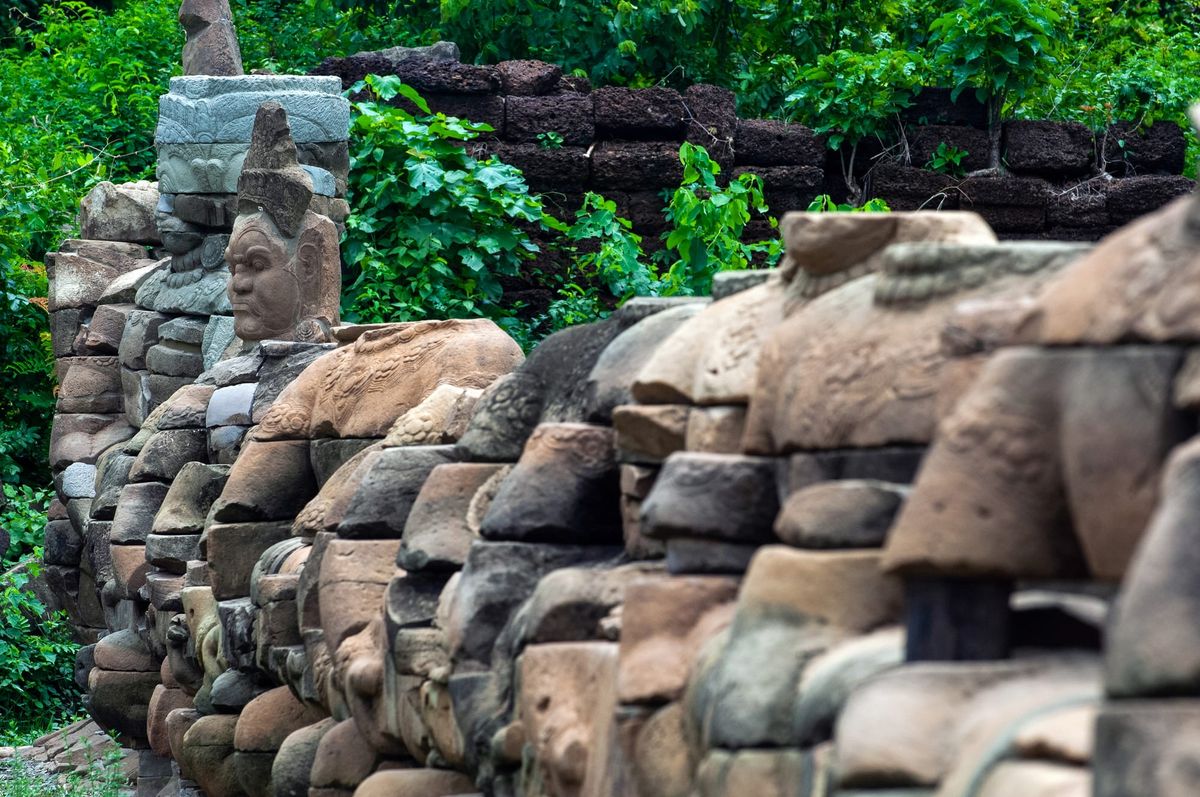
Matthew Campbell, a reporter for Bloomberg Businessweek, spent years digging into sources to write The Man Who Stole the Gods: A True Story of War, Obsession, and a Global Art Conspiracy. His book reads like a thriller while laying out the entwined histories of the Cambodian genocide and the rapacious hunger of Western collectors for the images of Hindu and Buddhist deities created by the sculptors of the Khmer Empire during the 9th to 15th centuries CE in what is now Cambodia.
Campbell’s book focuses on Douglas Latchford, an Englishman who moved to Bangkok in the late 1950s and became one of the main conduits for looted Khmer antiquities. He directed every aspect of the trade, from telling looters where to dig to placing the finds with wealthy collectors. Sometimes he kept these buyers in the dark about his sources, but Campbell reveals letters and other evidence showing that Latchford often boasted about exactly where he got his treasures. In 2019, the US Attorney’s Office for the Southern District of New York indicted Latchford with wire fraud, smuggling, conspiracy, and other trafficking charges, but he died a year later at age 88 before his trial could begin.
As an art crime researcher, I’ve long followed Cambodia’s fight to reclaim its sacred heritage from the Metropolitan Museum of Art in New York and the museum’s determined resistance (including kicking out a Cambodian dancer trying to honor her gods). After I tore through my advance copy of The Man Who Stole the Gods, Campbell agreed to an interview via Zoom. This conversation has been edited and condensed.
Hyperallergic: How did one of the world’s most significant collections of Cambodian antiquities end up at the Metropolitan Museum?
Matthew Campbell: The museum’s legendary director Thomas Hoving, who basically invented the idea of the museum as we know it today, wanted his institution to grow and change with New York City — which meant, in the 1970s, expanding its tiny Southeast Asian art collection. The Hare Krishna movement had originated in Tompkins Square Park. The Beatles’ guru, the Maharishi Mahesh Yogi, had come to speak in the city and set off a craze for Transcendental Meditation. The Met needed to stay relevant.
Hoving hired a curator named Martin Lerner and told him to use the vast resources of the museum to build a collection. He did it spectacularly, and with a particular emphasis on Cambodia, since that’s where he could get large sculptures — the real stunners for the galleries. In the process, The Met came to acquire a lot of pieces with, I think it’s fair to say, wildly illicit origins.