Maia Chao Performs the Museum
She approaches the museum less as a neutral space than as a structure that quietly trains behavior and participation.
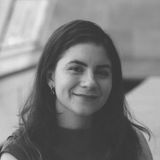
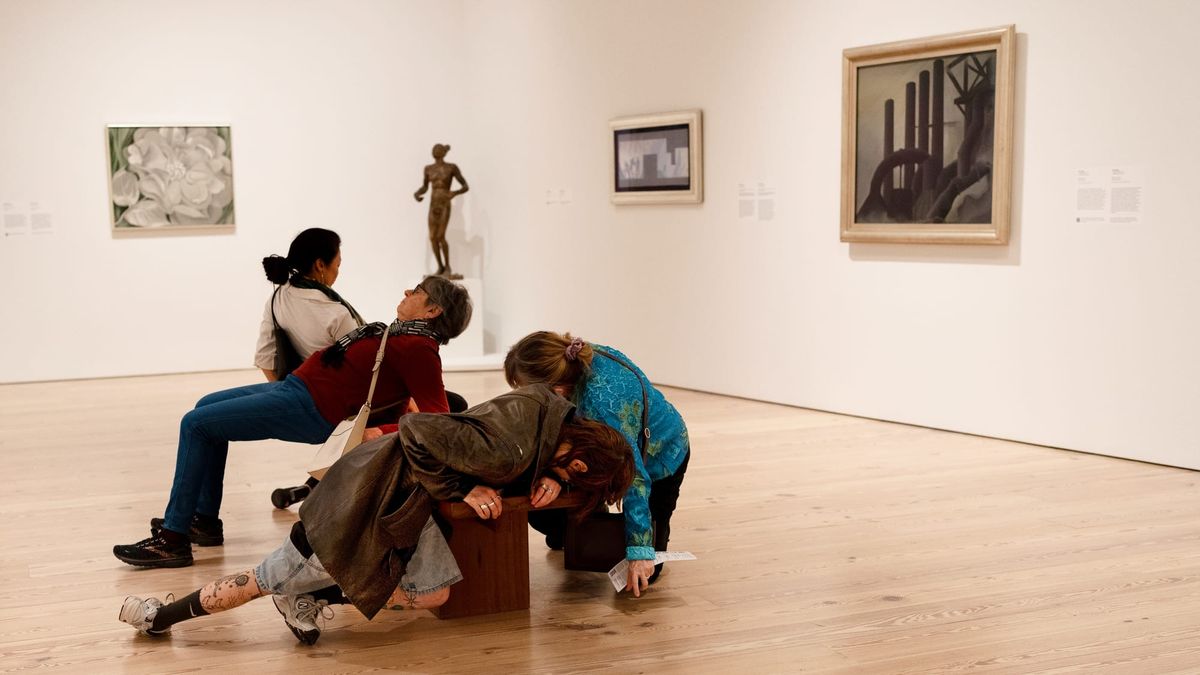
There’s a whole choreography surrounding art: the bodily habits of spectatorship, the invisible labor of maintenance and care, and the ways artists are expected to present themselves to make it professionally. Across performances, participatory projects, and interventions, artist Maia Chao approaches the museum less as a neutral space than as a structure that quietly trains behavior and participation. Later this week, as part of the programming for the 2026 Whitney Biennial, Chao will activate the seventh-floor galleries with her performance "Being Moved."
Chao’s projects frequently echo the canonical gestures and concerns of institutional critique. “My Business (Cards)” (2017) invokes Adrian Piper's “Calling Cards (I am black)” (1986) through the familiar format of the business card, responding to the racializing question, “What are you?” with a densely diagrammed, multiethnic genealogy that both satisfies and satirizes the demand for racial legibility. One upcoming photography project developed with Times Square Arts examines the forms of maintenance labor required to preserve that commercialized public space, recalling aspects of Mierle Laderman Ukeles’s Maintenance Art.
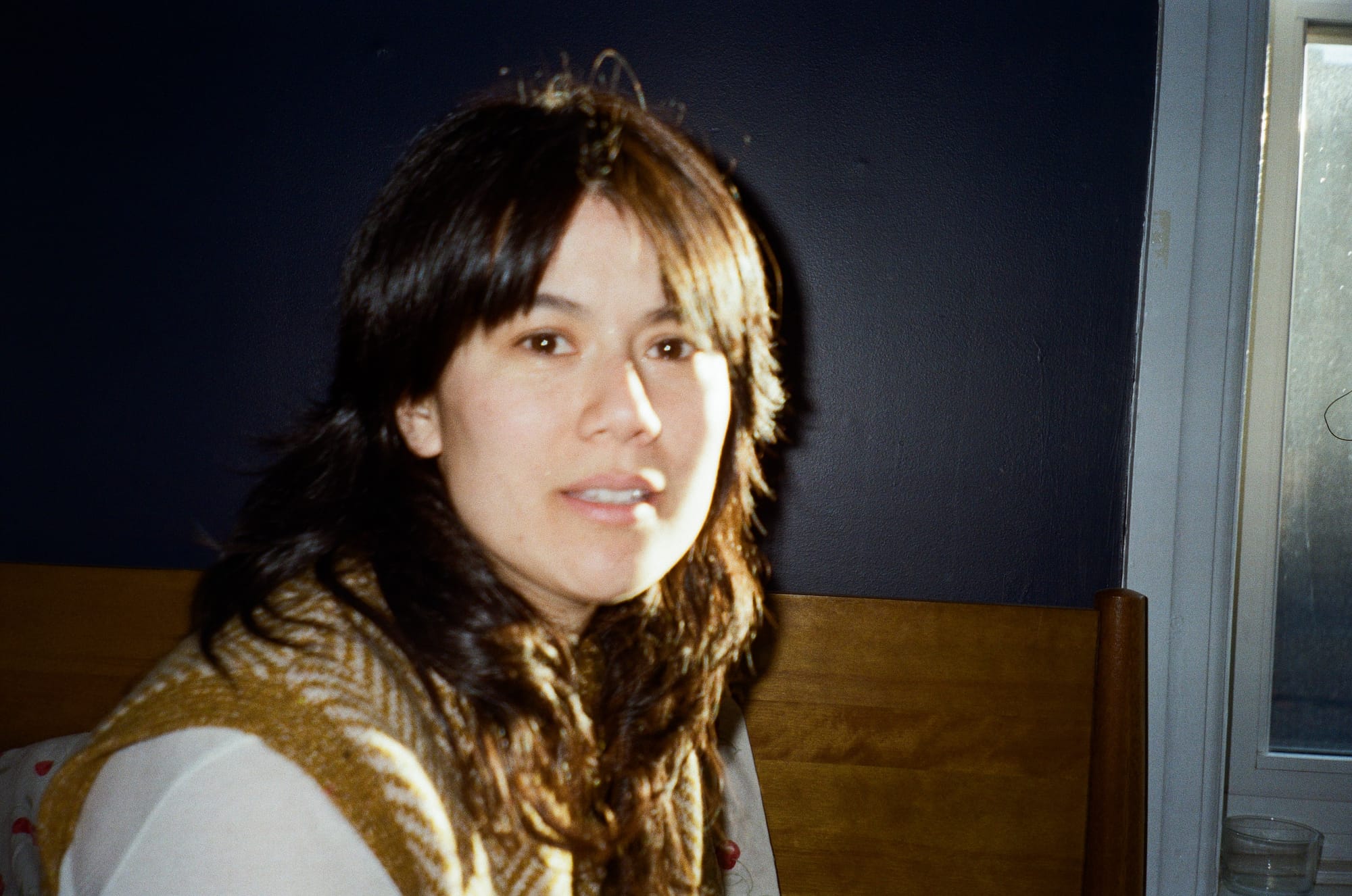
In a conversation with Hyperallergic over Zoom over the weekend, Chao — caught between rehearsals and technical runs ahead of the opening performance on Thursday, May 14 — spoke with an earnestness that resisted easy cynicism. She described her sensitivity to institutional labor and artistic precarity as “deeply informed by growing up with artist parents” in Providence, Rhode Island, where she went on to study cultural anthropology at Brown University, drawn to questions surrounding human values and social scripts. She spoke of watching firsthand the struggles of sustaining artistic practice, contending with the privilege of having the opportunity to pursue creative interests, and navigating the tension between artistic autonomy and institutional dependence. “[There is] something so painful about the vulnerability of art making,” Chao said, reflecting on the contradictions of making politically engaged work within museum structures and the tension between art’s capacity for truth and the systems of wealth and power through which it circulates.
Chao’s Whitney Biennial performance explores the “theatricality and choreography of a museum visit,” according to the description on the Whitney’s website, and "the gap between the fantasy of profound encounter and the ambivalence of spectatorship." It feels related to Andrea Fraser’s seminal Museum Highlights: A Gallery Talk (1989), in which she parodies the overly eager docent, though here, Chao dramatizes the visitor. In the context of a biennial that has prompted mixed responses and renewed debate about what the recurring exhibition can meaningfully offer, Chao's performance turns the question back to us, asking: What do we expect art to do, and what do we mean when we ask it to move us?
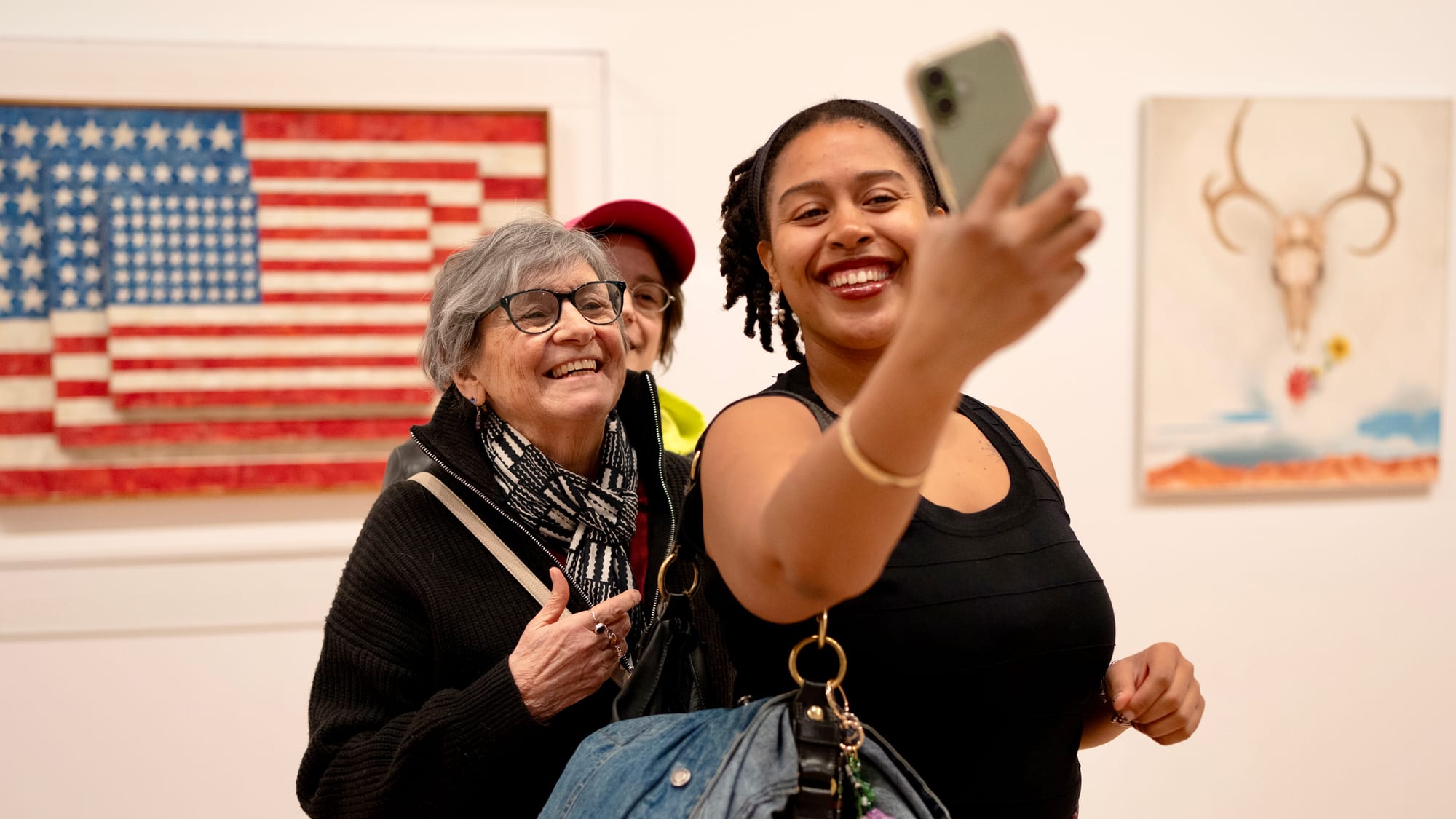
"Being Moved" grew out of years spent thinking about spectatorship, institutional access, and the bodily conditions of encountering art — concerns that trace back to her earlier project “Look at Art, Get Paid” (2015–20), in which she invited people who do not visit art museums to attend as paid “guest critics.” They offered accounts of what it looked and felt like for a newcomer, commenting on the intimidating visibility of security guards, the absence of museum outreach in their neighborhoods, the confusion produced by institutional language and signage, feelings of being out of place. Rather than treating expertise as something held exclusively by curators or critics, the project suggests that those most excluded from museum culture often perceive its structures with particular clarity. Institutional critique has often been faulted for circulating primarily among insider audiences — or reading like an inside joke for those already fluent in its codes — but what feels significant here is that the project moved beyond symbolic critique to produce a tangible roadmap for change. Indeed, “Look at Art, Get Paid” contributed to changes in the RISD Museum’s policies surrounding acquisition, advertisement, signage, translation, and more.
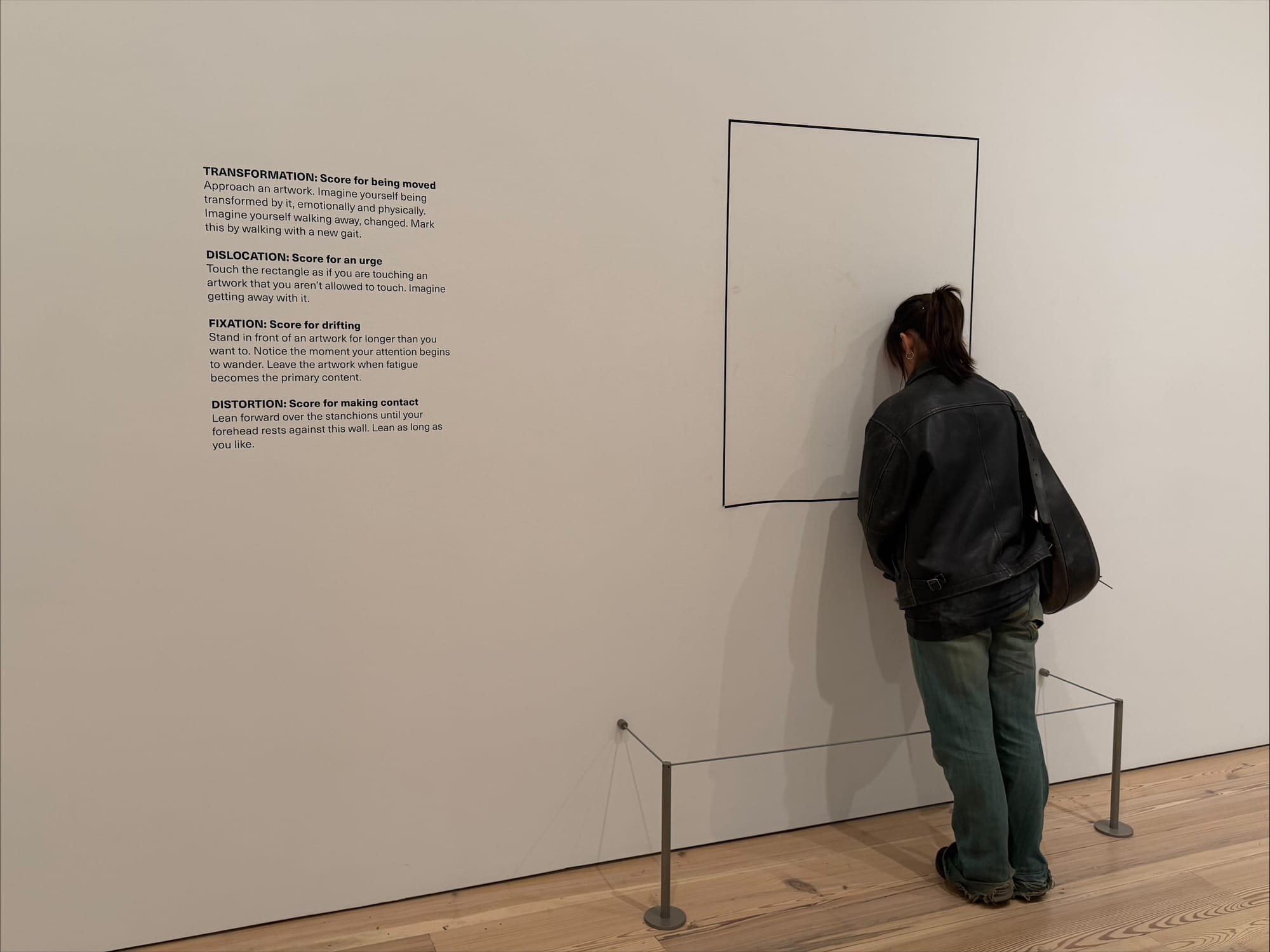
Reflecting on that project, Chao describes becoming increasingly attentive not only to who enters museums, but to the systems and behavioral codes that shape the experience of being inside. Included in the Whitney Biennial is Chao’s “Scores for the Museum Visitor” (2026), an empty rectangle painted on the wall, with instructions such as “Touch the rectangle as if you are touching an artwork that you aren’t allowed to touch. Imagine getting away with it.” The viewer is given permission to perform one of the museum’s clearest prohibitions. Yet the work’s tension lies precisely in the fact that the transgression is only partial. The rectangle is not a protected artwork, but a stand-in for one; the touch is permitted, but only by imagining the act as a violation. Museums are disciplinary spaces, often organized more around restriction than participation: Do not touch, keep your distance, queue here, lower your voice, move along. Chao’s instruction turns attention toward the internalization of these codes.
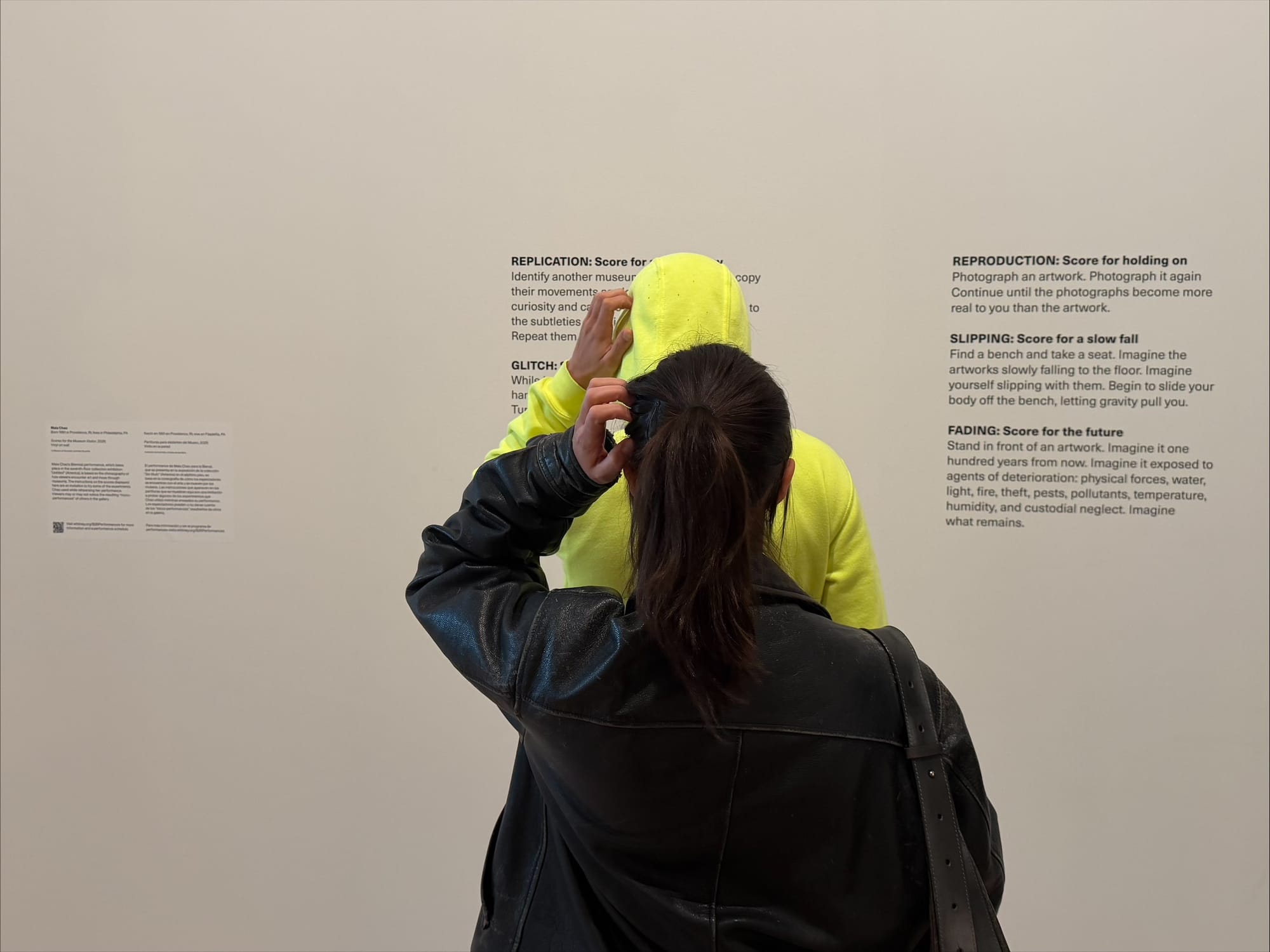
In "Being Moved," often unconscious gestures like leaning toward a painting, turning one’s head, and slowing one’s pace become exaggerated through synchronization and repetition. “You see two people doing it in sync,” Chao explains, “and it kind of denaturalizes it.” The effect is less a parody of museum behavior than a defamiliarization of it, making spectators newly aware of how much conduct is already performative. Drawing on Ben Lerner’s 2011 novel, Leaving the Atocha Station, Chao reflects on the subtle pressure museumgoers feel to experience aesthetic transcendence and the uncertainty that emerges when they fail to. Throughout "Being Moved," “visitors” faint, collapse, drift, or erupt into noise, drawing attention to the bodily realities of visiting a museum, like fatigue and thirst. Through this choreography, Chao suggests that the very atmosphere such institutions cultivate for contemplation — silence, restraint, careful spectatorship — can also inhibit the kinds of emotional encounters they aspire to produce.
But "Being Moved" also presses on the idea of art as a catalyst for social or political change, and on the museum’s tendency to present itself as the stage for that possibility. In one sequence of "Being Moved," “tour guides” begin speaking about Gaza before two frazzled “museum administrators,” in Chao’s words, intervene and usher them away from the gallery. Yet the moment is itself institutionally sanctioned: a scripted performance of censorship unfolding with the institution’s own permission. The scene arrives at a moment of mounting criticism surrounding the Venice Biennale and the limits of institutional solidarity, particularly the disjunction between publicly staging political consciousness as a cultural position and assuming the institutional risks that genuine political commitment might entail. Chao appears less interested in affirming the museum as a vehicle for political awakening than in asking whether art can still produce forms of awareness and collective attention that remain partially resistant to institutional management.
Institutional critique and the Whitney Museum have long been entangled, from the Independent Study Program (ISP) — often historicized as an incubator for artists like Fraser and Gregg Bordowitz — to past biennials that readily embrace art critical of institutions, even as the museum has struggled to address its own structural politics. Last year, the Whitney suspended the lSP, weeks after it canceled a performance on Palestinian mourning organized by the cohort. For its 2019 Biennial, the Whitney commissioned Forensic Architecture’s 15-minute video “Triple-Chaser,” which traced how then-vice chairman Warren Kanders’s company, Safariland, manufactured tear gas used globally in anti-protest and border control operations. The work brought renewed scrutiny to Kanders’s position at the institution and contributed to sustained protest campaigns that culminated in his resignation. As in the case of Chao's “Being Moved,” the work's critique is negotiated through the museum's structures of permission and display. Still, institutions increasingly ventriloquize dissent through the artists they invite in, allowing critique to surface without fully speaking or authoring it themselves.
But for Chao, that compromised terrain between dissent and institutional accommodation is also the material reality under which performance art often operates, dependent as it is on museum infrastructure, labor, and invitation. Acutely aware of the paradoxes of institutional critique, she does not position herself outside these contradictions. Instead, Chao acknowledges the uneasy position of “collaborating with the institution and antagonizing it.” The ambivalence feels central to the work, and to Chao’s critical practice. “There’s a complicity,” she reflects. “It requires participation, as opposed to absolute withdrawal from an institution.”
Maia Chao's "Being Moved" will be performed at the Whitney Museum of American Art (99 Gansevoort Street, West Village, Manhattan) as part of the 2026 Whitney Biennial.