Michaelina Wautier Finally Known by Her Name
For centuries, her masterpieces were misattributed to male painters. A new exhibition at London's Royal Academy corrects the record.

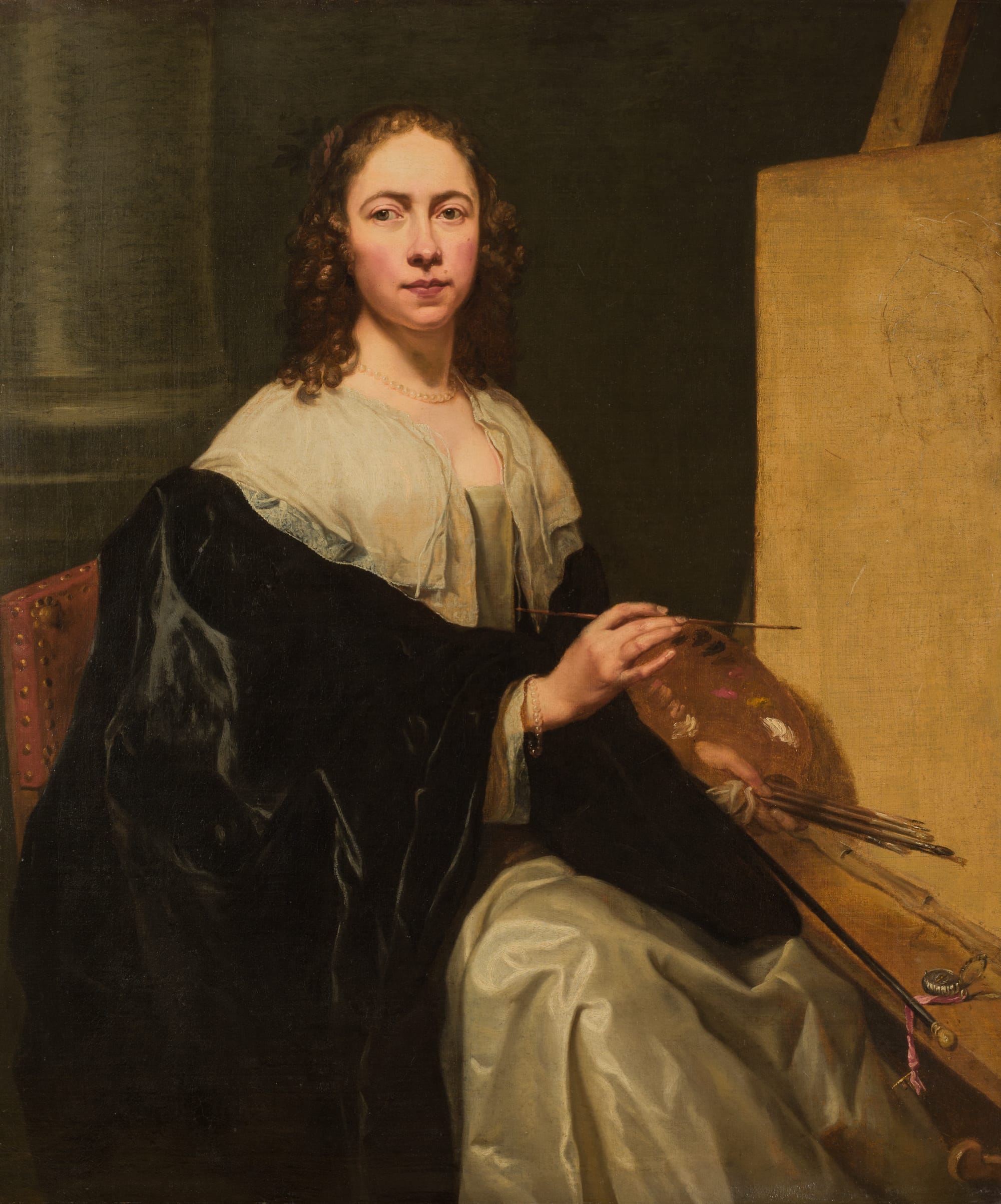
LONDON — The most remarkable aspect of the Royal Academy’s newly opened monographic exhibition on Michaelina Wautier (1604–1689) is its rediscovery of a talent on a par with the likes of Van Dyck and Rubens. Despite apparent success and recognition during her lifetime, the artist seemingly flew undetected — or, more accurately, misattributed — beneath our noses for centuries.
Wautier is an art-historical anomaly; working in mid-17th-century Brussels, she spans wide genres from flower pieces to portraiture all the way up to grand, male-dominated history painting, excelling throughout.
Her versatility defied the contemporary confinement of women to decorative or floral work — then seen as “lower” genres in the hierarchy of painting — preventing easy categorization or attribution. More significantly, however, it is her sex, and ingrained societal norms, that have obfuscated her position in the art historical canon. The situation echoes that of Artemisia Gentileschi in similarly patriarchal Italy, who trained under her father, Orazio Gentileschi, and had many of her paintings subsequently misattributed to him. (Wautier likely shared a studio with her brother Charles, to whom her work was often falsely credited.)
Women were excluded from studio art classes, and therefore access to live nude models; despite Wautier signing two of her pieces “invenit et fecit” (“invented and made”), historical appraisals denied her authorship based on the improbability of a woman so accurately rendering the twisting nude flesh of a work like “The Triumph of Bacchus” (1650–56) having been denied the means to study it. Indeed, “The Triumph of Bacchus”, listed in the collection of Archduke Leopold Wilhelm of Austria, was for centuries assumed to be the work of a male painter. The situation is compounded by scant biographical documentary evidence, meaning that Wautier’s paintings are generally all we have had to go on.
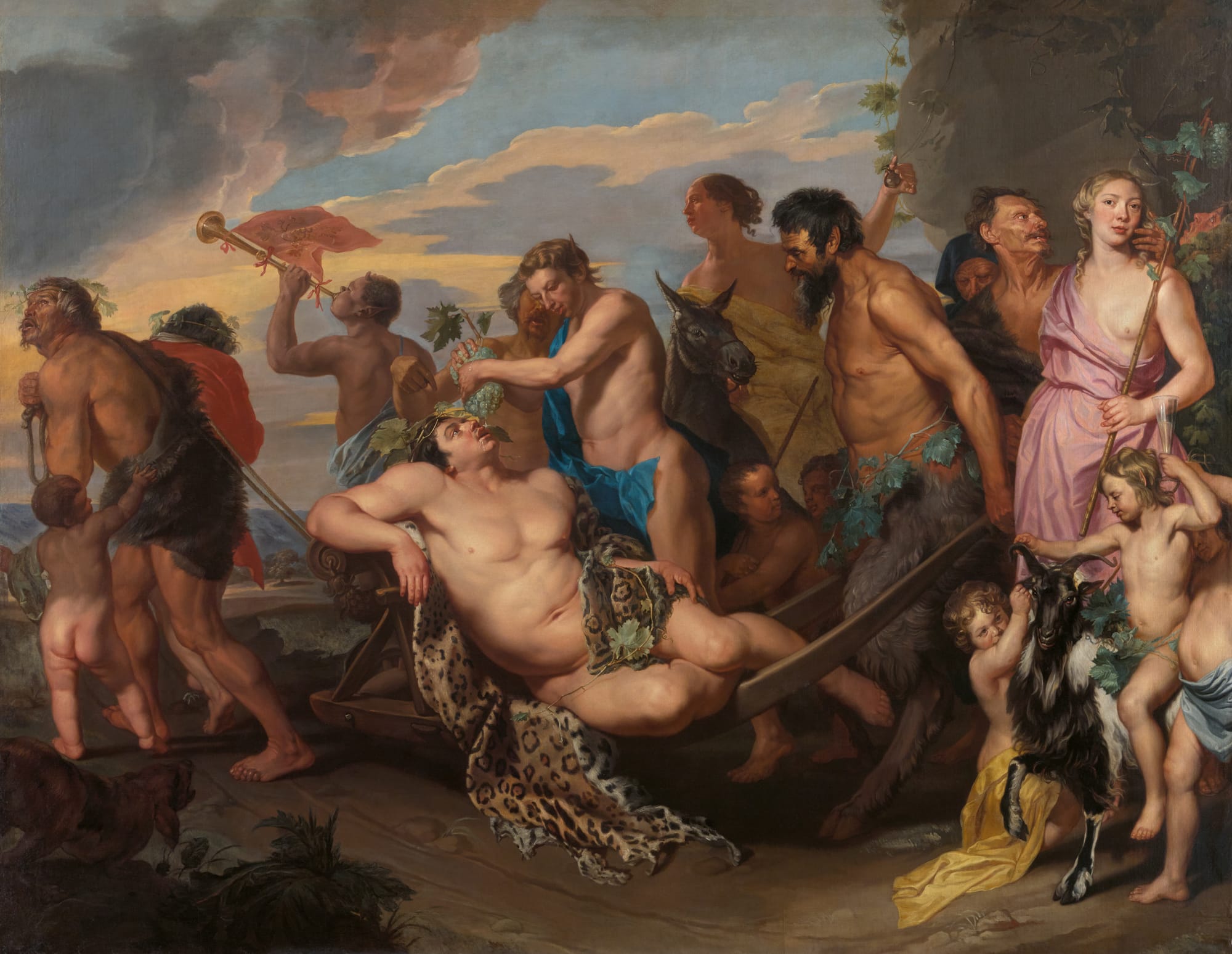
It was the reattribution of the “Triumph of Bacchus,” presented by curator Gerlinde Gruber at Vienna’s Kunsthistorisches Museum in 2009, alongside investigative research of art historian Katlijne Van der Stighelen of KU Leuven, that turned the tide in recent years. This culminated in Wautier’s first monographic presentation in Antwerp in 2018, a joint enterprise between the Museum aan de Stroom (MAS) and the Rubenshuis. Such consistently high quality across genres in work made by one hand — not to mention a previously unrecognised one — was nothing short of astounding. The exhibition included the freshly reattributed “Everyone His Fancy” (c. 1655) and presented the case for Wautier’s authorship of a series known as “The Five Senses” (1650), now considered to be one of her most important works; in it, the senses are allegorised as different boys engaging in everyday activities, flipping a gendered thematic tradition on its head.
Most exciting about such monographic shows is their place in ongoing historiography. Since the Antwerp exhibition in 2018, art historians including Van der Stighelen, Jahel Sanzsalazar, Jeffrey Muller and their teams have expanded on and driven research into Wautier’s changing oeuvre. A key difficulty researchers face in piecing together her presence in history is the inconsistency with which Wautier was referred to in name: for example, she’s often listed as “M Wouters” in historic auction catalogues. In this respect, ongoing work into the digitization of documentary sources, such as auction catalogues and collection inventories, has facilitated better mapping of potential clues and leads. Building the picture of Wautier, or rather the evidence supporting her existence, movement and activities, is to better understand her social and intellectual milieu, and therefore the context in which the paintings were created.
This year’s solo exhibition at the Royal Academy and Kunsthistorisches Museum represents the next stage in the process, where visitors may participate in the rediscovery of Wautier in real time. It is hard to overstate the rarity of uncovering such undisputed talent in an artist simply “disappeared” from art history. “It’s a genuine story of rediscovery — it’s become a bit of a cliché to say a woman artist is being “rediscovered,” while most of the time they’ve simply been ignored,” Julien Domercq, who co-curated the show with Rina Sagoo, told me. “But in Wautier’s case it’s true: She was completely forgotten and only rediscovered in the last 30 years.”
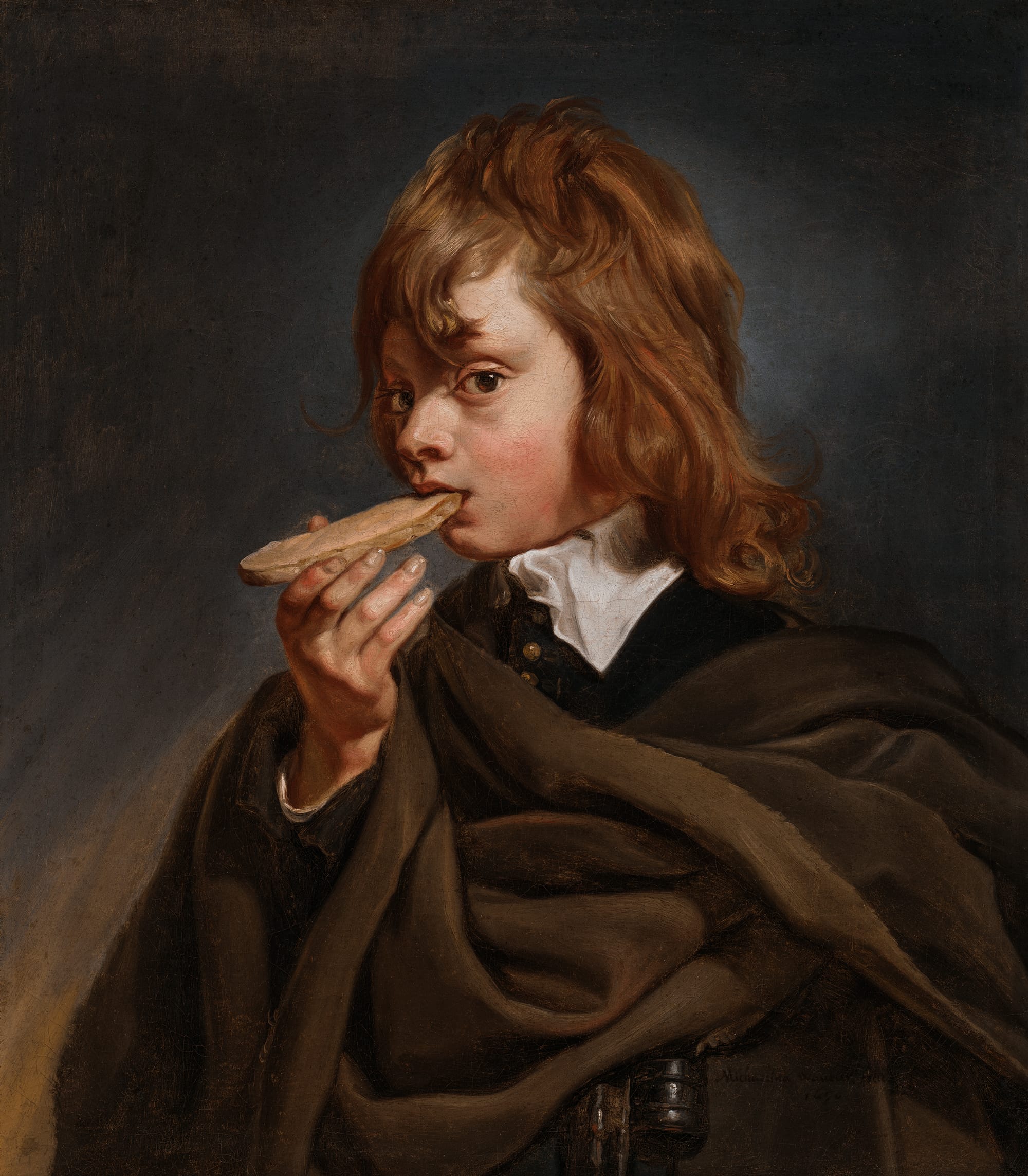
Domercq also noted that the list of Wautier’s autograph works has changed since her first monographic exhibition; the Royal Academy presents the updated oeuvre of recognised paintings, alongside pieces by her brother Charles and contemporaries Rubens and David Teniers the Younger.
I asked Domercq why Wautier is so unknown in the public imagination; her name isn’t even included in most popular surveys of women artists. This is a striking contrast to the extraordinary attention and recognition afforded to Gentileschi, her direct contemporary, not least in the National Gallery’s recent monograph and acquisition of Gentileschi’s Self Portrait as Catherine of Alexandria. For the two are both titans of technical ability; it is not so trite a matter as one being “better” than the other. Domercq rightly pointed out that Gentileschi was never “forgotten” in the way Wautier was, citing extensive surviving documentary evidence on the former (not least the brutal trial lending a “drama that fascinates many”).
“We hope the show here will change that,” Domercq said, though given the scant information available on Wautier, “it is her works that need to do all the talking. All that we can really tell is that she must have been an extraordinary human being to paint such great, varied pictures, transcending all these limitations usually imposed on women.”
Having covered the developments on Wautier since 2018, I can liken the effect of first encountering so many accomplished and vivacious paintings in one presentation, combined with the realization they are all by one hitherto unknown person, to the peculiar and powerful sensation of that silent person reappearing again — even if, as Domercq notes, “we do not really have ‘her voice.’”
Michaelina Wautier continues at the Royal Academy of Arts (Burlington House, Piccadilly, London) through June 21. The exhibition was curated by Julien Domercq and Rina Sagoo and organized in collaboration with the Kunsthistorisches Museum, Vienna.