Nude Performance at MFA Boston Confronts One of Art’s Oldest Tropes
Artist Xandra Ibarra's “Nude Laughing” sparks conversations about consent, viewer etiquette, art history, and the human body.

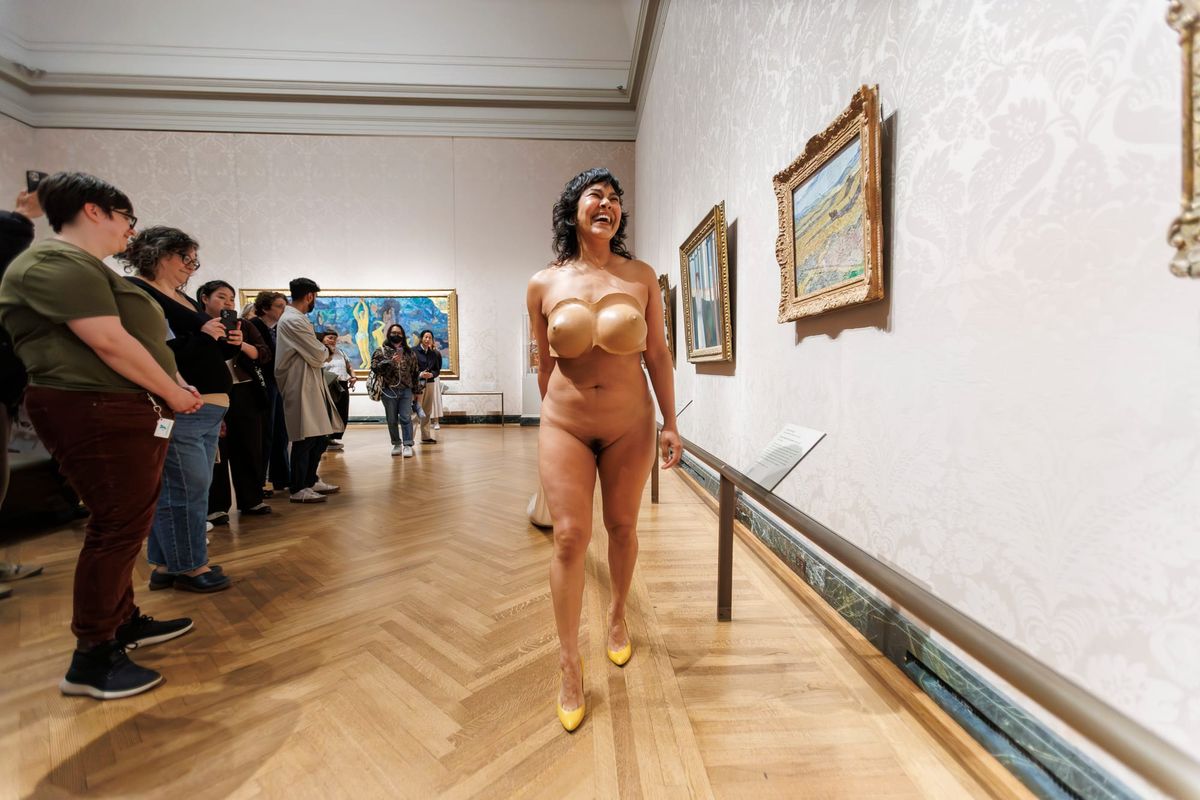
At the puritanical core of the United States, artist Xandra Ibarra's performance in the Museum of Fine Arts (MFA) Boston shattered the nude woman’s historical designation of beautiful as an art object, but vulgar in the flesh.
In her staging of “Nude Laughing” (2014–), Ibarra appeared at the museum exactly as the title suggested last Thursday, April 16, astonishing those onsite and scandalizing the museum's digital following in the days after. Hundreds of commenters volleyed arguments back and forth about the legitimacy and obscenity of the artist's performance on the MFA Boston's Instagram post.
The event was a highlighted program in Subvert, Repair, Reclaim: Contemporary Artists Take Back the Nude, an ongoing exhibition at the museum in which 12 artists critique the racial, gender, and power hierarchies entrenched in the Western art historical canon.
“Art history was made that night,” Carmen Hermo, the museum's contemporary art curator who organized the exhibition, said in a phone call with Hyperallergic about Ibarra's performance, adding that the proposal for the overall exhibition was “really centered around why it should be at the MFA Boston, this encyclopedic museum that has so much colonial baggage.”
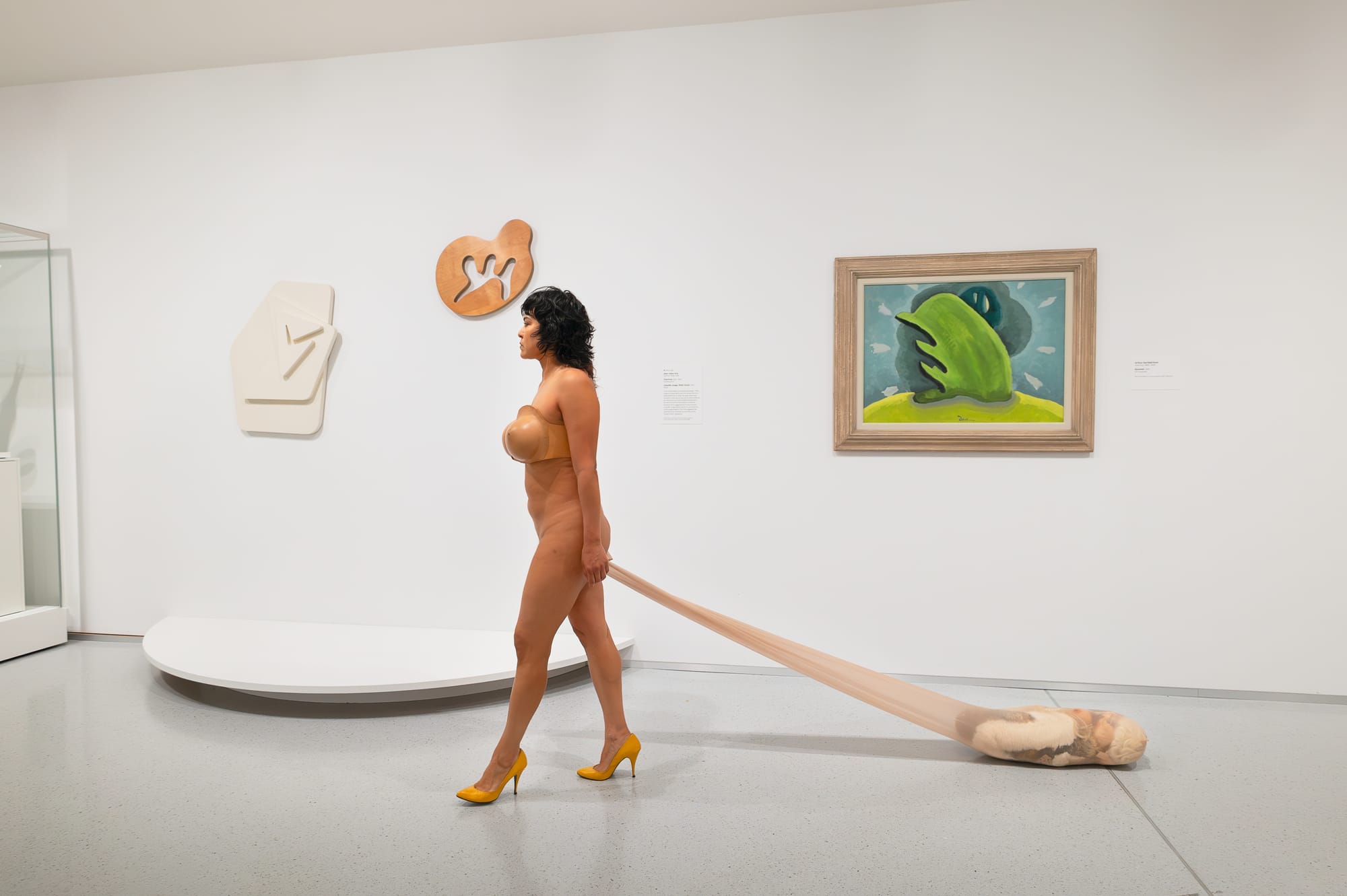
With adequate disclaimers onsite and online, “Nude Laughing” unfolded during Third Thursday at the museum, when hours are extended and admission fee drops to $5 a ticket. The performance began when Ibarra emerged in the Contemporary wing, wearing only a breastplate of what could only be described as unnatural perkiness and a pair of yellow heels while dragging along a stocking-like sack stuffed with blonde wigs, hyperfeminine accessories, and fake breasts — “white lady accoutrements,” as the artist puts it.
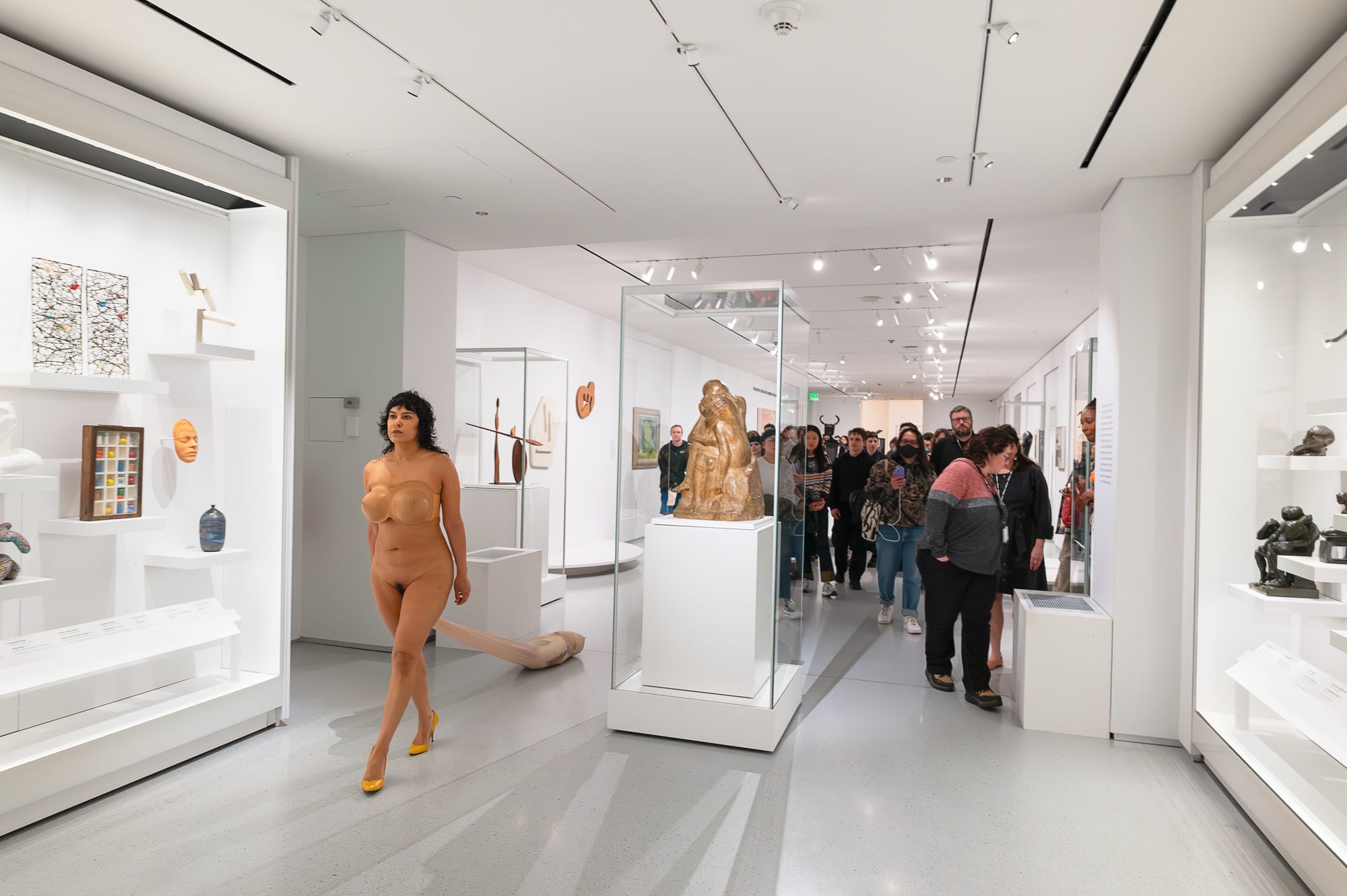
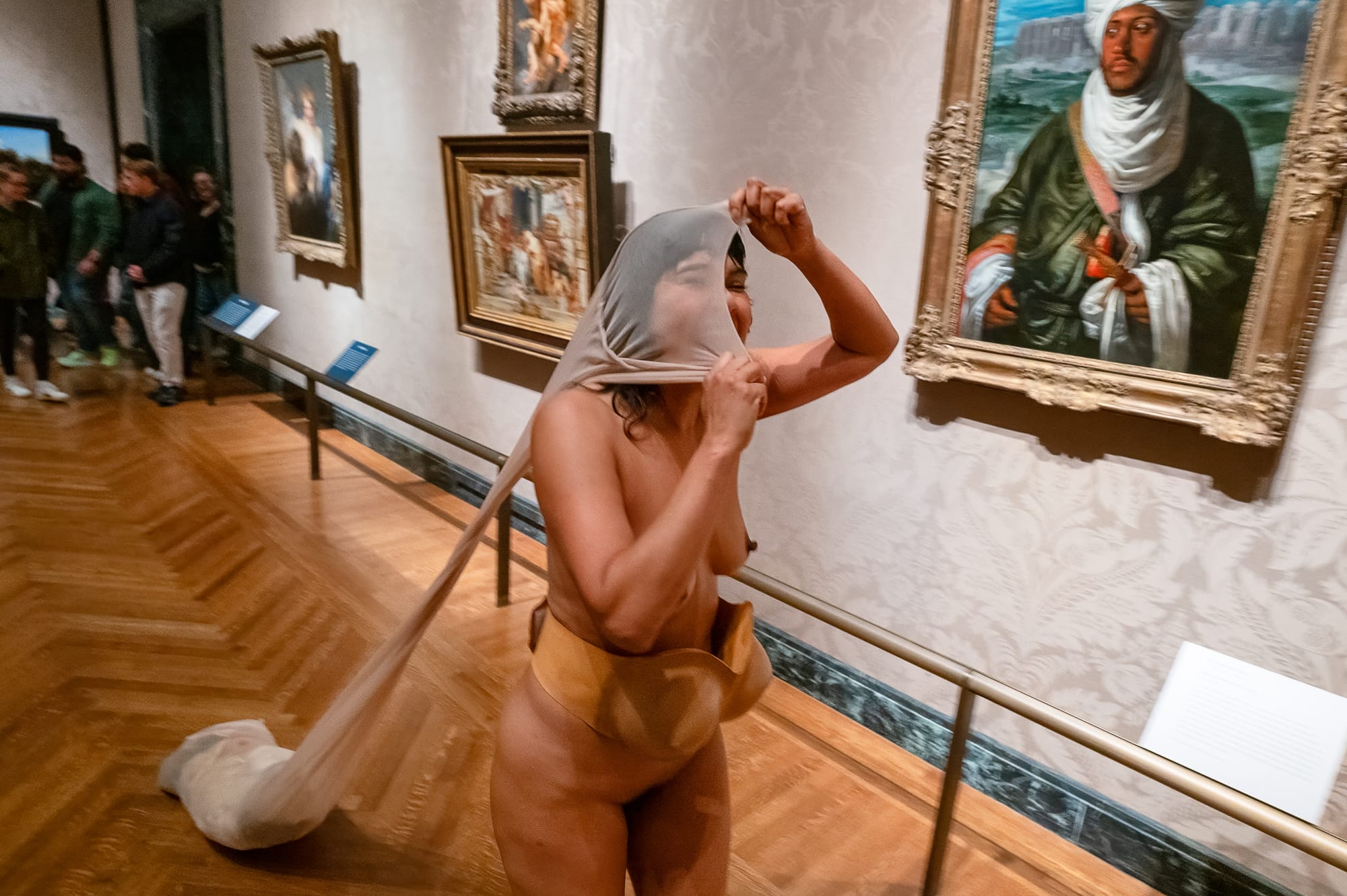
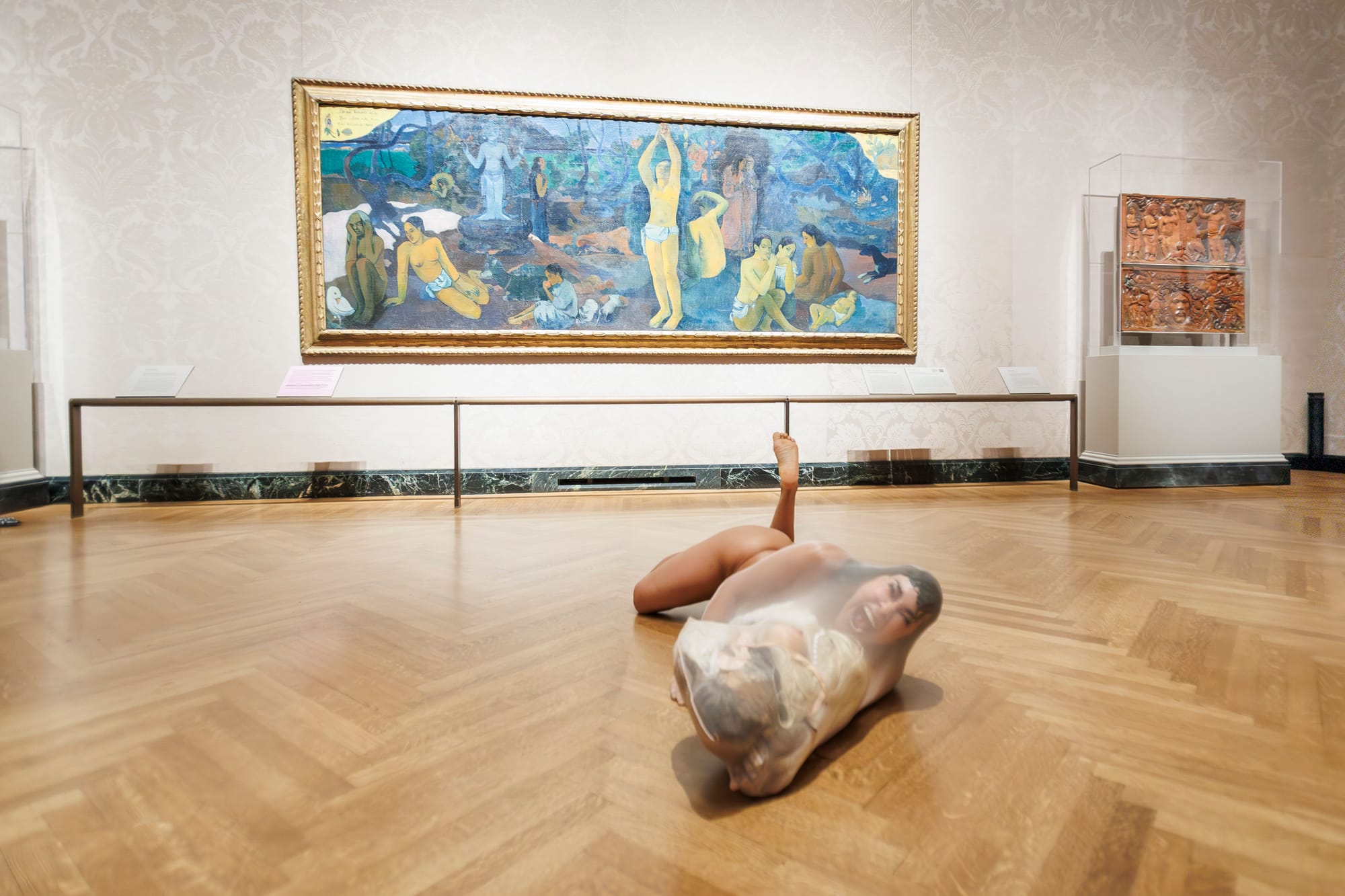
Starting with a silent stride, Ibarra traversed the gallery and made her way through several others, cutting the quiet with bubbly giggling. While navigating through the Art of Europe section, her laughter crescendoed into hysterics as she responded to the surrounding artworks. Once she reached Paul Gauguin's “Where Do We Come From? What Are We? Where Are We Going?” (1897–98), she ultimately wrestled herself to the floor and into the nylon sack, still laughing.
In an email to Hyperallergic, Ibarra said that a museum's holdings are not just its collections, but the spatial dynamics of its architectural and curatorial decisions, the histories it chooses to archive and narrate, and “the rhythms and flows that constitute a museum’s political and epistemic intensities.”
The artist continued:
I laugh at the integration and normalization of the violent archive of sex that is indexed in the collections that comprise museums, art history, and the art market.
I laugh at the comfortable distance that museums have with colonial fantasies, while playing them out.
I laugh at the current state of sexual and racial violence that accompanies the disavowal of it.
I laugh at the acts of violence endured by the subjects in nude art paintings, rendered as mute objects.
I laugh at the amnesia of the many historical vandalizations and destructions of nude paintings by elite, puritanical men and women.
I laugh at the strong social relationship that the museum and its viewership have with traditional representations of the nude that form habits of perception.
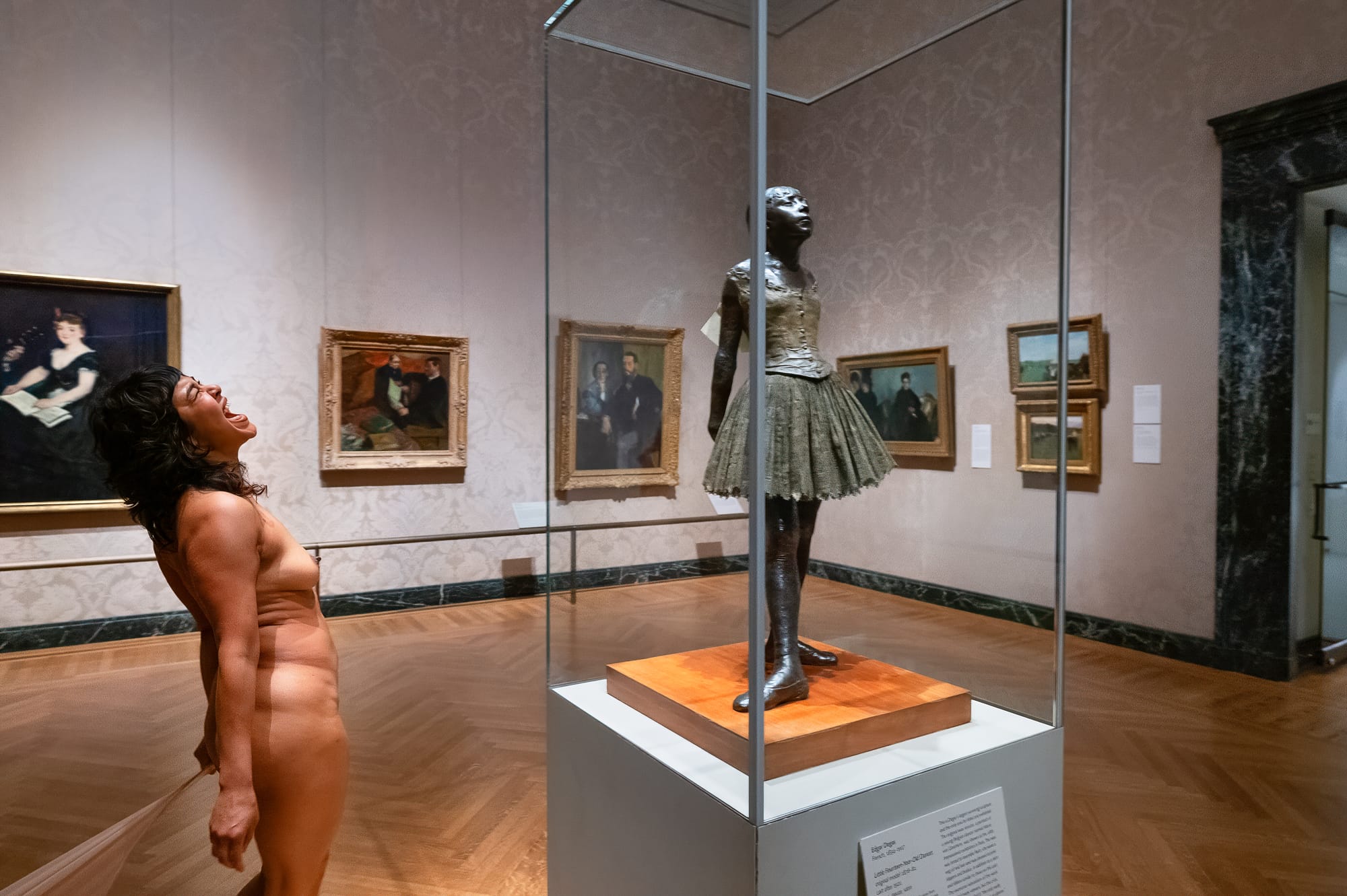
Hermo told Hyperallergic that Ibarra's performance was approximately 20 minutes long, but the large audience she amassed lingered for another half hour after her exit to unpack what they had just witnessed. Conversations about consent, viewer etiquette, art history, and the human body unfolded as people rehashed their experiences.
Online, however, the conversation was a little more black and white. MFA Boston shared photo documentation of the performance to its Instagram page, sparking fervent debates about whether or not it was art in the first place. One commenter said Ibarra's performance “is really a shame and mockery to the history of art” and said she'd consider cancelling her membership.
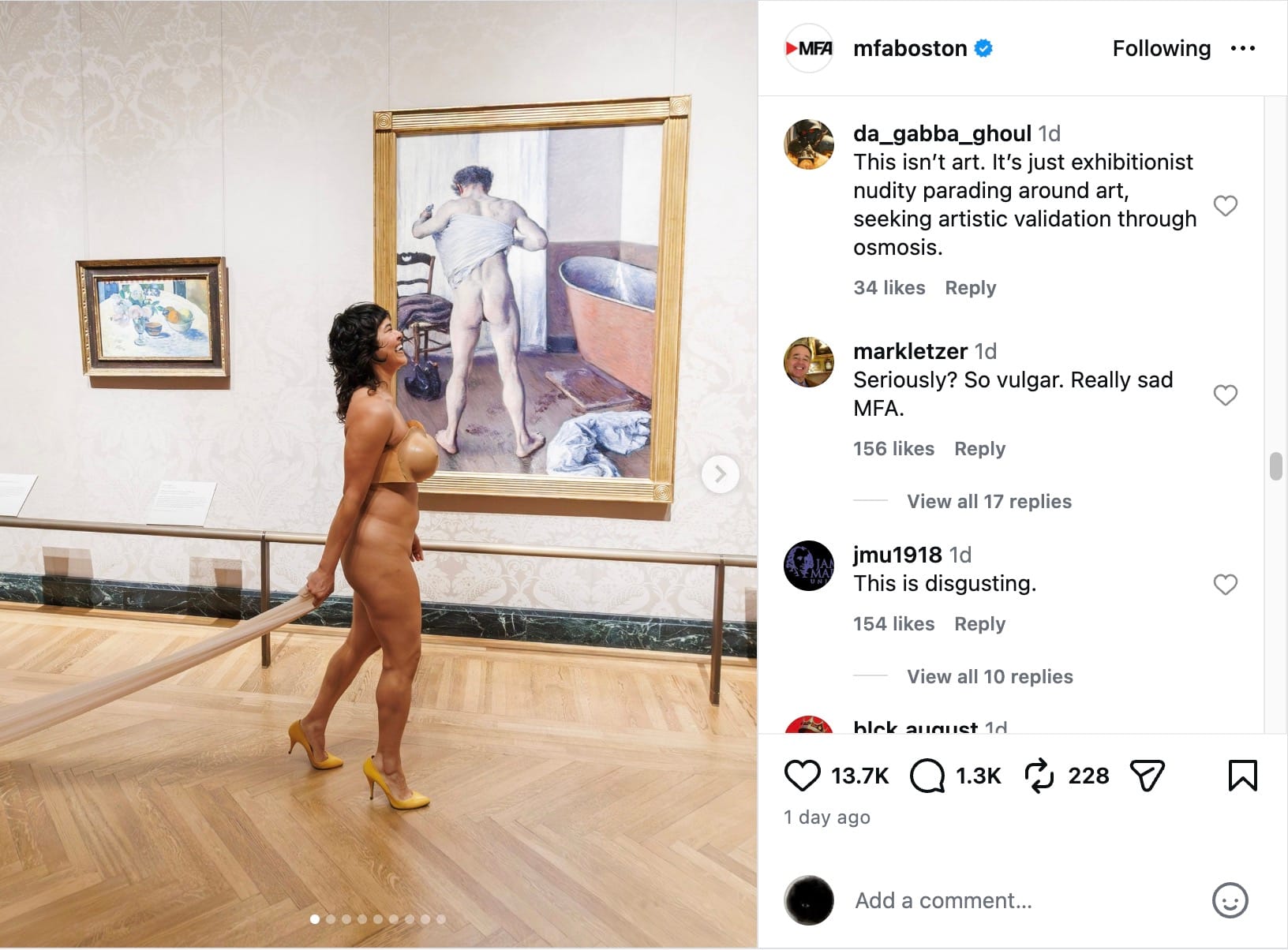
Several others called the performance “disgusting,” “vulgar,” “exhibitionist,” a “viral stunt,” and an example of “public indecency.”
But an MFA Boston spokesperson confirmed to Hyperallergic that in spite of all of the fervor on social media, only two people have contacted the museum to complain about the performance.
Many pointed out that the reactions said more about the viewers than the artist.
“Bodies are art and they have always been appreciated,” a commenter with the username @creamyskeletons wrote. “There's nothing sexual about this. If it makes you uncomfortable, maybe dig deeper and think about why it does.”