Remembering James Hayward, LA’s Adored Cowboy Painter
A legendary artist, Jimmy was equally known for his magnetic personality, sense of ribald humor, and inspired storytelling.

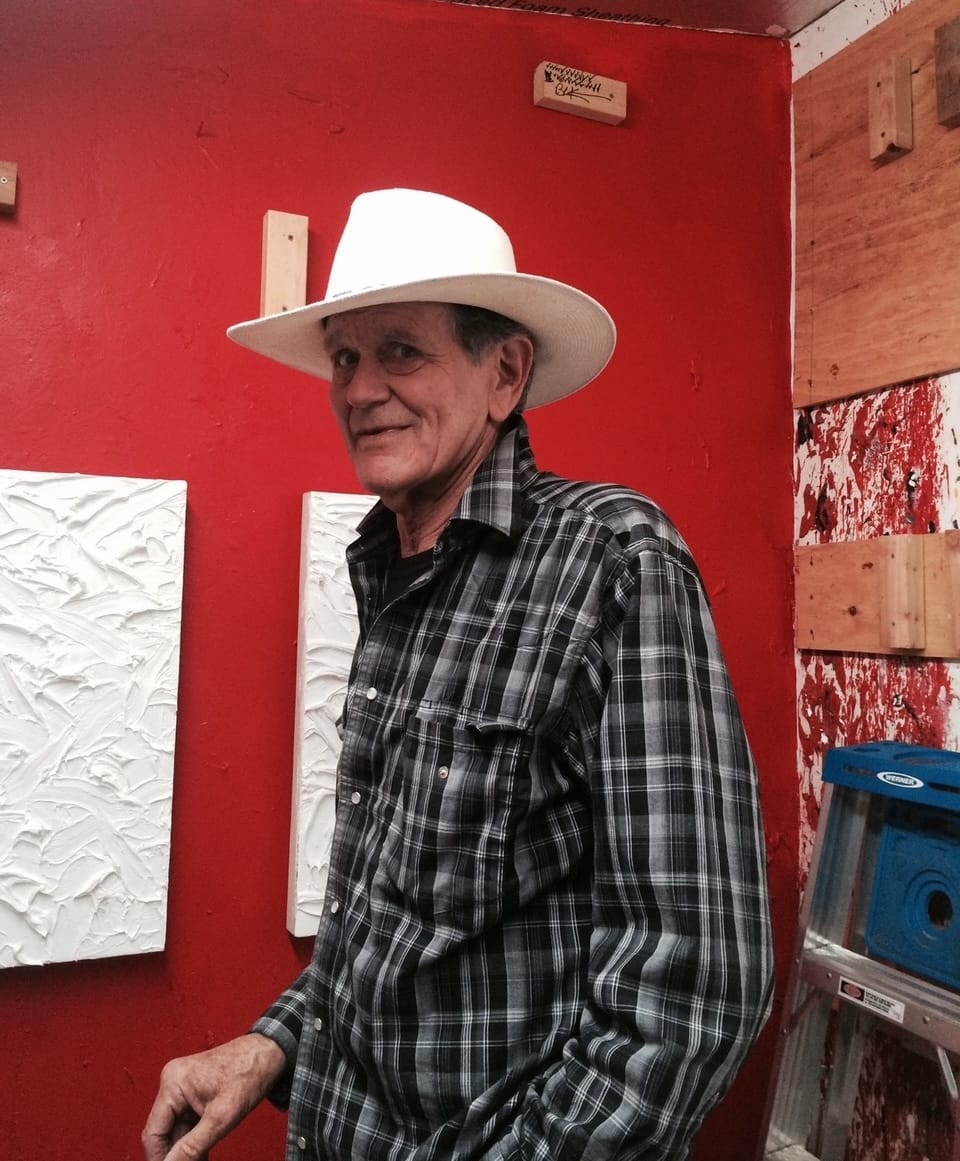
Abstract painter James Hayward died last week at the age of 82. It was a great fortune to know him, own one of his paintings, feast on his famous tri-tip, share a joint and a glass of good red wine (he was a connoisseur), and listen to his inexhaustible wellspring of anecdotes.
As much as Hayward was legendary as an LA painter, he was equally known for his magnetic personality, sense of ribald humor, unfiltered commentary, and inspired storytelling. Highly regarded among his fellow artists, his early hard-edge paintings eventually led to his signature “monochromatic abstractions,” the term he preferred to describe his oil and wax impasto works. He detested it when people referred to the luscious, thick, gooey compositions as “frosting” paintings — one would have to refrain from using the F-word in his presence.
Hayward was born in 1943 and raised in San Francisco as the oldest of three siblings. Early on, his destiny was always to be an artist, attending college to study art right after high school. He then began his long career teaching at colleges across the country, eventually settling in Southern California in the mid-1960s.
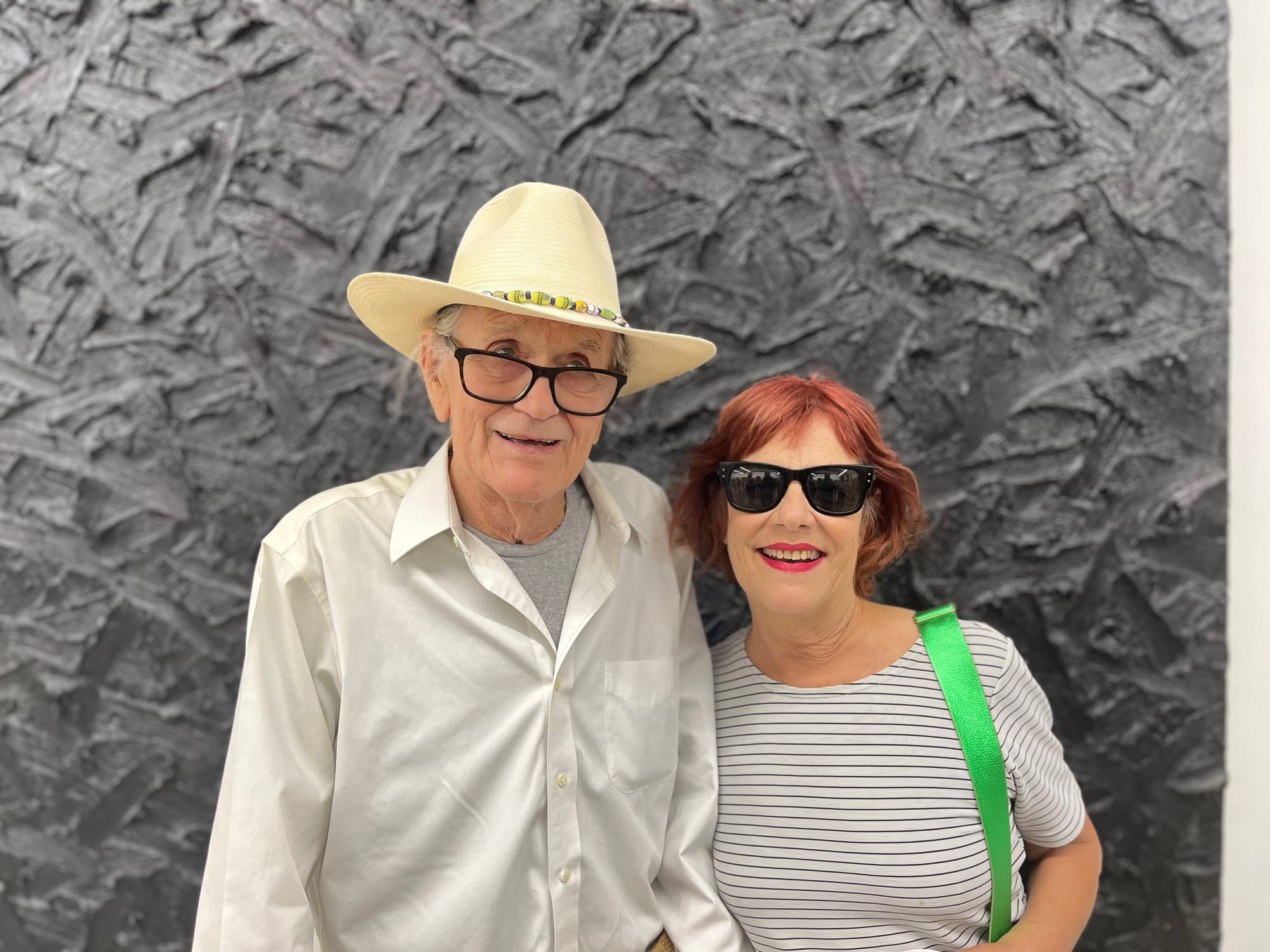
I met Jimmy, as he was known, in the late 1980s, when he was a guest artist teaching a grad seminar at the University of Southern California. He mainly told stories — albeit with great zeal, and a fair amount of name-dropping — leaving students to wonder if this was all he was going to do. One day, he gave us an assignment, much to our surprise. Everyone was to present a lecture on an influential artist; I chose Larry Clark. During my slide lecture from Clark’s Teenage Lust series, one image infuriated Jimmy, who yelled out, “That’s not art, that’s pornography!” We became fast friends.
That’s how it was with Jimmy — he was everyone’s friend. He was very supportive of Artillery when I was editor at the LA contemporary art magazine, routinely weighing in on articles he liked, or disliked.
If one hung around Jimmy long enough, one would eventually hear his stories about how he got screwed by the infamous (and now felonious) LA dealer Doug Chrismas. He even published a story about a dream involving Chrismas and an axe, included in his 2010 book Indiscretions. (Warning, parental discretion highly advised.)
Jimmy was a cowboy. He was tall, lanky, and handsome, always wearing a cowboy hat. He lived on a horse ranch outside of LA, with several makeshift painting studios, lush vegetable and cactus gardens, and a very cool streamline trailer that belied all trailer stereotypes. With his smooth swagger and just-got-high, shit-eating grin, Jimmy always made quite an impression entering a room.
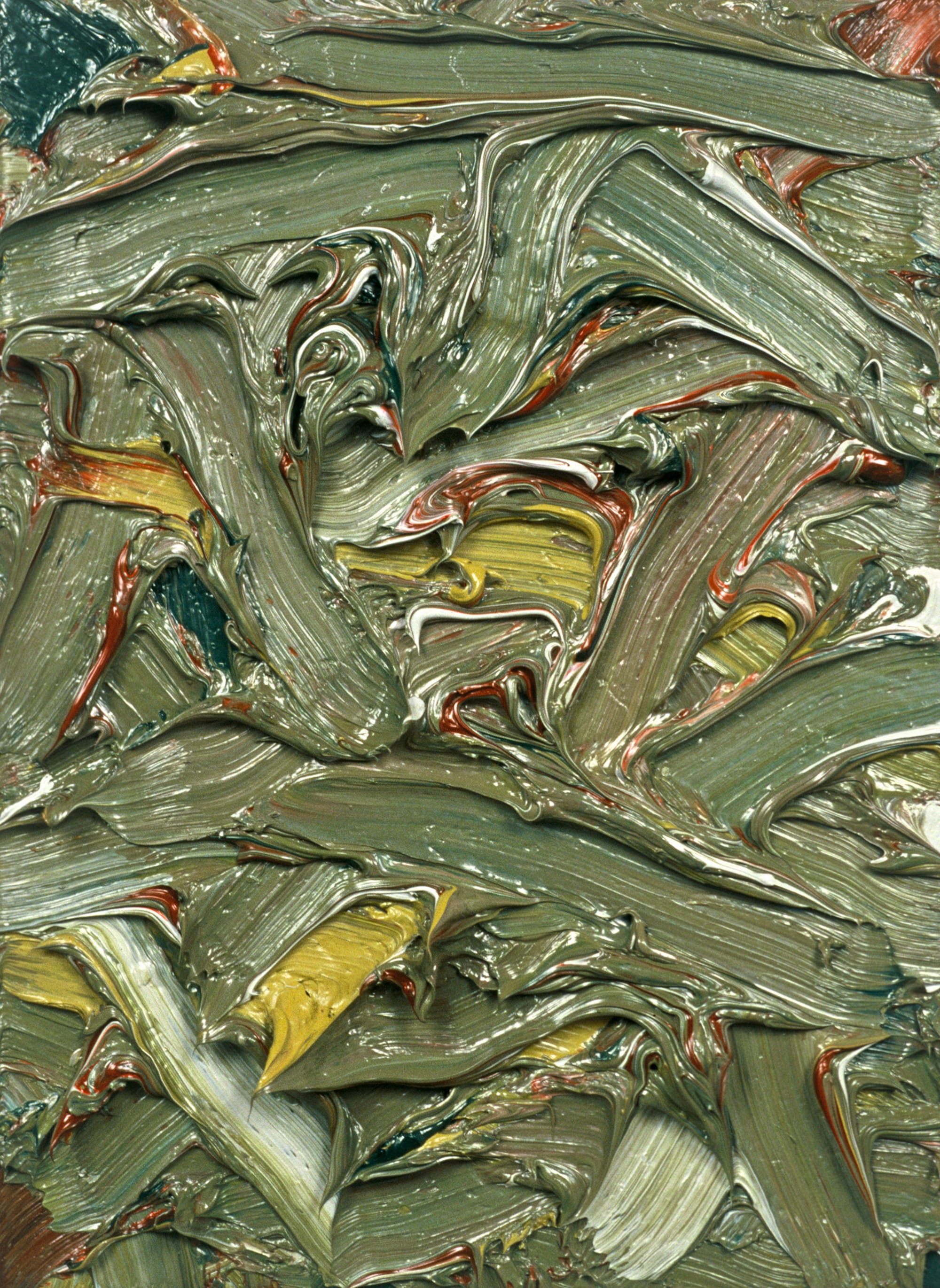
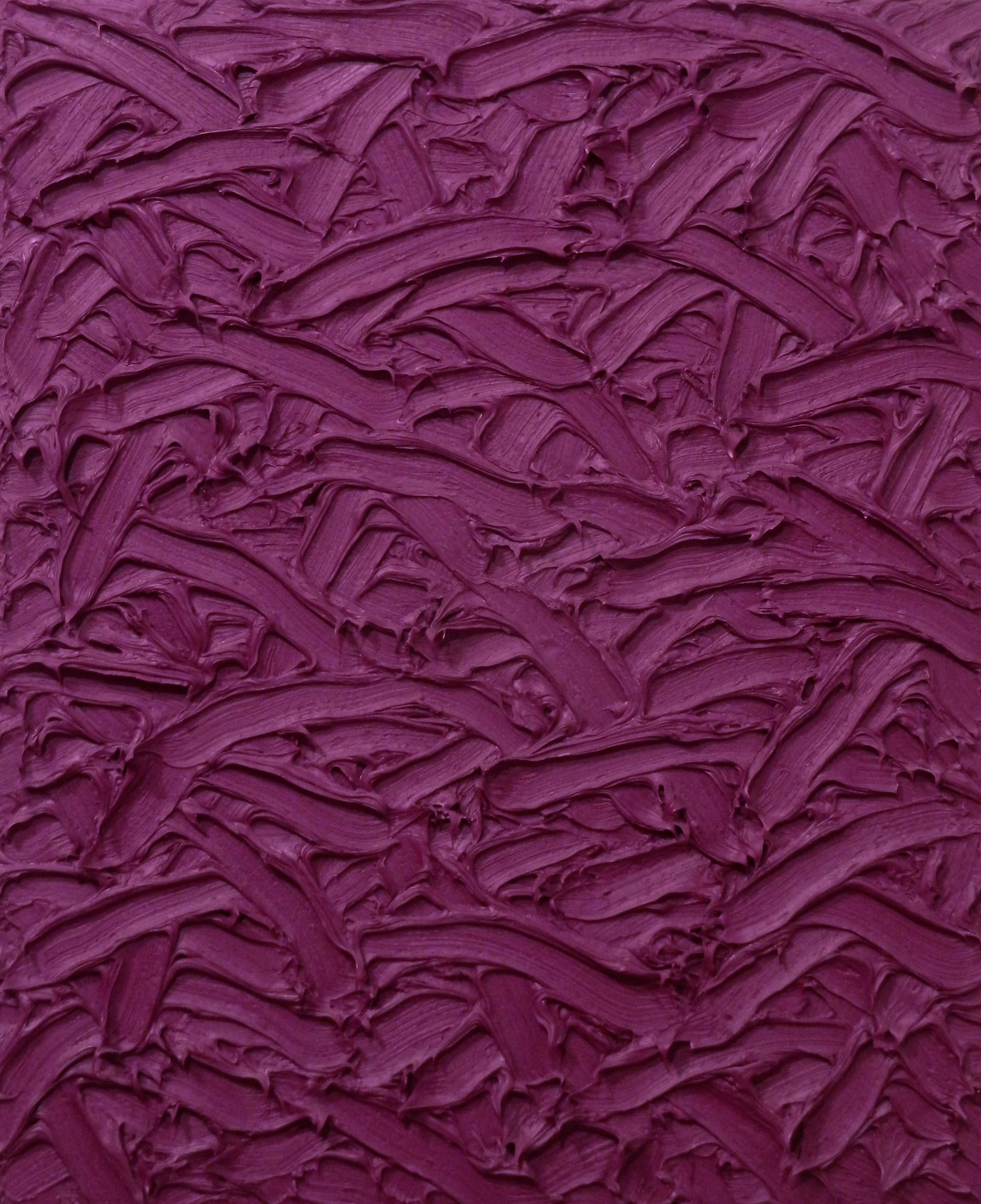
James Hayward, "Chromachord #23" (1998) and "Abstract #85" (2004) (courtesy the artist)
Though his bad-boy reputation may have preceded him, he was revered and respected as an artist, especially in the abstract and Minimalist painting canon. He rose to prominence in 1977, when he was included in the famed New York group show Less is More at Sidney Janis Gallery. He was greatly admired by and friends with art giants such as Dave Hickey, Chris Burden, Nancy Rubins, Ed Moses, and Frances Colpitt, the late art critic and writer at whose home I ran into Jimmy many times.
Mike Kelley owned an army-green Hayward painting and told me in an interview I had with him in 2011, published in Artillery right before his tragic death in 2012, that he would be forever indebted to Jimmy for getting him his first teaching job at Minneapolis College of Art and Design. “We had the same girlfriend at the time,” Kelley said. “Jim went there and did a painting gig, and convinced them they should have a performance class, and they hired me sight unseen.”
A prolific artist who never seemed to stop painting, he would make dozens of “black” paintings, cursing anyone who dared to ask, “Aren’t they just all black?” He was circumspect about where he exhibited, maintaining his allegiance to abstraction and what he’s always described as its “pureness.” Museums around the world collect his work, along with many private collectors: In the LA area, he worked with Bennett Roberts, William Turner, The Pit, Peter Blake, and, of course, Chrismas’s ACE Gallery. But he kept the steadiest relationship with the Modernism Gallery in San Francisco.
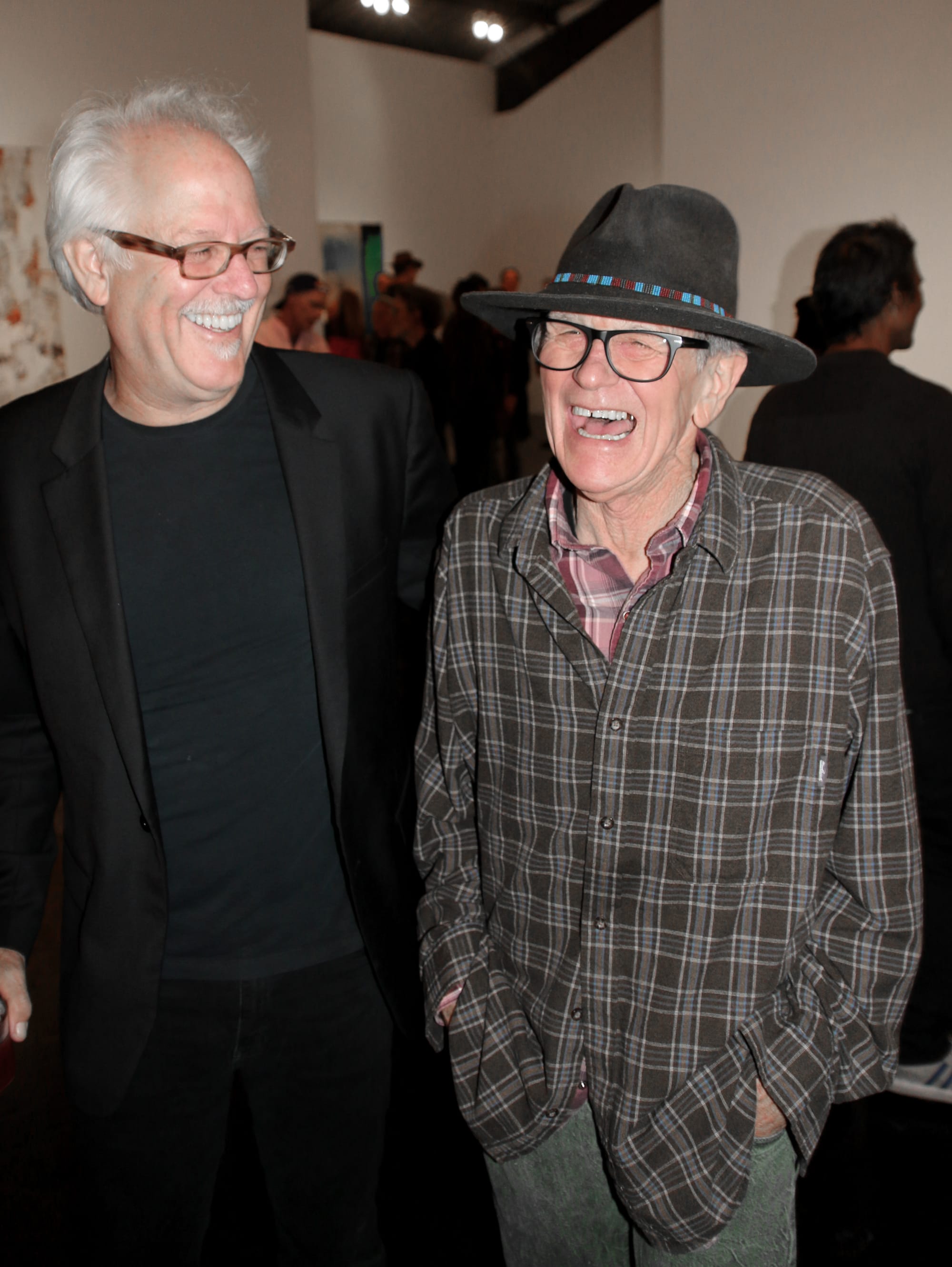
Jimmy last exhibited his work in a group show at the William Turner Gallery in Santa Monica (it was in its last week when he died). I contacted Turner, a longtime close friend, who was in touch with him near the end. “Hayward’s paintings, like his writing, carried a distilled clarity — a purity of vision that could easily be mistaken for simplicity,” Turner told me. “But that simplicity was hard-won. Beneath their reductive surfaces lay a profound engagement with painting at its most essential, expressing something deeply authentic about the human spirit.”
Jimmy had a big soul with a contagious smile. He sometimes seemed avuncular, often bestowing his wisdom no matter how outrageous it might have been. But it was genuine, oftentimes hilarious, and unabashed. Los Angeles is mourning the loss of a treasured artist. He was the real deal.