SAIC Puts Professor on Leave After Palestine Reference
The Chicago school is investigating the director of its art therapy graduate program after she assigned a case study that touched on pro-Palestine activism.

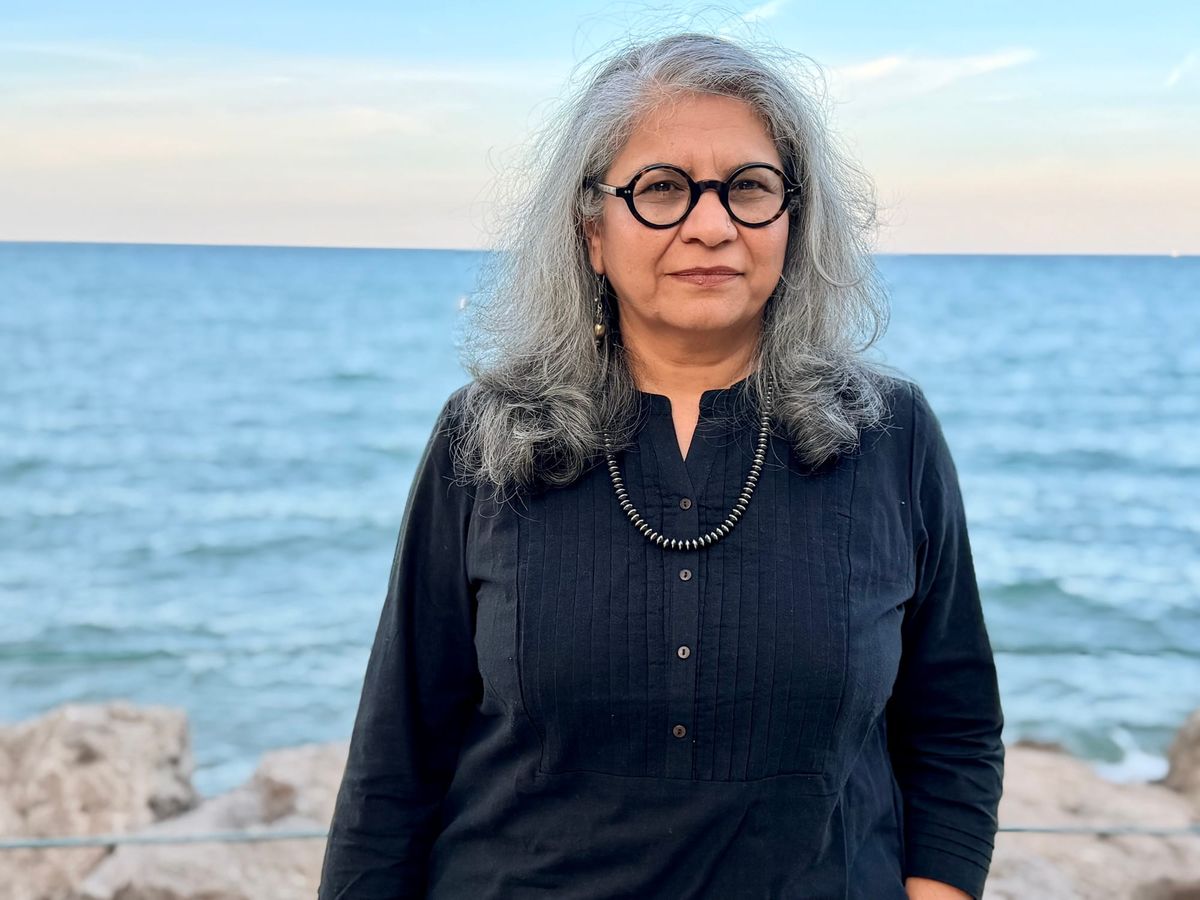
The School of the Art Institute of Chicago (SAIC) has placed the director of its graduate art therapy program, Savneet Talwar, on leave after she assigned students a case study analyzing a hypothetical client who was "deeply affected by the violence against Palestinian civilians."
On April 17, Talwar received a notice from the SAIC administration, reviewed by Hypeallergic, notifying her that the school had opened an investigation into allegations of "discrimination, harassment and/or retaliation." One day prior, Talwar had asked the six students enrolled in her “Cultural Dimensions in Art Therapy” course to create a mock therapeutic treatment plan for a queer Arab woman who sympathized with pro-Palestinian protests and feared retaliation under the Trump administration.
The assignment provided the hypothetical client's family and relationship history, and a narrative on her experience as an "immigrant student" in the United States.
"Bela sought therapy after living in the United States for one year, during a period of politically tense protests at her university," the assignment reads. “While she was not particularly politically active in her home country, protests in support of Palestine resonated with her on a personal level. She felt deeply affected by the violence against Palestinian civilians and was critical of the home government’s limited response.”
On April 20, SAIC Provost Martin Berger told Talwar in a meeting and subsequent follow-up letter that she would be placed on leave, claiming that her "alleged actions threaten immediate harm to the student or to others within our community." He also alleged that Talwar assigned only one student to the case, though she said she assigned the item to her entire class.
Berger has served as provost at SAIC since 2019. He was previously the school's dean of faculty and vice president of academic affairs. Before joining SAIC, his scholarly focus was on gender and race in 19th- and 20th-century art in the United States, and he authored various publications about the civil rights movement, including Sight Unseen: Whiteness and American Visual Culture (2005).
According to communications that Talwar's attorney, Rima Kapitan, shared with Hyperallergic, the investigation stems from a complaint from one unnamed student. A spokesperson for the SAIC said the institution would not comment on “ongoing investigations” and that it does not “discipline faculty for protected classroom discussion of national, religious, racial, or cultural topics.”
In emails to Hyperallergic, Talwar denied all allegations and defended her assignment as pedagogically valuable. She also linked her case to broader university crackdowns on conversations about social justice topics.
"Title IX and institutional complaint processes are being used to intimidate and silence faculty engaging in discussions about anti-discriminatory practices, colonialism, and human rights," Talwar wrote.
Talwar told Hyperallergic that as an art therapy educator, she is responsible for instructing students on the practice's ethical standards, which prohibit therapists from denying services “based on race, religion, gender, ethnicity, nationality, sexual orientation, disability, or other protected identities.”
"As educators, we are responsible for preparing students to uphold these ethical standards in their future clinical work," Talwar said.
Kapitan, Talwar's attorney, told Hyperallergic that the school has refused to share the specific allegations that the student made against it and described the investigation as "discriminatory."
Talwar filed a complaint against SAIC with the Illinois Department of Human Rights today, June 9, after she said she hasn't received any updates on her investigation. The complaint, reviewed by Hyperallergic, alleges the university has discriminated against her based on her “association with Arabs and Palestinians.” It also describes allegations of ageism from a separate matter.
"Are SAIC faculty expected to ethnically cleanse Palestinians from their course materials?" Kapitan asked the administrations in a letter on April 20. "Are Arab Muslims unworthy of their own case studies?"
SAIC has not yet responded to a request for comment on today's filing.
Talwar said she's scheduled to teach a summer course but does not yet know whether she will be permitted to do so.
"I am deeply concerned that the university’s response ... has been immediate and disproportionate," Talwar wrote. "This situation raises significant concerns regarding academic freedom, institutional governance, faculty rights, and political pressure within higher education."