Texas Tattoo Artist Gets 30-Year Sentence Over “Anti-Trump” Zines
Daniel “Des” Sanchez Estrada faces three decades in prison after he moved a box of left-wing literature in the aftermath of an anti-ICE protest.

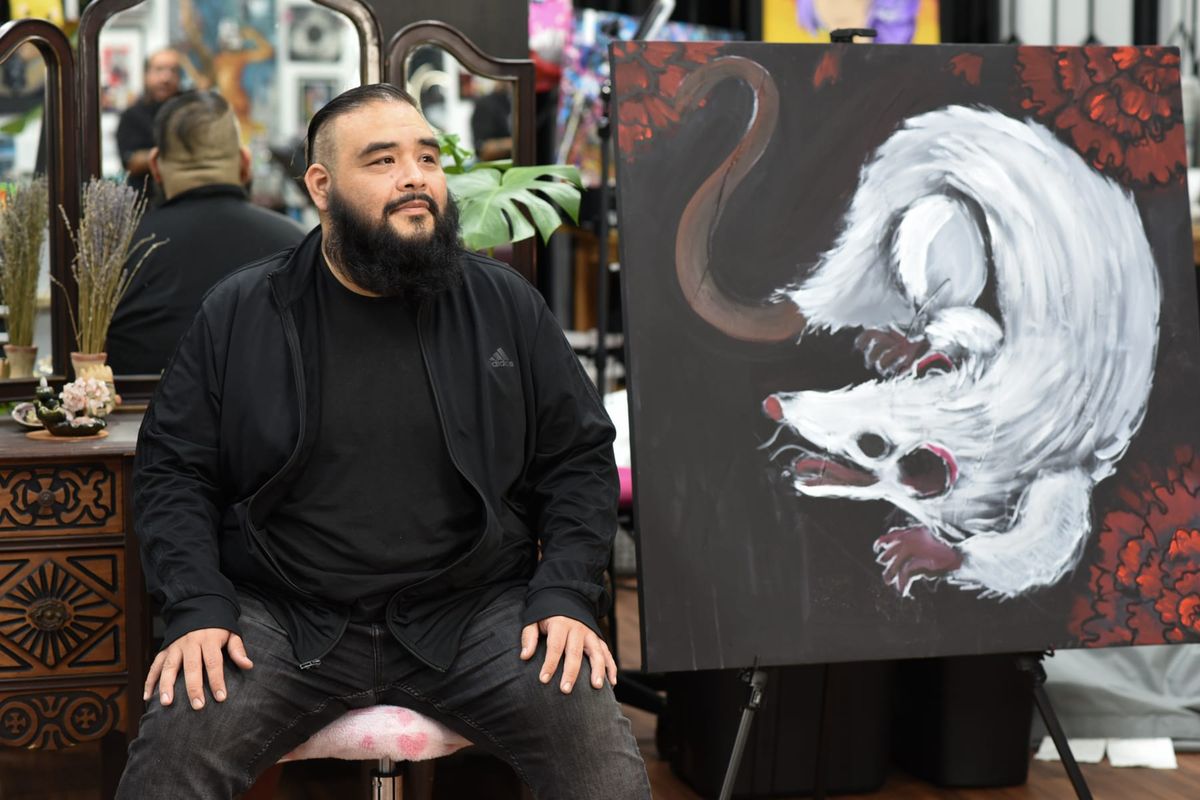
A Texas tattoo artist has been sentenced to 30 years in federal prison for moving a box of political pamphlets and zines featuring “anti-government and anti-Trump sentiments,” prompting outrage from First Amendment advocates.
Thirty-nine-year old Daniel “Des” Sanchez Estrada was one of eight defendants sentenced to lengthy prison terms by a Texas federal court last week for their alleged roles in a 2025 protest that turned violent. On July 4, 2025, protesters had gathered outside of Prairieland Detention Center, where the federal government holds undocumented immigrants whom it plans to deport. The demonstration, billed by the Trump administration as an orchestration by “Antifa terrorists,” took a turn when a protester shot and wounded a local police officer in the neck in front of the facility.
While Sanchez Estrada, a green card holder, did not attend the protest, his wife, Maricela Rueda, partook in the demonstration and was sentenced to 70 years in prison this week, though she was not the individual to fire at the police officer. Another protester, 32-year-old Benjamin Hanil Song, was convicted of attempted murder and sentenced to 100 years in prison.
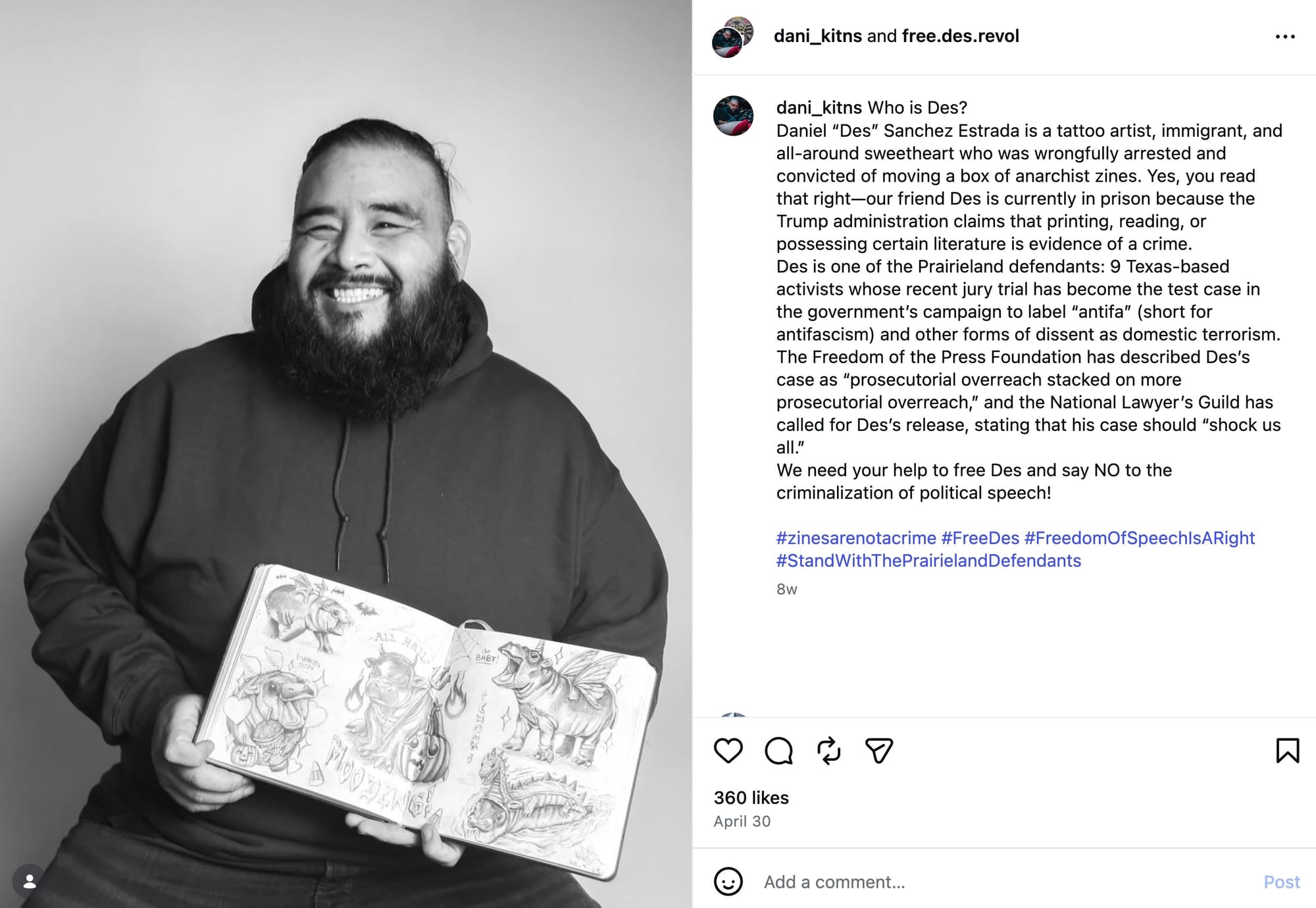
Following the arrest of Rueda last summer, federal prosecutors accused Sanchez Estrada of concealing documents in an attempt to diminish the integrity of the government’s case against the Prairieland protesters. According to court documents, agents recorded a phone call made by Rueda in jail, in which she asked her husband to move her car with her phone inside. At some point after the call, Sanchez Estrada was seen in surveillance images dropping off a cardboard box to an address in Denton, Texas. Inside the box, law enforcement officers discovered political zines, including It’s Vacant, Take It! (2013), a guide to squatting, and War in the Streets: Tactical Lessons from the Global Civil War (2026).
According to the Free Des Support Committee, which advocates publicly on Sanchez Estrada’s behalf, the artist addressed federal judge Reed O’Connor with an emotional plea before his sentencing. “I worked really hard every day in this country, and I believe in human rights and helping others in need. I donate money and art to help animals and other people,” Sanchez Estrada said. “I am a father, I am a husband, I am a teacher, a poet — I am many things, Your Honor, but I am not a terrorist.”
Prior to his incarceration, Sanchez Estrada shared images of his tattoo designs of flowers and animals on social media.
Following the sentencing, the Freedom of the Press Foundation vociferously defended the artist, claiming the charges represent the Trump administration’s intent to “criminalize disfavored ideologies.”
“Under the First Amendment, possessing literature cannot be criminal, so what legitimate evidence could he possibly have been concealing?” Seth Stern, the Freedom of the Press Foundation’s chief of advocacy, said in a statement. “Political zines like those Sanchez possessed are no different from the pro-Revolution pamphlets this country’s founders had in mind when they drafted the First Amendment’s press clause.”
Sanchez Estrada’s federal public defender, Christopher Weinbel, told Hyperallergic that he was working on a forthcoming appeal and declined to comment further.