The Ukrainian Pavilion’s Deer Seen Around the World
Before arriving in Venice, Zhanna Kadyrova’s “The Origami Deer” undertook an epic journey mirroring those of displaced Ukrainians.

VENICE — On Tuesday, May 5, the day before previews began at this year’s Venice Biennale, Russia launched a massive drone and missile attack on Ukraine, targeting, as is usual, civilians and civilian infrastructure. Twenty-seven people perished, and well over 100 were injured. At the 61st iteration of the international art event, among many scandals and controversies, the Biennale’s startling decision to welcome Russia back into the fold despite the now five years of its brutal, unprovoked war on Ukraine looms as especially shameful.
With very few exceptions, this war — the worst in Europe since World War II — was largely invisible throughout the sprawling Biennale, including the main exhibition In Minor Keys, the national pavilions, and copious collateral events, although there were occasionally emphatic protests outside the Russian pavilion. This makes Zhanna Kadyrova’s multifaceted project Security Guarantees, which is in the Ukrainian Pavilion at the Arsenale and inside the Giardini, especially significant, a project that confronts the war head-on. For me, it is a signature work in the Biennale, and one of the most consequential.
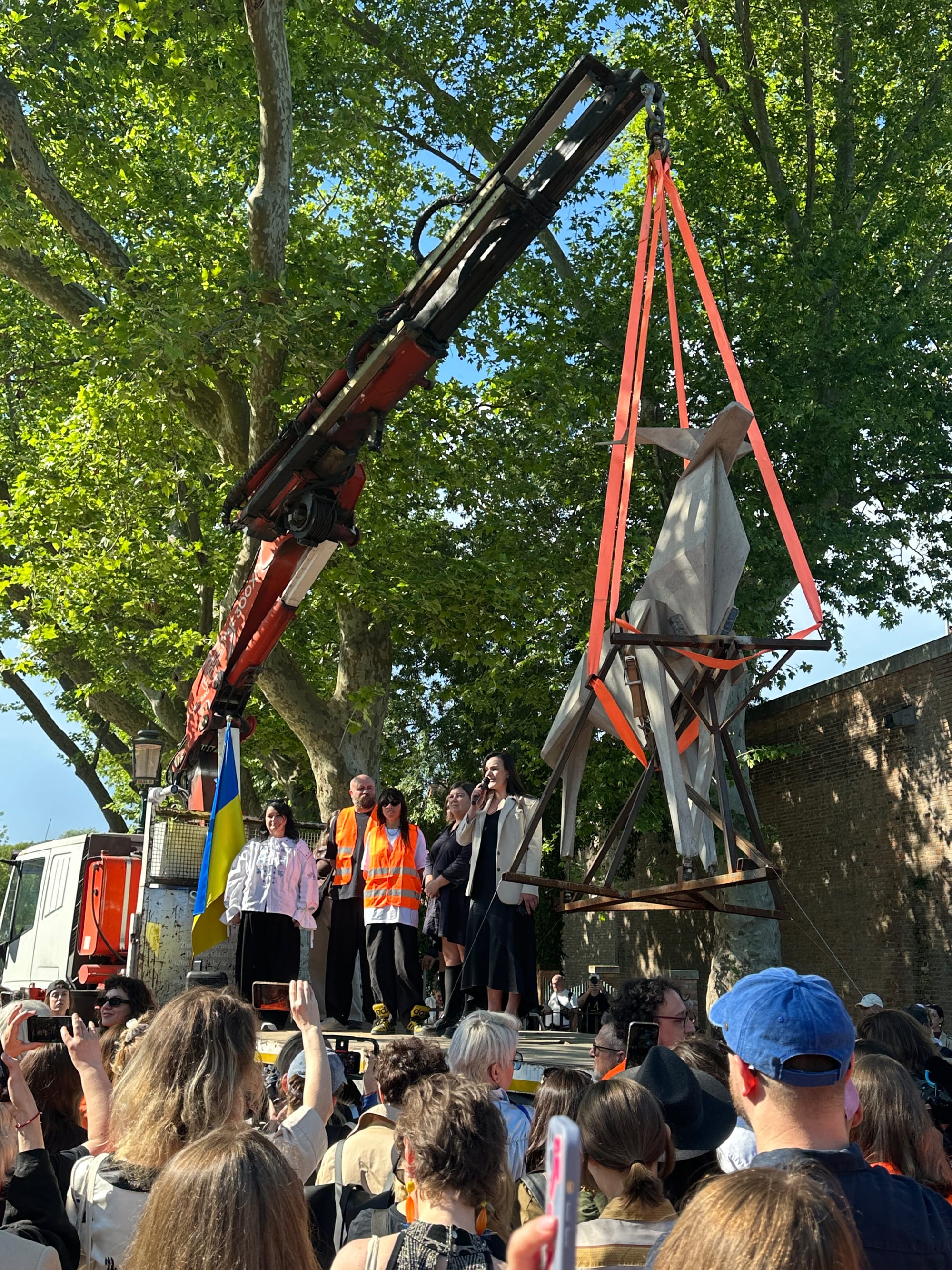
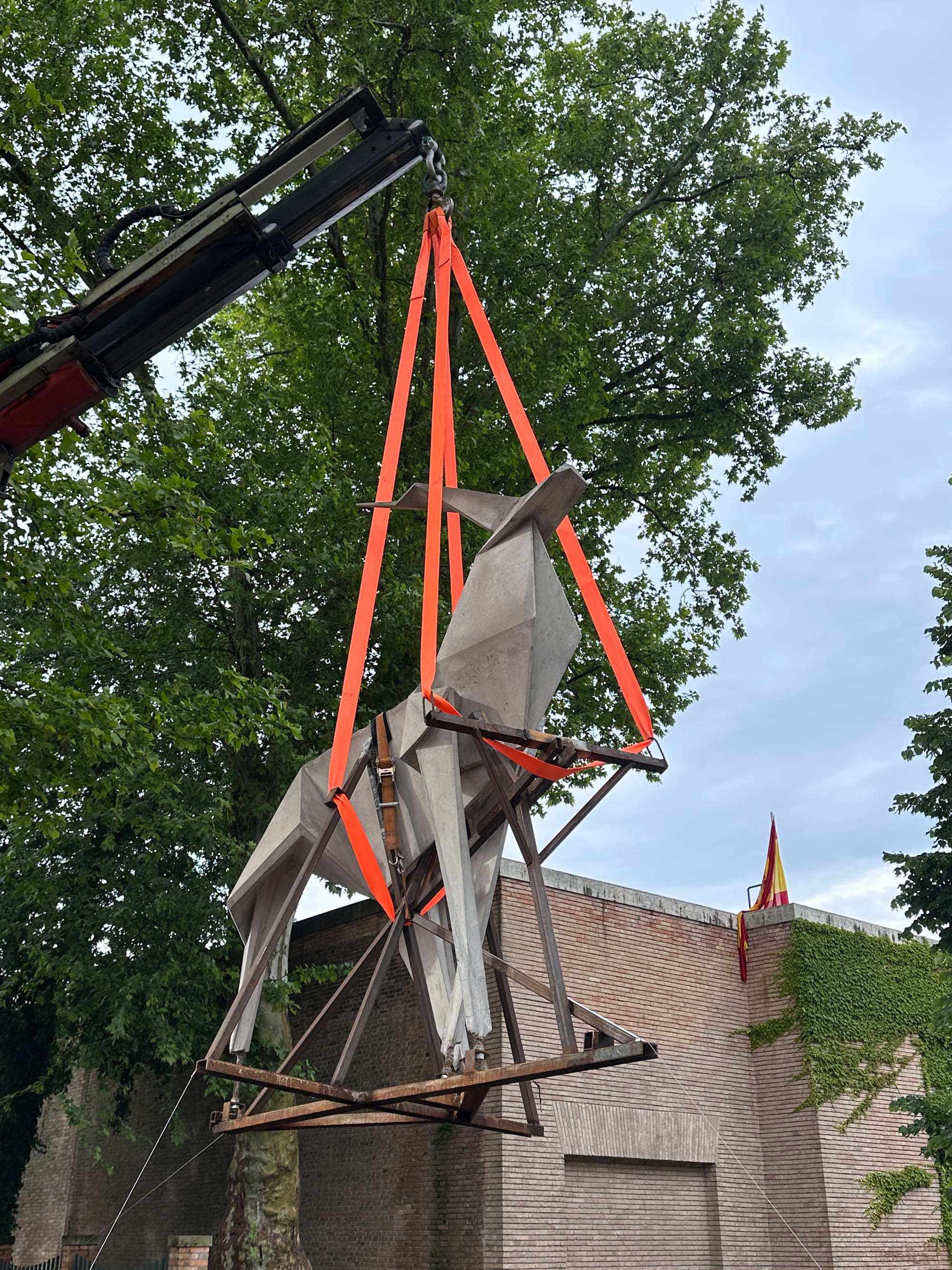
Zhanna Kadyrova’s "The Origami Deer" (2019) fitted in an orange harness and suspended from a crane in front of the entrance to the Giardini
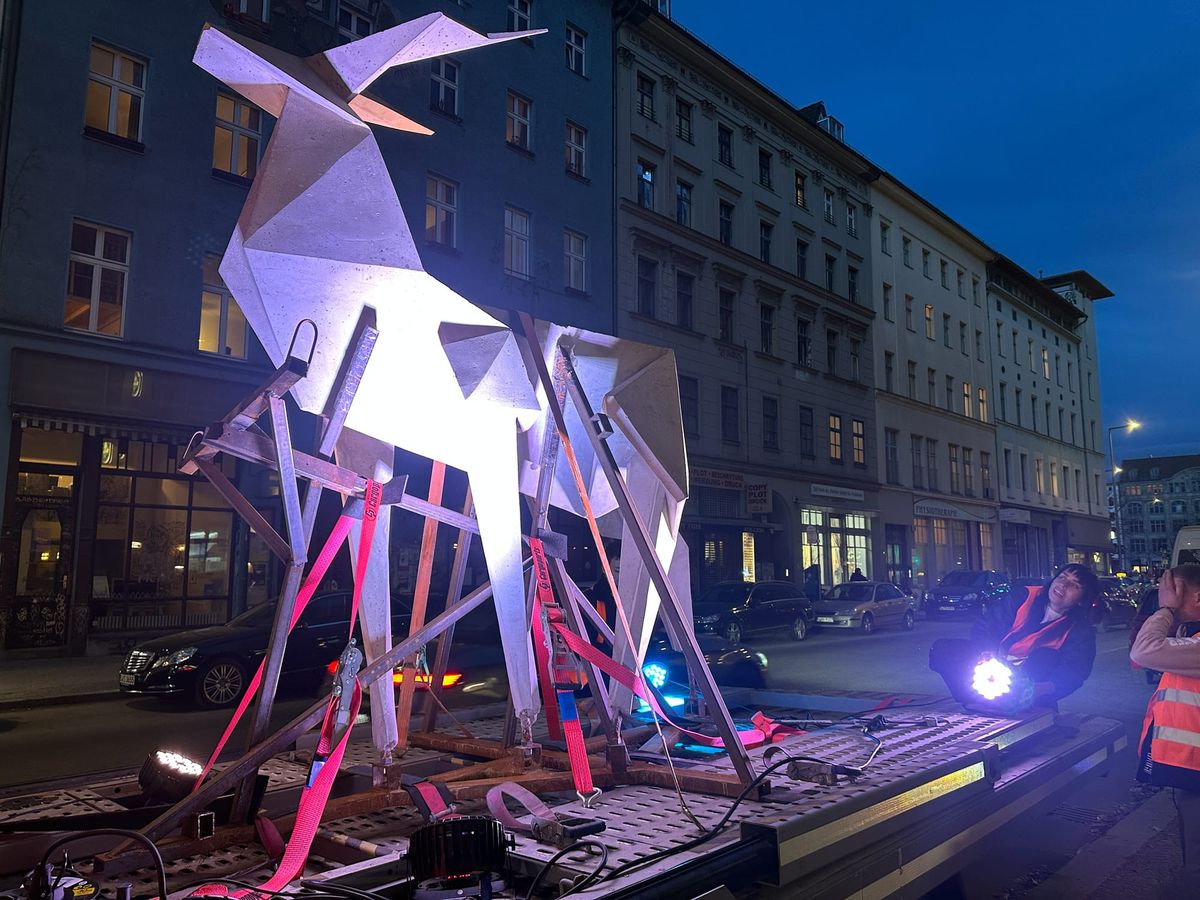
Fitted into an orange harness and suspended from a crane, Kadyrova’s sculpture “The Origami Deer” (2019) is prominently displayed at the entrance to the Giardini, a short distance from the Russian Pavilion. Made of heavy gray concrete and shaped like a deer, it also looks delicate and light, suggesting a giant origami construction; it encapsulates both fragility and strength. According to accompanying texts, the suggestion of folded paper invokes the 1994 Budapest Memorandum, a document signed by the Russian Federation, United Kingdom, and United States, information on which is provided in the pavilion. In exchange for Ukraine relinquishing its sizable store of nuclear weapons remaining from Soviet times, these three powerful countries “guaranteed” Ukraine’s security and territorial integrity. When Russia invaded and annexed Crimea in 2014, stormed into Donetsk and Luhansk that same year under sham pretexts, and launched its full-scale invasion on February 24, 2022, facing little resistance from the US and UK, those guarantees proved worthless, the signed memorandum meaningless. Ukraine would have to withstand the Russian onslaught largely on its own.
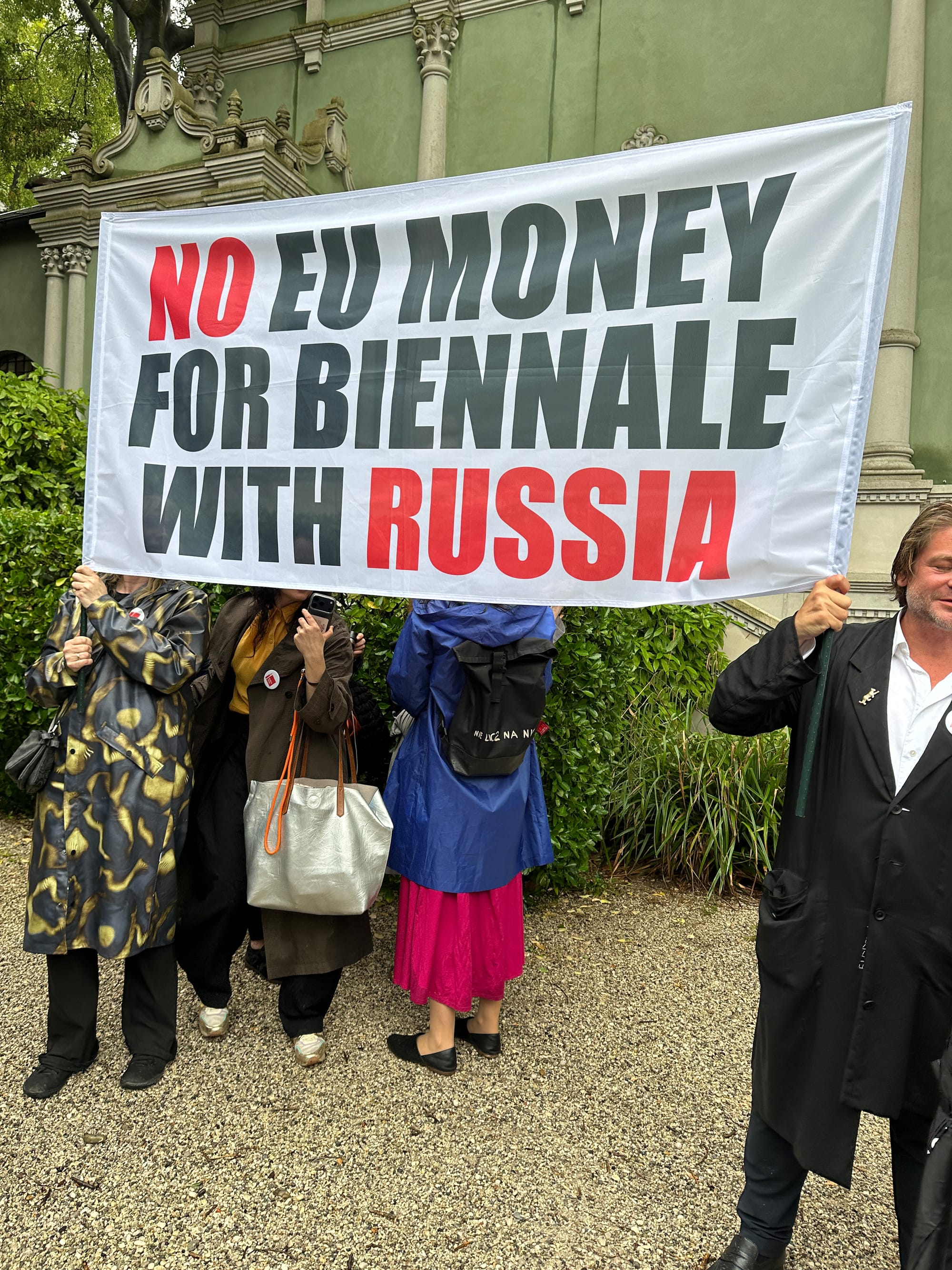
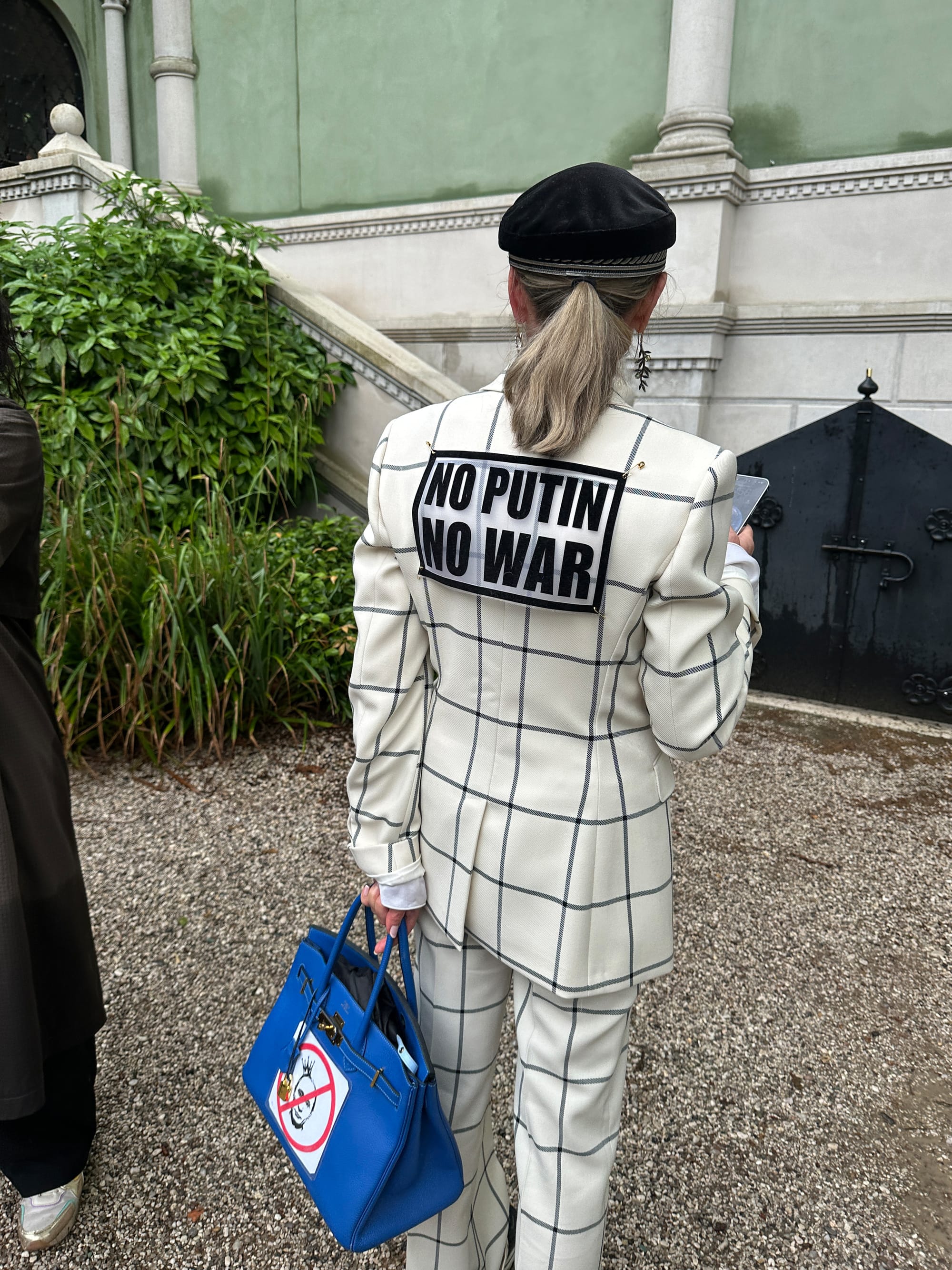
Protests outside of the Russian pavilion at this year's Venice Biennale
Kadyrova’s sculpture has quite a history. She originally installed it outdoors in the eastern Ukrainian city of Pokrovsk, on a stone plinth that formerly displayed a nuclear-capable Soviet jet — a Ukrainian artwork that supplanted a militaristic symbol of Soviet power. Intended as a permanent sculpture, it quickly became a beloved piece of public art for many, one integral to the city.
With the Russian army advancing on Pokrovsk in 2024, Kadyrova, Leonid Maruschak (one of the two curators of the pavilion alongside Ksenia Malykh), and assistants succeeded in removing her work and bringing it to relative safety, not an easy feat. Otherwise, it surely would have been destroyed by the Russians, who have demolished much Ukrainian cultural heritage and art. It became a displaced sculpture, evocative of the large majority of Pokrovsk’s citizens (along with many other Ukrainians) who have likewise been displaced. Later, it became a sort of refugee sculpture. Prior to the Biennale, it traveled through several European countries, making stops in cities including Vienna, Warsaw, Prague, Berlin, and Paris before arriving in Venice — an epic voyage that connects with those undertaken by six million or so Ukrainians fleeing the war.
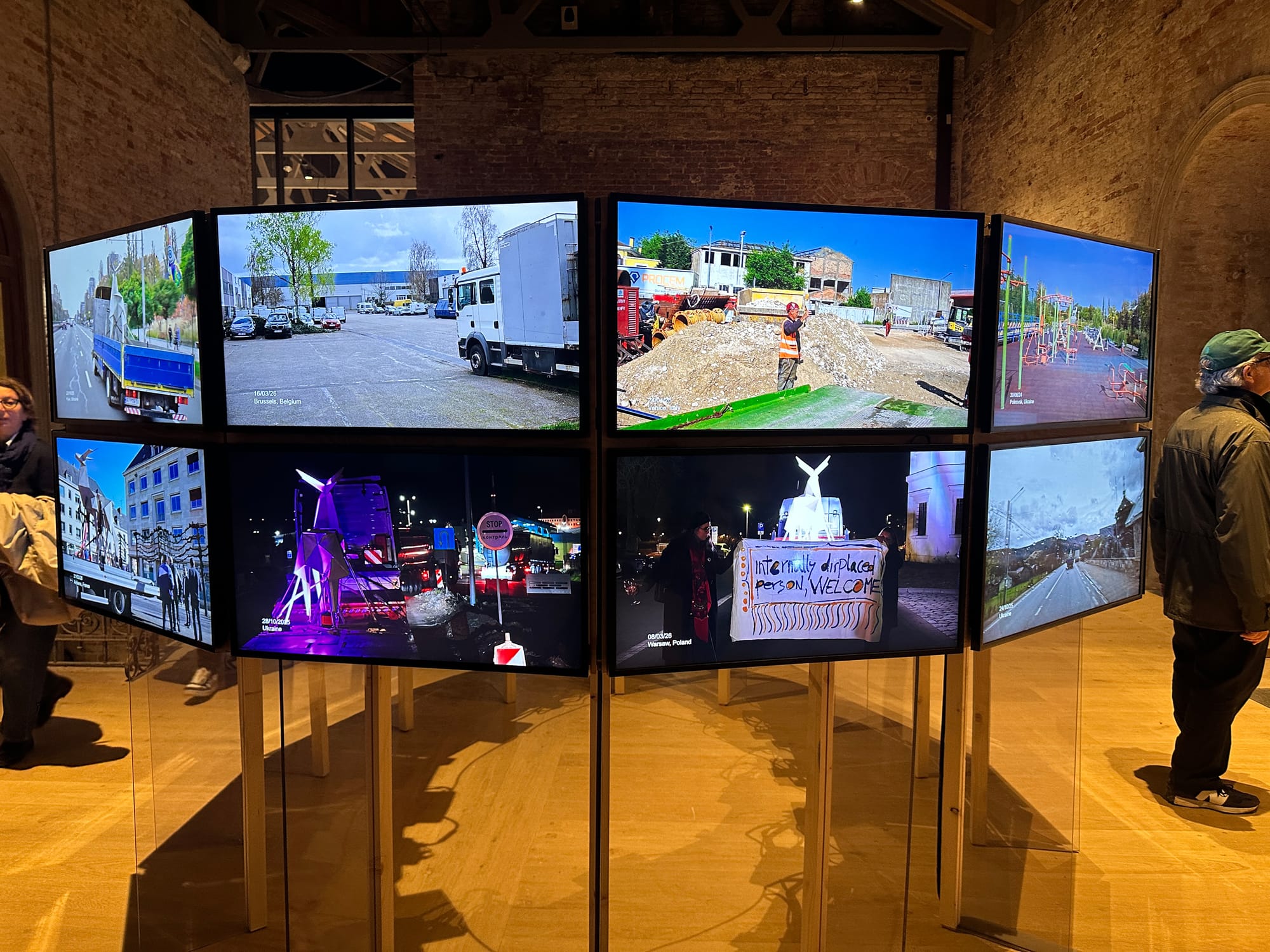
The video installation is captivating and engrossing, with the circular construction echoing the roughly circular route of the voyage. Short, silent clips from different perspectives record the sculpture en route on a flatbed truck — inquisitively eyeing its surroundings as it rolls through the countryside, regal and proud as it enters the city (including Venice, on a boat) — often tender, yet always forceful. One sees the people — scholars, programming staff, curators — who made this voyage possible, Kadyrova’s roving Ukrainian “family”; the connection they developed with one another is palpable in the familial way they greet each other. At each stop the sculpture was exhibited (I saw it in Berlin), the organizers held symposia concerning Ukraine and the war, and threw parties, with the videos capturing the revelry — joy and exuberance amid grief, war, and outrage. The work confirms the life spirit and humanity of Kadyrova’s project, which contrasts so extremely with the death and destruction wrought by Russia. Deeply emotional refugees from Pokrovsk showed up at each stop to experience this reminder of a ruined, stolen home.
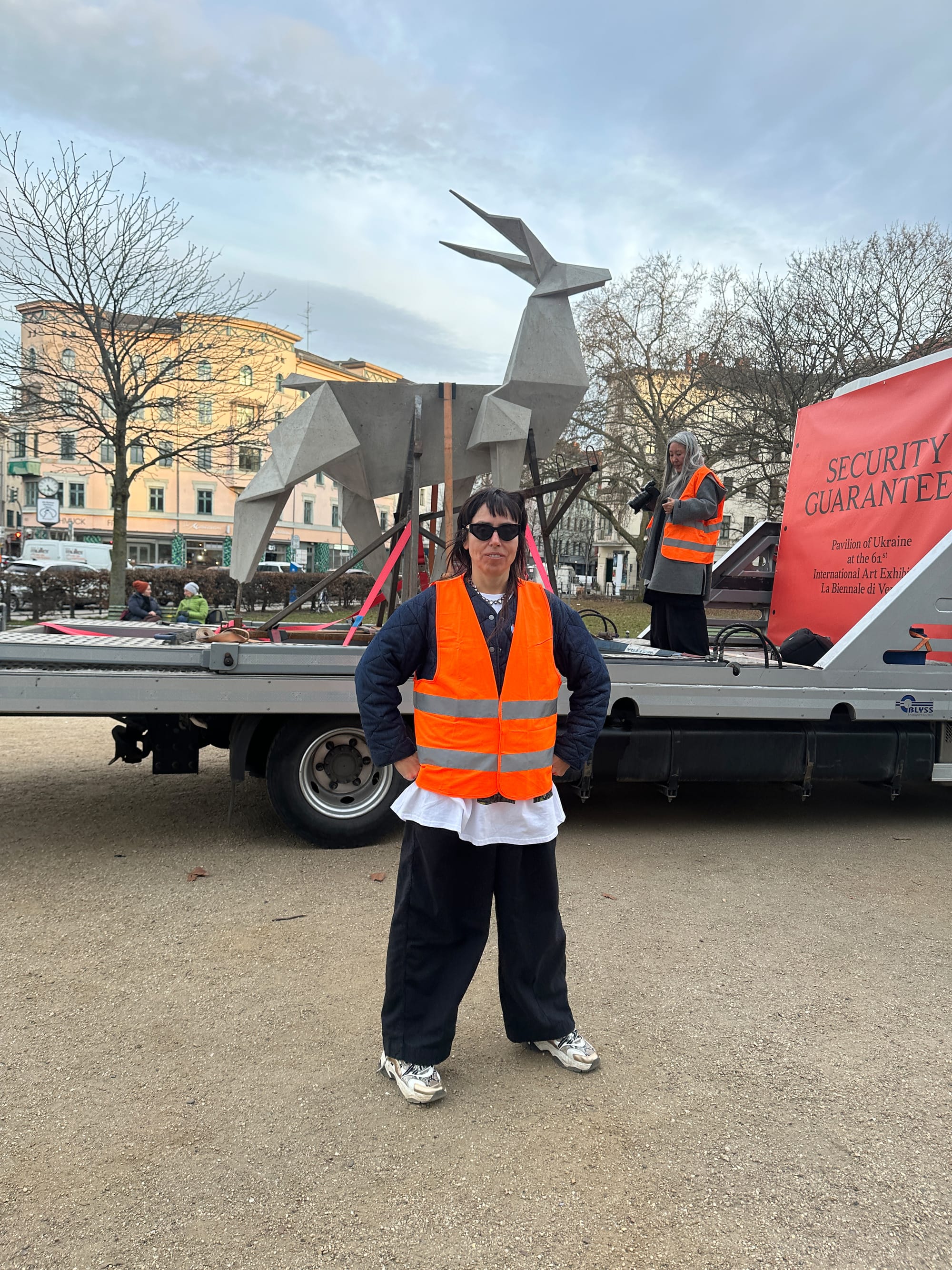
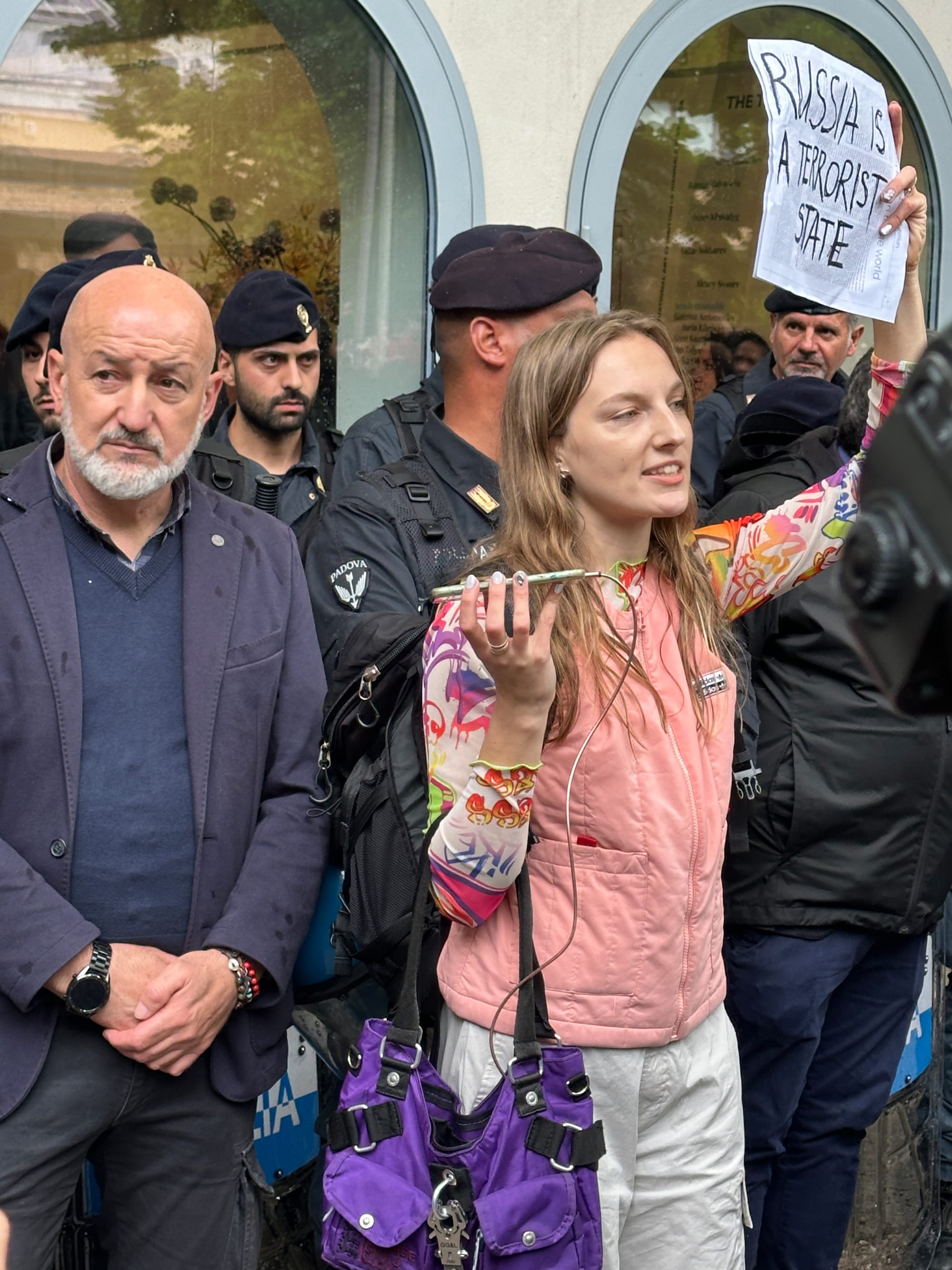
Left: Zhanna Kadyrova in front of her "The Origami Deer" (2019) in Berlin; right: protests outside the Russian pavilion at the Venice Biennale
Some excerpts are delightful, as when Kadyrova and her team, all wearing orange “Security Guarantees” vests, along with what seem to be politicians and dignitaries, line up in front of the deer in Paris, or when a smiling, jostling, camera-wielding crowd in Lviv, Ukraine, welcomes and celebrates the deer. Others are searing. In a shot from a sunny day in 2024, Kadyrova and her team attend to the sculpture while passersby stroll about. Pokrovsk looks normal and pleasant, a mid-sized city of some 70,000 inhabitants (although many had already fled) with a newly renovated park. The front line was not far off, and getting closer; explosions and mayhem were on the horizon.
Then there is the deer itself, with its complex messaging. Dangling in mid-air, a sculpture pried from its base and torn from its rightful home, it signals precarity and uprootedness, upheaval and vulnerability, all of which have been and are currently being painfully experienced by Ukrainians in droves. With its upraised head and powerful, defiant posture, it also signals hope, strength, resilience, and resolve — a totemic animal for these trying, war-wracked, freedom-seeking times.
Zhanna Kadyrova: Security Guarantees continues at the Ukrainian pavilion at the 2026 Venice Biennale through November 22. The exhibition was curated by Ksenia Malykh and Leonid Marushchak.