Thousands Decry Right-Wing “Smear Campaign” Against Misan Harriman
“Truth itself is on the line,” the Southbank Centre board chair told Hyperallergic, rejecting accusations of antisemitism leveled by conservative outlets.

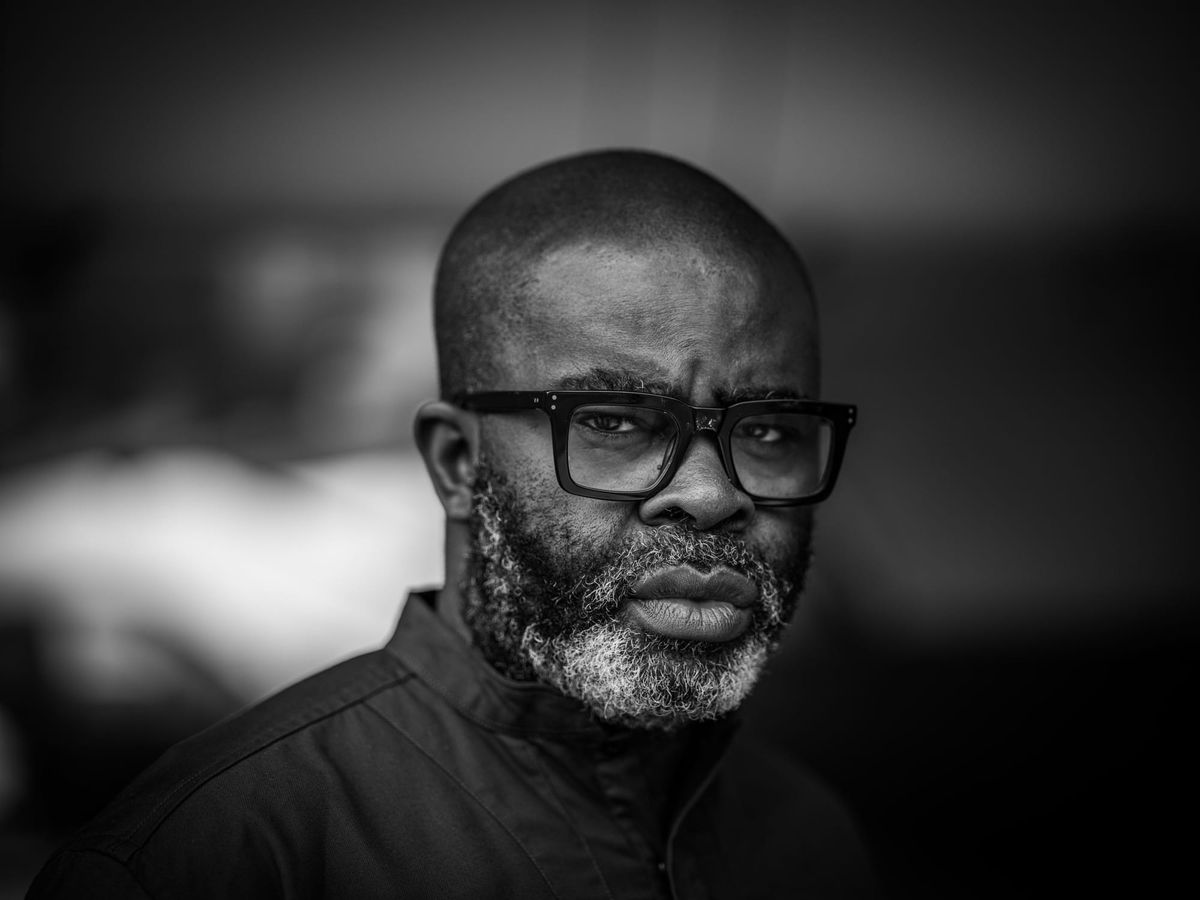
Over 97,000 people have submitted complaints to the United Kingdom’s Independent Press Standards Organisation after right-wing news outlets published back-to-back articles characterizing British-Nigerian arts trustee Misan Harriman's recent social media posts as antisemitic. Alongside the complaints, Tracey Emin, Greta Thunberg, Mark Ruffalo, Peter Doig, and Aimee Lou Wood were among the 245 original signatories of an open letter in support of the photographer and human rights activist as articles amplified calls for his removal from the board of the Southbank Centre in London.
Harriman has rejected the characterizations of his social media posts as antisemitic. “I’ve organized for Black Lives Matter, championed women’s rights, LGBTQ+ rights, transgender protections, and for the Ukrainians during the war, and no one has had a problem until I started speaking out against Israel’s genocide in Palestine,” he said to Hyperallergic.
“Truth itself is on the line; just because these right-wing and frankly racist newspapers scream the loudest, it does not mean it is the truth,” Harriman told Hyperallergic. “To have by far the most complaints in British newspaper history means the people have had enough.”
Harriman was appointed board chair of London's Southbank Centre, the UK’s largest visual and performing arts venue, in 2021. As a self-taught photographer, he quickly gained editorial and art-world acclaim for his protest images of the 2020 Black Lives Matter movement and became the first Black man to shoot a British Vogue cover for the September issue that year. His oeuvre balances socially conscious photojournalism and celebrity portraiture with a recent pivot to documentary film. Harriman is also a vocal advocate for human rights causes within Gaza, Sudan, and the Congo, and became a global ambassador for Save the Children UK in 2022.
The media coverage of Harriman started the day after British Prime Minister Keir Starmer's remarks on increasing government efforts to tackle antisemitism following the recent attacks in Golders Green, a north London suburb with a prominent Jewish community, during which two Jewish men were stabbed. Regarding the arts and culture sector, Starmer stated that the Arts Council “must act, using its powers to suspend, withdraw and claw back funding” being used to “promote or platform antisemitism.”
On May 6, the Telegraph published an article that scrutinized Harriman's recent Instagram activity, focusing on a post that prompted Labour Member of Parliament David Taylor to suggest that Southbank remove Harriman from its board and have its state funding reconsidered. Harriman had reshared a post criticizing the police and media's characterization of the Golders Green attack as antisemitic and terroristic, citing the fact that the assailant had attacked a Muslim acquaintance in south London before journeying to Golders Green.
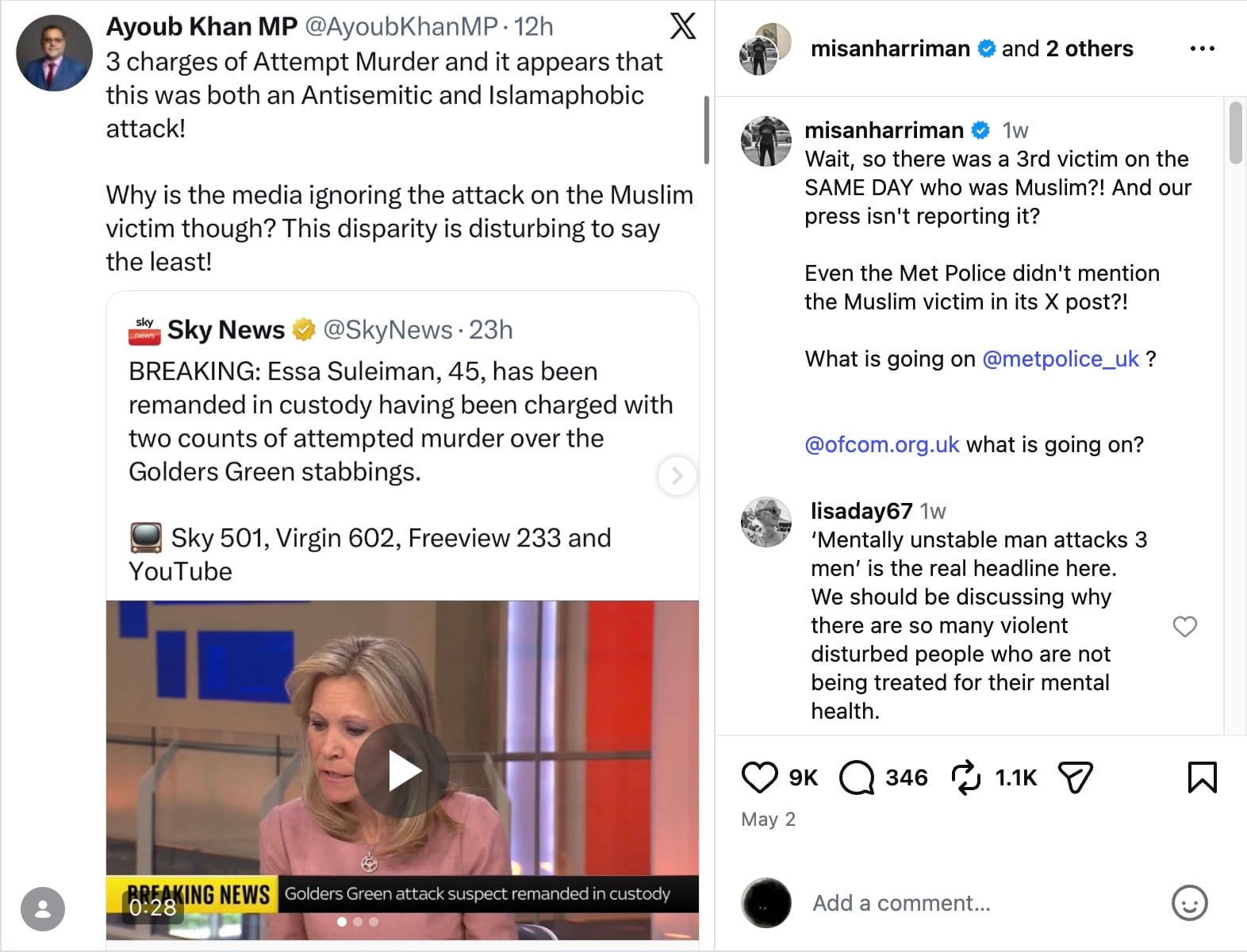
Harriman wrote in the caption that he wasn't aware of the Muslim victim's background and wondered why the Metropolitan Police and the press hadn't been acknowledging it more widely. The Telegraph also highlighted posts in which Harriman criticized Israel, the UK's Reform party, and actor Sydney Sweeney's jeans campaign.
Last week, the Telegraph published a second article fixating on Harriman's video response to the far-right Reform party's sweeping wins during the recent local elections. In discussing the results, he referenced a widely shared quote by writer and critic Susan Sontag. When asked what she had learned from the Holocaust, Sontag responded that “10 percent of any population is cruel, no matter what, and that 10 percent is merciful, no matter what, and that the remaining 80 percent could be moved in either direction.” A video clip of Harriman quoting Sontag was clipped from the segment and posted on X.
The Telegraph’s report cited Robert Jenrick, a Reform parliament member, and Karen Pollock, CEO of the Holocaust Educational Trust, both of whom accused Harriman of comparing Reform voters to Nazis. “This crass moron should be nowhere near a taxpayer funded organisation,” Jenrick wrote in a post on X. Other right-wing outlets, including the Daily Mail, the Daily Express, and GB News, quickly picked up the story.
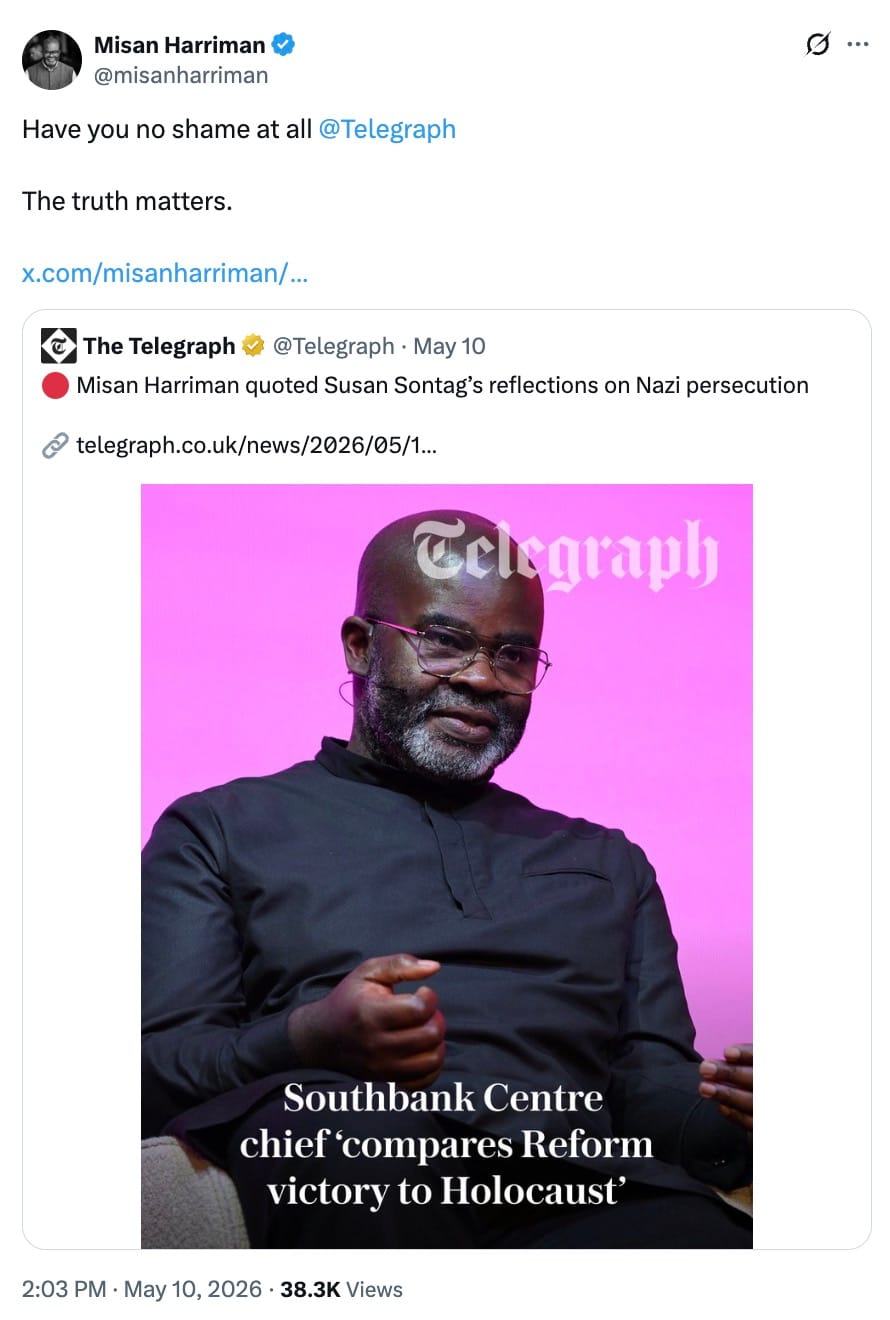
Celebrities, civilians, media professionals, and even former Israeli peace negotiator Daniel Levy came to the artist's defense online, many of them decrying the articles about him as a “smear campaign.”
Through the media monitoring platform NewsCord, close to 100,000 people have filed complaints with the UK’s International Press Standards Organisation, which regulates the Telegraph, the Mail, and the Express. The Guardian reported that several members of parliament penned a missive defending Harriman to the Secretary of State for Culture, Media and Sport. The star-studded open letter, which states that the campaign against Harriman is “entirely without foundation in fact” and meant to intimidate others from speaking out, has since garnered over 20,000 signatures.
Harriman told Hyperallergic that people are fed up. “If the Independent Press Standards Organisation has any legitimacy, it must not let the impunity of the right-wing press continue in this way,” Harriman said.
The Southbank Centre did not respond to Hyperallergic's request for comment. A spokesperson for the institution told the Guardian earlier that “all board members, including the chair, have the right to exercise their freedom of expression within the law.”Harriman currently remains as the Centre's board chair.
The artist is among the few non-White executives and trustees representing British arts and culture institutions — a landscape that has weathered repeated allegations of racism and a general lack of diversity in the 21st century.
The questioning of Harriman's role as the Southbank Centre's board chair comes three months after South Asian cultural programmer Devyani Saltzman abruptly departed from her senior role at the Barbican Centre after less than two years as a result of organizational restructuring, which prompted questions seeking institutional transparency.