vanessa german’s Shrine to Forgotten Black Girls
In new sculptures that vibrate with color and movement, the artist vivifies the stories of the girls who attempted to escape from a Louisville detention center in 1913.

LOUISVILLE — The idea of freedom, it seems, is embedded in Louisville, Kentucky. Situated on the banks of the Ohio River, the city once provided a crucial corridor for enslaved Black people to escape northward. Later, in 1896, the Louisville Industrial School of Reform added a Colored Girls Dormitory to incarcerate 15 Black girls. The stories of these young women might have been entirely erased were it not for their bold attempt to escape, carried out in the darkness of one hot summer night in 1913.
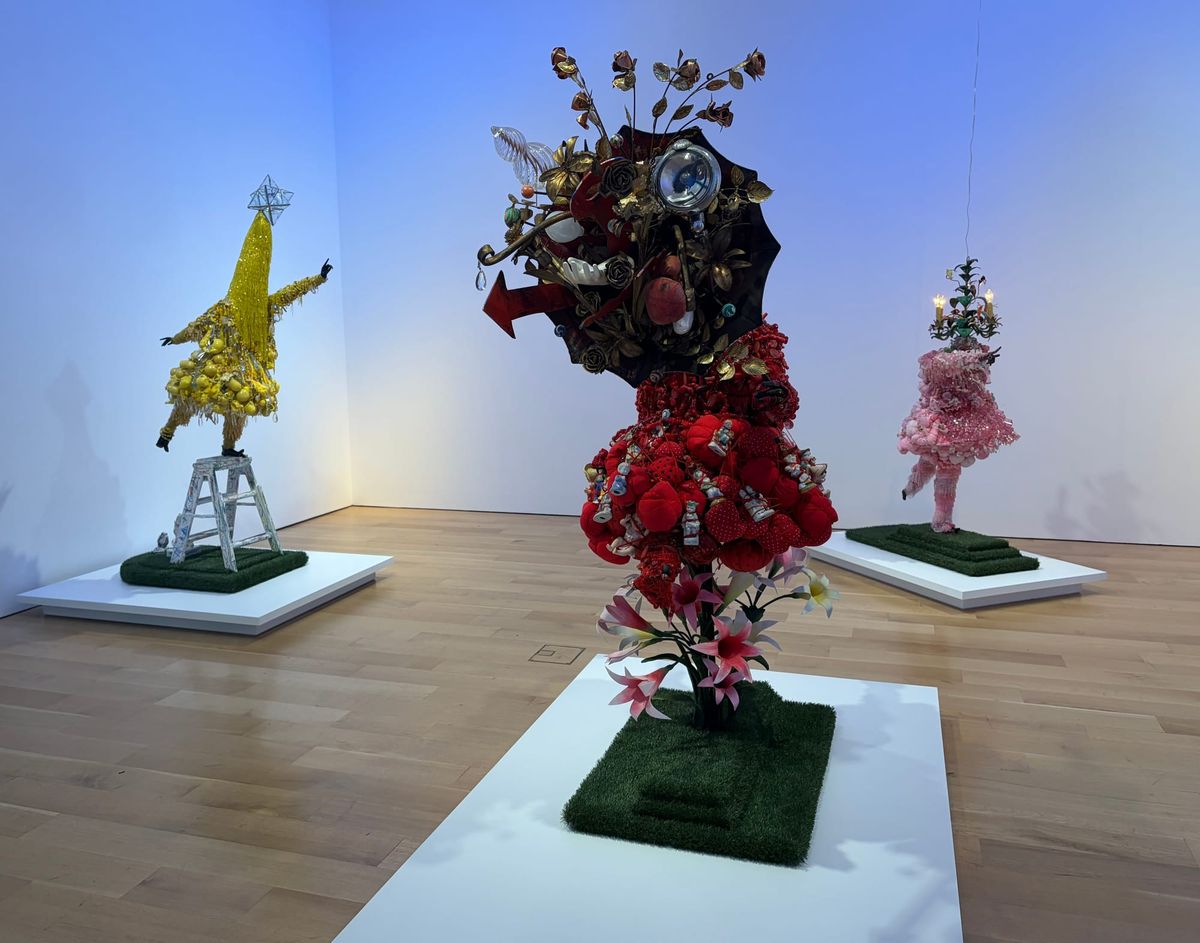
This emancipatory gesture provided the foundation for vanessa german’s work as the inaugural participant in the Sam Gilliam Visiting Artist Program at the Speed Art Museum. Her research informed a three-day participatory performance series last October as well as the current exhibition, …do you remember when you were the sky?. In this show, german brings the faint fragments of the girls’ history into her signature assemblage practice to create new sculptures and wall works that vibrate with color, movement, and playful vitality.
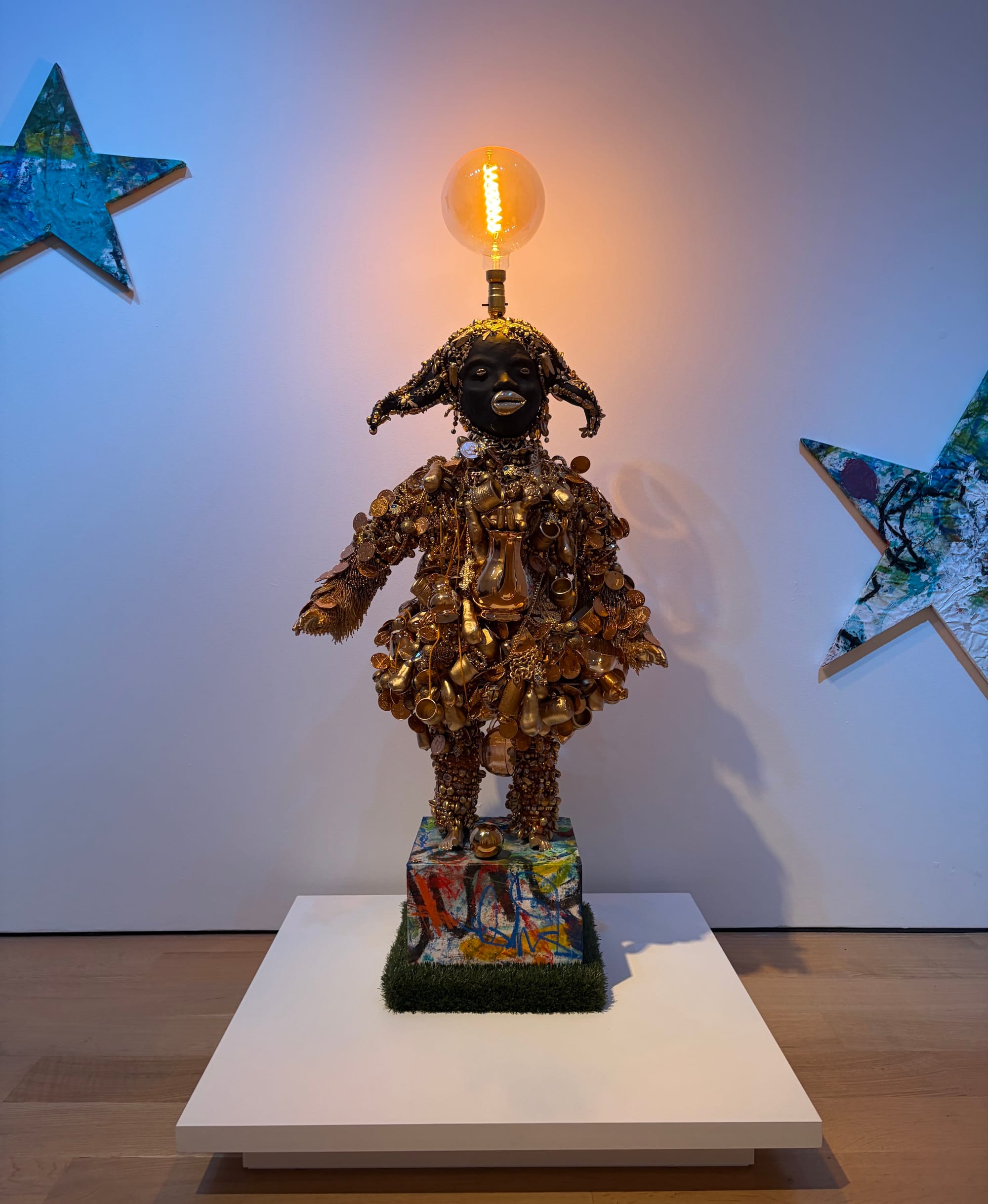
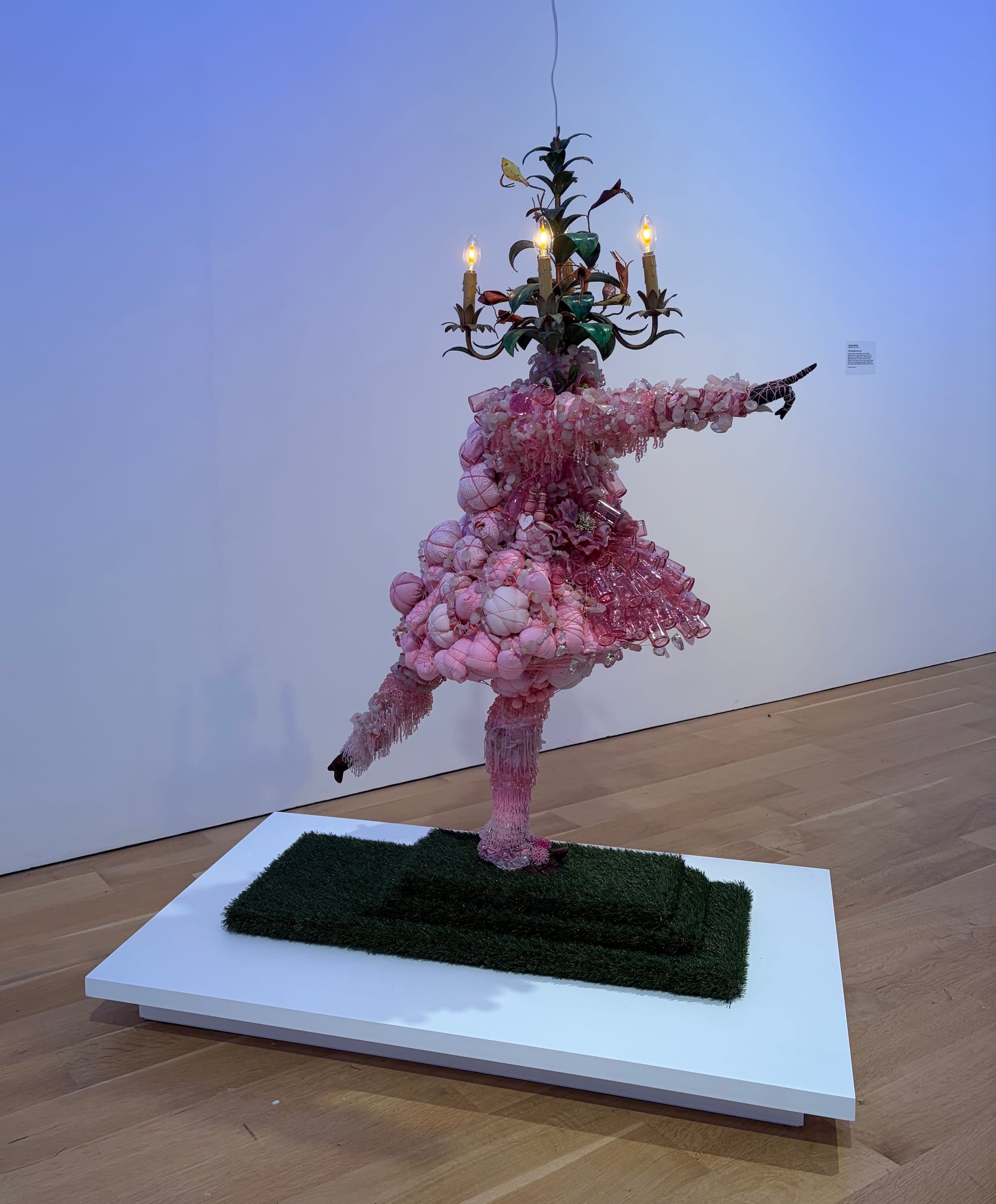
The figures, each about four to five feet tall, are dominated by glittering bricolage: ceramic teacups, glass bottles, wooden and glass beads, ribbons, yarn, textiles, and other found objects such as keys, coins, cowrie shells, porcelain figurines, and child-size boxing gloves. Together, they tell the story of the girls’ plotting and escape: “The Girl Who Had The Idea” balances on a step stool, radiant in yellow-gold, her face covered by an elongated headpiece that shimmers with cascading beads; a glass merkaba balances at its apex. Her small body reaches forward on one foot as if in excited anticipation; her hand points slightly ahead to a pink figure titled “The Girl Who Lit The Path.”