You Can Love David Hockney and Still Hate His iPad Paintings
No amount of curatorial artspeak counters the sense that the late artist’s massive digital painting lacks the inventive mark-making and use of color that characterized his life’s work.

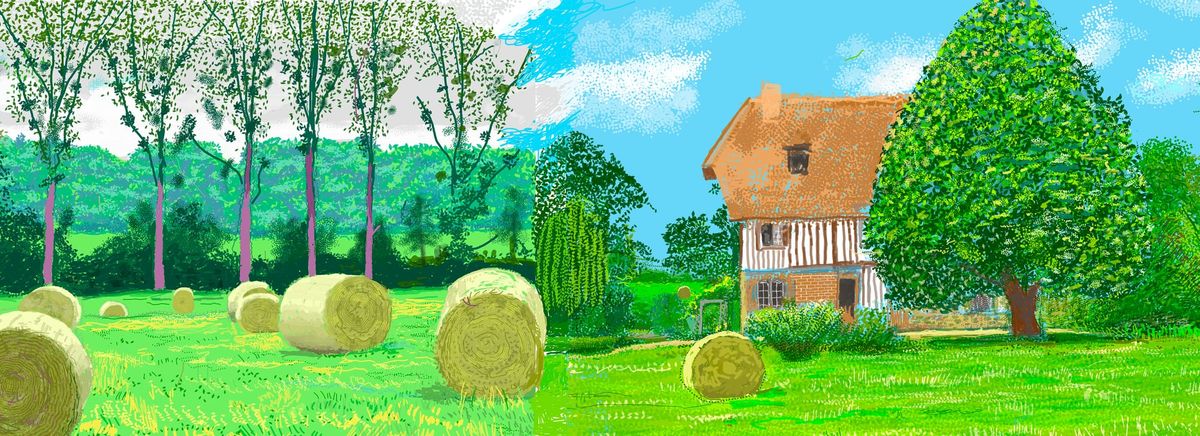
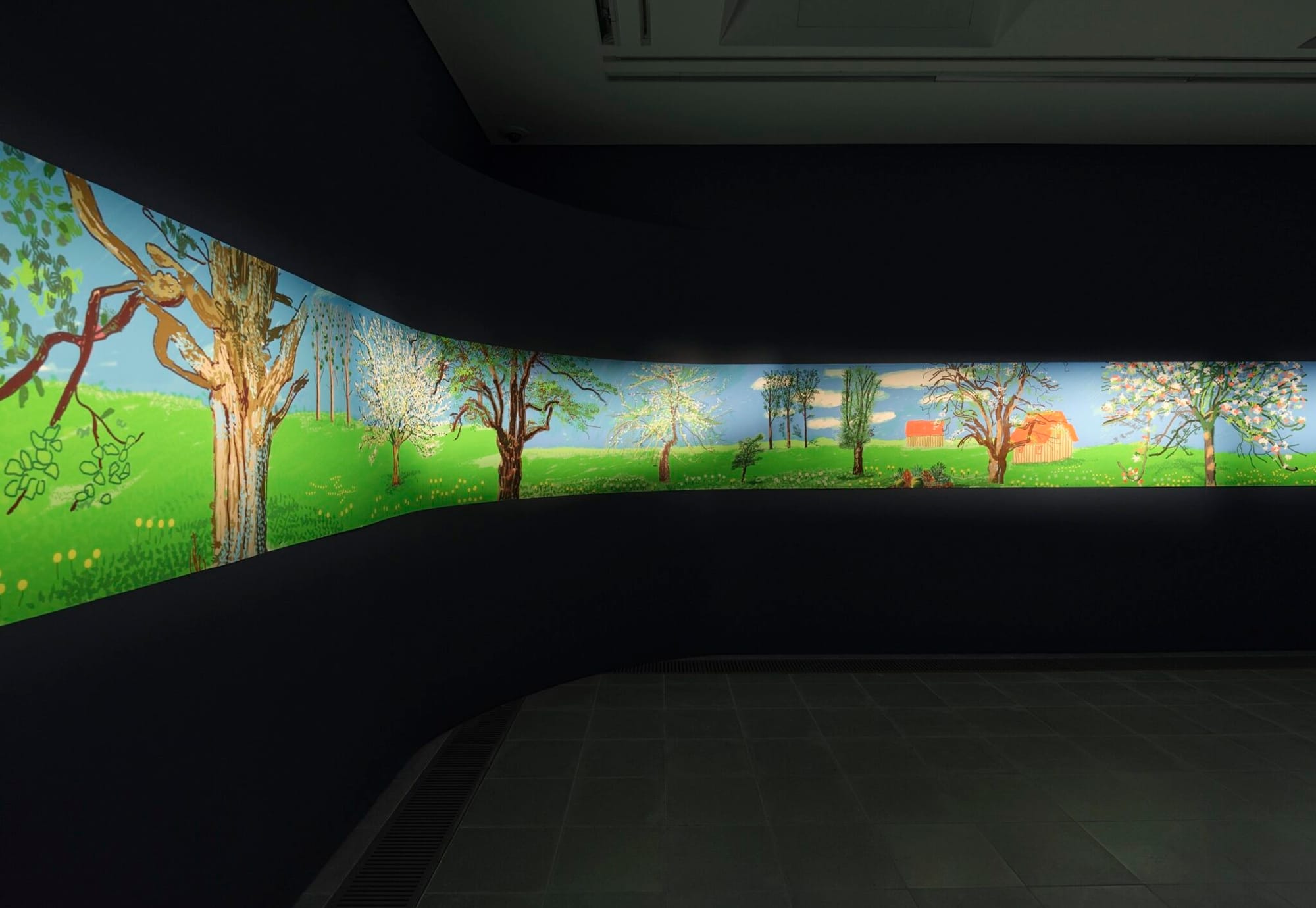
LONDON — The Bayeux Tapestry, an 11th-century, 230-foot (~70-meter) linen that illustrates the story of the Norman conquest, has just returned to England after nearly a millennium for a forthcoming exhibition at the British Museum. Was David Hockney taking the piss out of this event by presenting an even longer 295-foot (~90-meter) composite iPad “painting," titled “A Year in Normandie” (2020–21), at Serpentine Galleries in March?
Hockney, who died last month at age 88, argued against the Bayeux Tapestry’s loan from the French government due to the risk to the object, a concern expressed by numerous historians and scholars. Yet his Serpentine show, entitled A Year in Normandie and Some Other Thoughts About Painting, cites Hockney’s “endless invention” through more than 100 printed iPad paintings digitally “stitched” together. Encircling the gallery interior, this work is meant to “encourage movement and close looking,” as the opening wall text states. Furthermore, the exhibition purports to highlight how Hockney’s work “fuses digital tools with ancient traditions,” inspired by 14th-century Chinese scroll paintings and, yes, the Bayeux Tapestry itself.