“Costume Art” Is a Bad Look for The Met
The exhibition shapes a fashion canon based less on historical relevance than on the interests of those in charge.

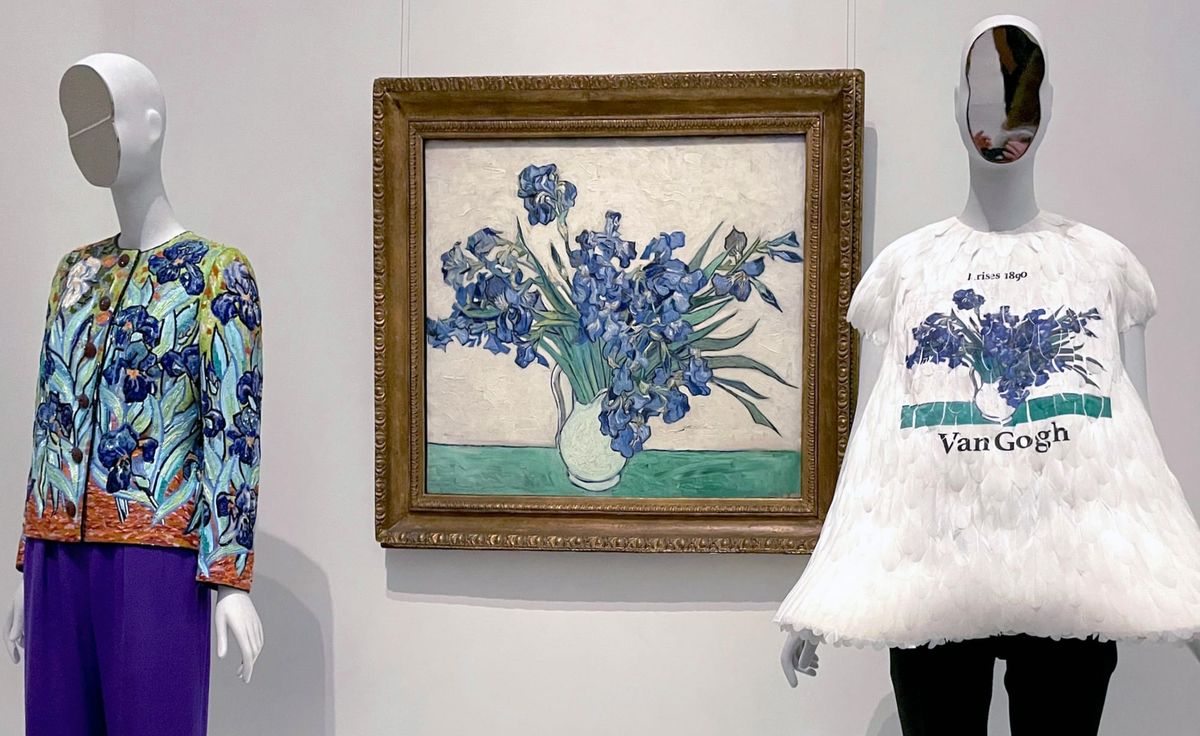
For an exhibition with such a simple title, Costume Art at the Metropolitan Museum of Art is awfully confusing. It’s also fairly problematic, but let’s start with the confusing parts. The show pairs garments and art objects to accomplish the radical task of “reveal[ing] the inherent relationship between clothing and the body,” as the website concisely explains. The artworks are meant to demonstrate the clothed body’s presence across The Met’s collection, evidently establishing the Costume Institute as the museum’s beating heart.
So clothing and the body are related, a fact to which The Met’s artworks attest. This ridiculously broad proclamation is organized into body typologies, starting with “Naked and Nude Body.” Other sections include “Anatomical Body,” “Abstract Body,” “Aging Body,” “Mortal Body,” and “Epidermal Body.”
With around 200 garments filling the Costume Institute’s nearly 12,000-square-foot, Grand Hall-adjacent new Condé M. Nast Galleries, certain pairings do enable visitors to experience the objects “through the lens of fashion, so the art becomes embodied,” as the Costume Institute’s Curator in Charge Andrew Bolton told the Art Newspaper — diaphanous Grecian-style gowns coupled with ancient Greek vessels, for instance.
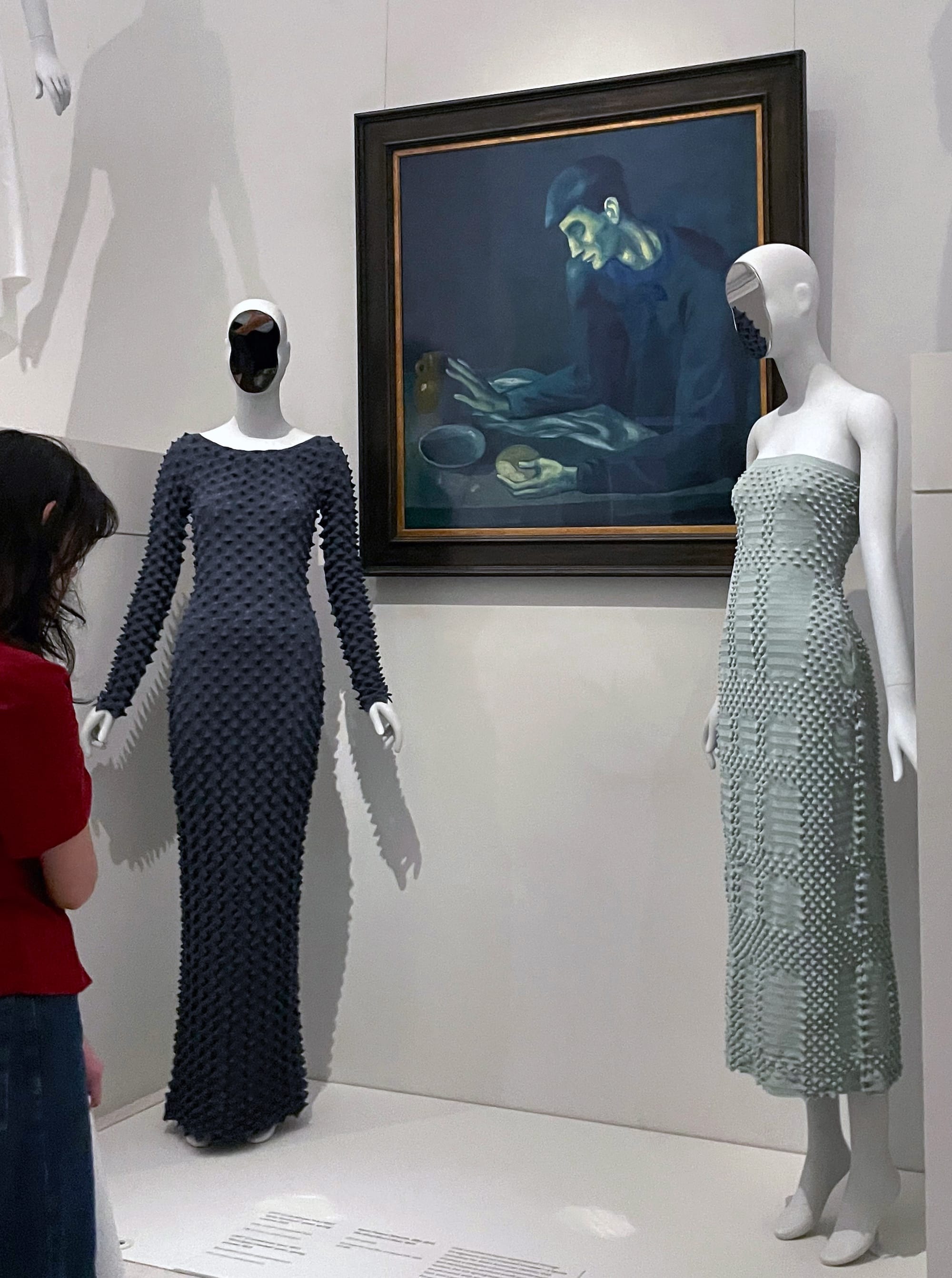
Many other correspondences come across as forced, superficial, or questionable. For example, clothing by Chet Lo, who offered fabric swatches and audio descriptions to people with blindness and vision disabilities for his Spring 2025 collection, is juxtaposed with Picasso’s painting “The Blind Man’s Meal” (1903), while a limestone votive ear with the inscription “I belong to a deaf person” (4th–3rd century BCE) accompanies a “Deaf Dysmorphia” ensemble (2023) by designer Justin Dougan-Leblanc, who is deaf. If inclusiveness is a priority, why not feature artists living with blindness and deafness — for instance, Emilie Louise Gossiaux and Christine Sun Kim? Could the constant selfies at the Lo-Picasso display be the answer? This space was once a gift shop..
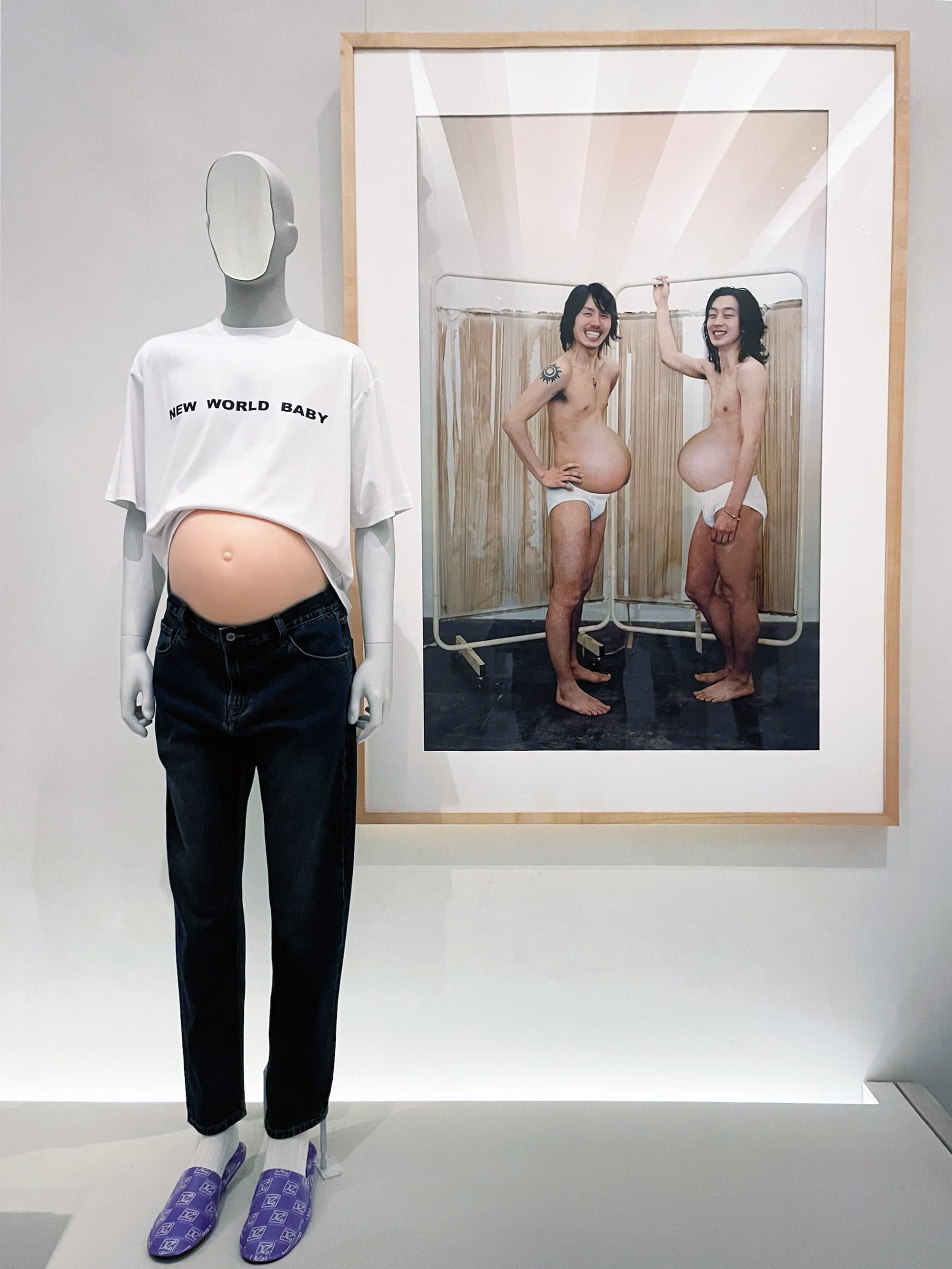
Likewise, a section titled “Pregnant Body” includes several works by (cis) men, as does “Reclaimed Body.” The latter couples Michaela Stark’s body-binding outfit “Twisted” (2026) with a photograph by Hans Bellmer of one of his faceless, limbless poupée (doll) sculptures.