Gather 'Round, Willie Birch Is Speaking
Across five decades of work, he always asked: What's my neighborhood, and what does it need?

LOS ANGELES — Imagine sitting next to your favorite uncle. Or rather, you’re a child perched on his lap, enraptured by the tales he tells of things he’s seen and places he’s been. He draws you in with his eloquence, the vividness with which he can animate and transfer the world he’s explored into your own mind. You can taste, hear, and feel everything he’s sharing with you, right where you are. Willie Birch: Stories To Tell is an exhibition that plants every viewer in that position: safely ensconced in the sphere of sharing. At the California African American Museum, this career retrospective of Birch — his first ever — spans over five decades of work across multiple mediums and cities.
Weaving chronologically through Birch’s life and art, this exhibition gives one the sense that he has a keen interest in people — at large, but especially Black people. There is an affinity for observing community practices, ways individuals navigate the world, and how past actions influence and inform present activities.
The exhibition begins in the 1970s, a decade when Birch seemed amused by patterns of behavior. His work from this period comments on and codifies how people move within Black traditions and histories. There is “Voodoo Series #1” (1978–79), a mixed-media work based in Xerox collage that marries symbols of ancient spiritual and medicinal practices with then-burgeoning household technology. Or “Passages” (1982), a literal rumination on movement across oceans with carved, brown wooden bodies on a painted water-like surface. The figures are arranged like a second-line parade from Birch’s hometown of New Orleans, their faces either appearing serene or portending great danger. After moving to New York City in 1975, Birch created “New York City Jazz Series” (1978) — a gridded painting of invented symbols, pictograms, and hieroglyphs — to mimic jazz musical notation and codify the goings-on of his new environment.
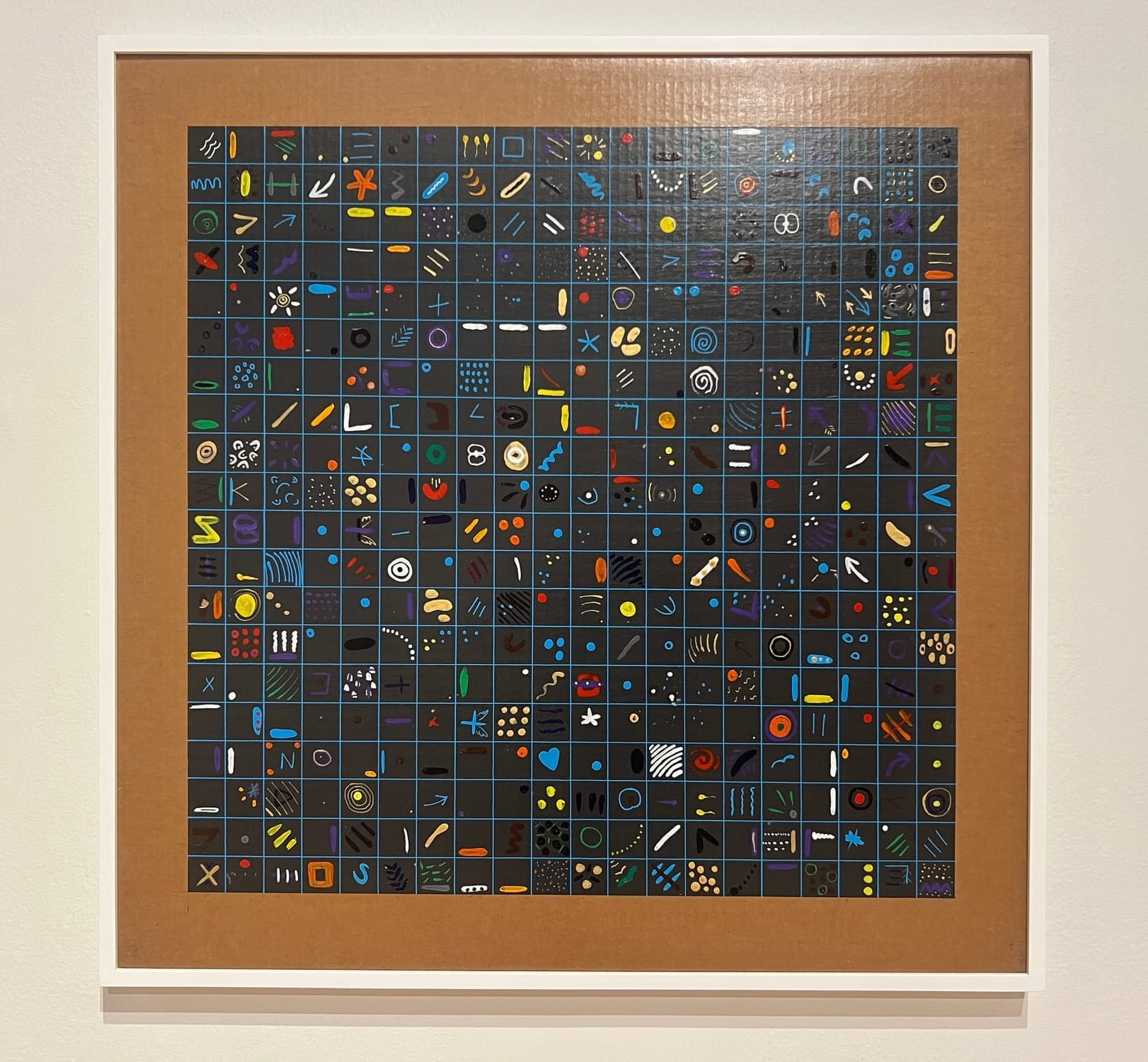
New York grows more prominent as the exhibition moves into the second major era of Birch’s work, when he began introducing paper-mâché to his technique. Graphite, charcoal, and acrylic paint form large-scale New York scenes like short stories, while paper-mâché frames extend the core ideas of these works. Three-dimensional touches and debossed words give context to Birch’s thinking at the time. Works like “Keeping Up with the Iran-Contra Hearings” (1987) and “Birthday Celebration for Nelson Mandela” (1988) reflect the concerns of New York City's Black community with its leading figures while situating those concerns within the broader national and political issues shaping life in the city.
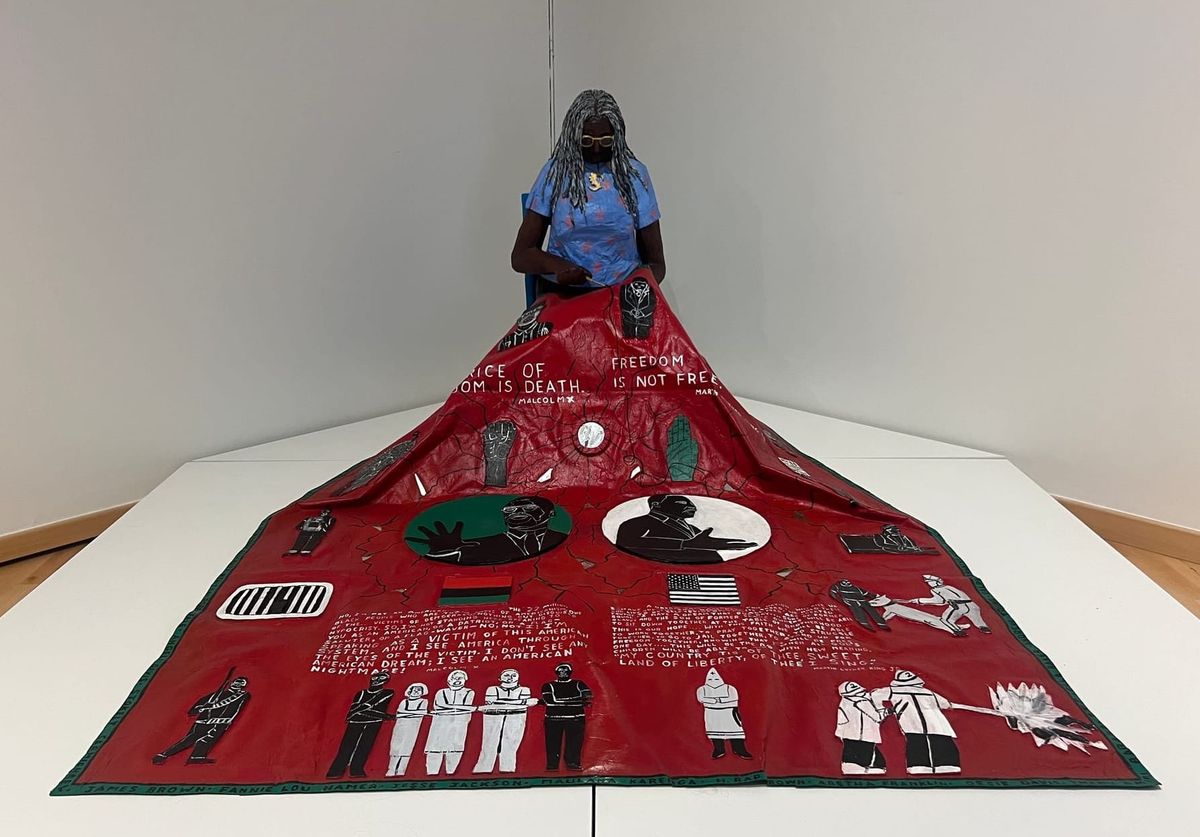
The wall-hanging pieces give way to a new era in Birch’s work: life-size figures. Variously hued Black bodies animate the exhibition space, posed as if telling their own stories. From smaller, sconce-sized sculptures like “For Alex Haley” (1993) to figures that could fill a room, each lifelike presentation represents a layered aspect of Black existence. “Memories of the ‘60s” (1992) is a sprawling, intricate quilt of important events from the Civil Rights Movement. Centered on the words of Malcolm X and Martin Luther King Jr., the quilt rests across the knees of a woman with grayed locs sewing in the final seams; a gold Gye Nyame, an Adinkra symbol that gives praise to God, hangs around her neck. It’s an arresting piece, not only for its gargantuan size but for the simultaneous serenity and gravity it elicits. It also ushers viewers into a larger gallery of Birch’s more recent work.