ICE Seizes 22,000 Antiquities in Florida
The seizure of the allegedly smuggled artifacts comes amid the agency’s escalating violence and the Department of Homeland Security’s waiver of cultural preservation safeguards.

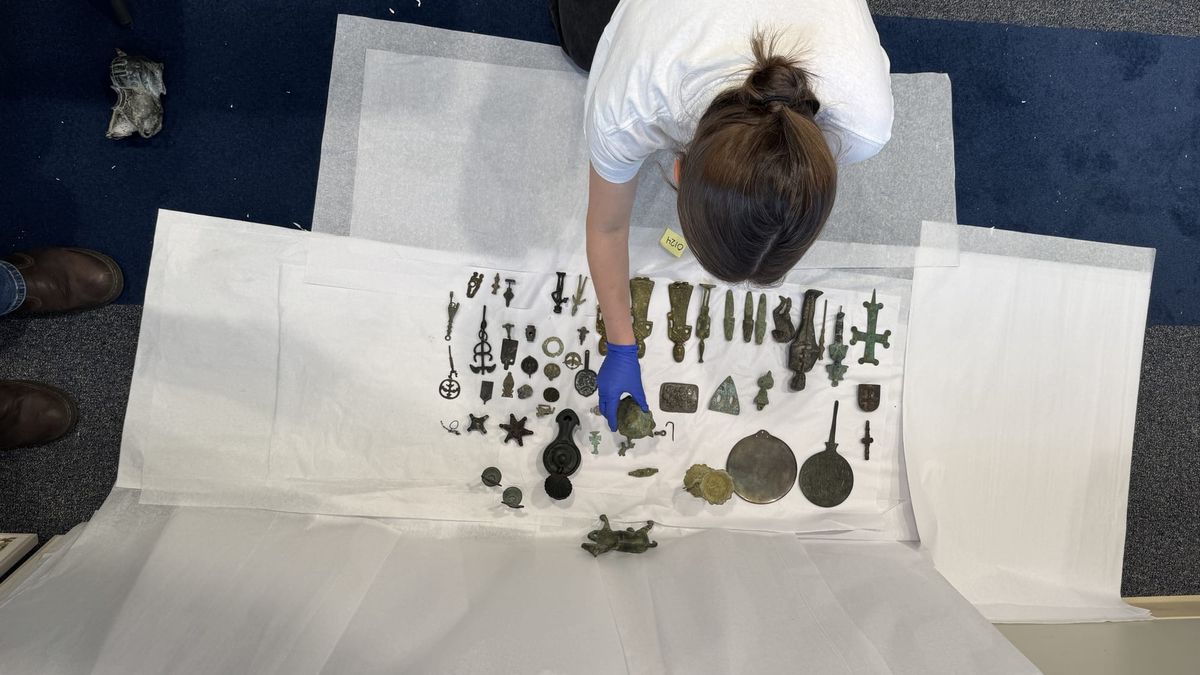
Immigration and Customs Enforcement (ICE) seized over 22,000 ancient artifacts in Florida last month, including Greco-Roman coins, terracotta and glass vessels, jewelry, and mosaic frames, yielding the largest object recovery in the department's ongoing probe into antiquities smuggling in the state.
Dated between 1,000 and 5,000 years old, the objects are said to have originated from sites across Europe and the Eastern Mediterranean, Africa, and the Levant. The Tampa Homeland Security Investigations (HSI) unit partnered with archaeological specialists and researchers at the University of South Florida and the University of Pennsylvania to authenticate, contextualize, and conserve the objects yielded during the seizure.
ICE and its parent entity, the Department of Homeland Security (DHS), continue to wage a campaign of brutality against immigrants in the United States that has also had consequences for the country's cultural heritage.
The Department of Homeland Security (DHS), under which ICE and HSI operate, came under fire this April after the Customs and Border Protection crew erecting Donald Trump's border wall “inadvertently disturbed” the millennium-old Las Playas Intaglio in Arizona, ultimately damaging a quarter of the Native American archaeological site with heavy machinery.
DHS followed up in July by waiving a majority of environmental, public health, and historical preservation barriers to expedite the construction of border barriers from the Big Bend region to Amistad Reservoir, Texas, threatening over 400 archaeological sites in the area.