The Disappearing Art of Iberian Democracy
The varied, confrontational works on view at Madrid's La Casa Encendida are reminders of the intense labor required to protect liberty.
MADRID — On April 25, 1974, Portuguese soldiers and civilians took to the streets to peacefully overthrow the Estado Novo regime that had ruled their country for more than four decades. Just over a year and a half later, Spain’s dictator, Francisco Franco, died after 36 years in power. Though distinct, both countries initiated their revolutions, transitions to democracy, and new constitutions around the same time. But 50 years later, far-right parties in both Spain and Portugal are gaining popularity, and a growing nostalgia for the days of dictatorship is even taking shape. It’s now worth asking: What happened back then, what changed, and what’s the state of Iberian democracy today?
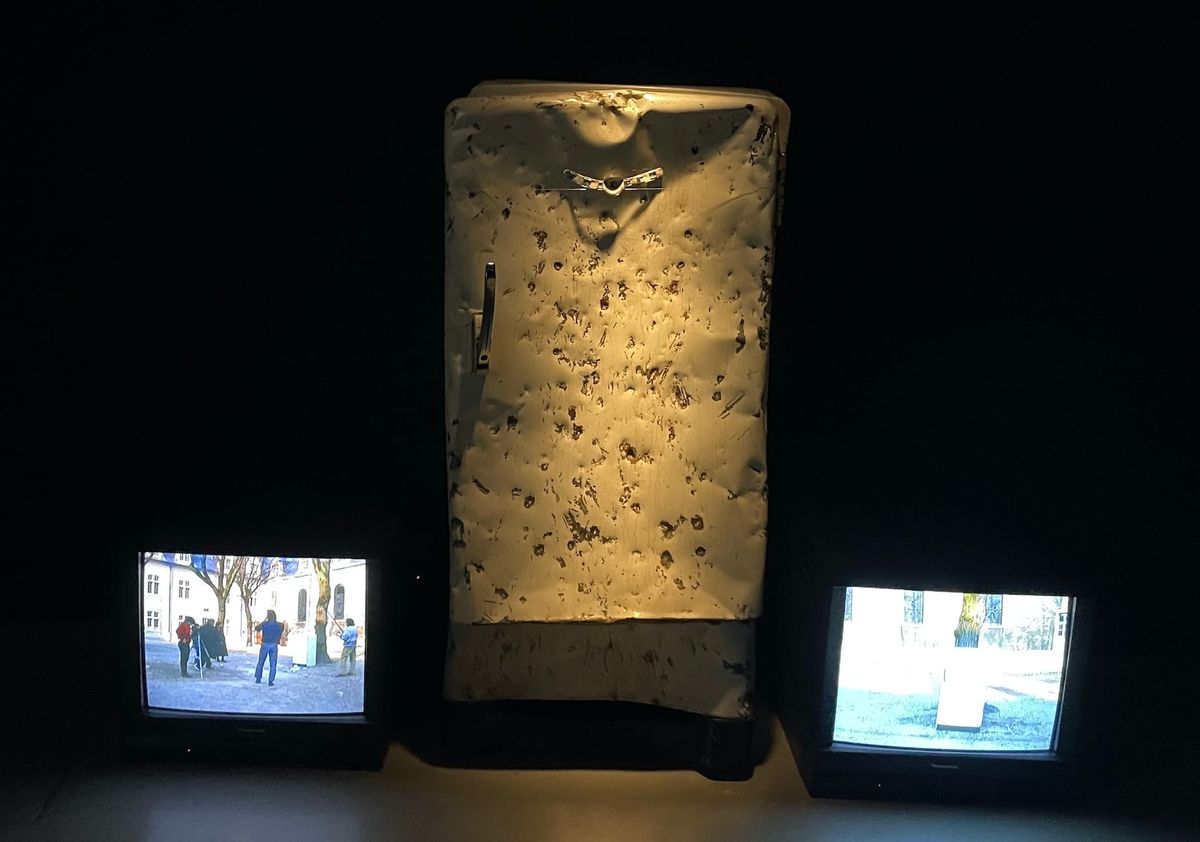
Inquietud. Libertad y democracia (Concern: Freedom and Democracy) at La Casa Encendida takes a hard look at these questions. Curated by Paulo Mendes and Sandra Vieira Jürgens, this stirring show features more than 50 artists (most Spanish and Portuguese) and nearly 80 paintings, photographs, videos, sculptures, and other artworks created before, during, and after Spain and Portugal transitioned to democracy. “The exhibition is a visual and sonic account of the time,” La Casa Encendida Director Pablo Berástegui noted on a recent tour of the show, and indeed Inquietud provides visitors with a remarkably dynamic sensory experience.
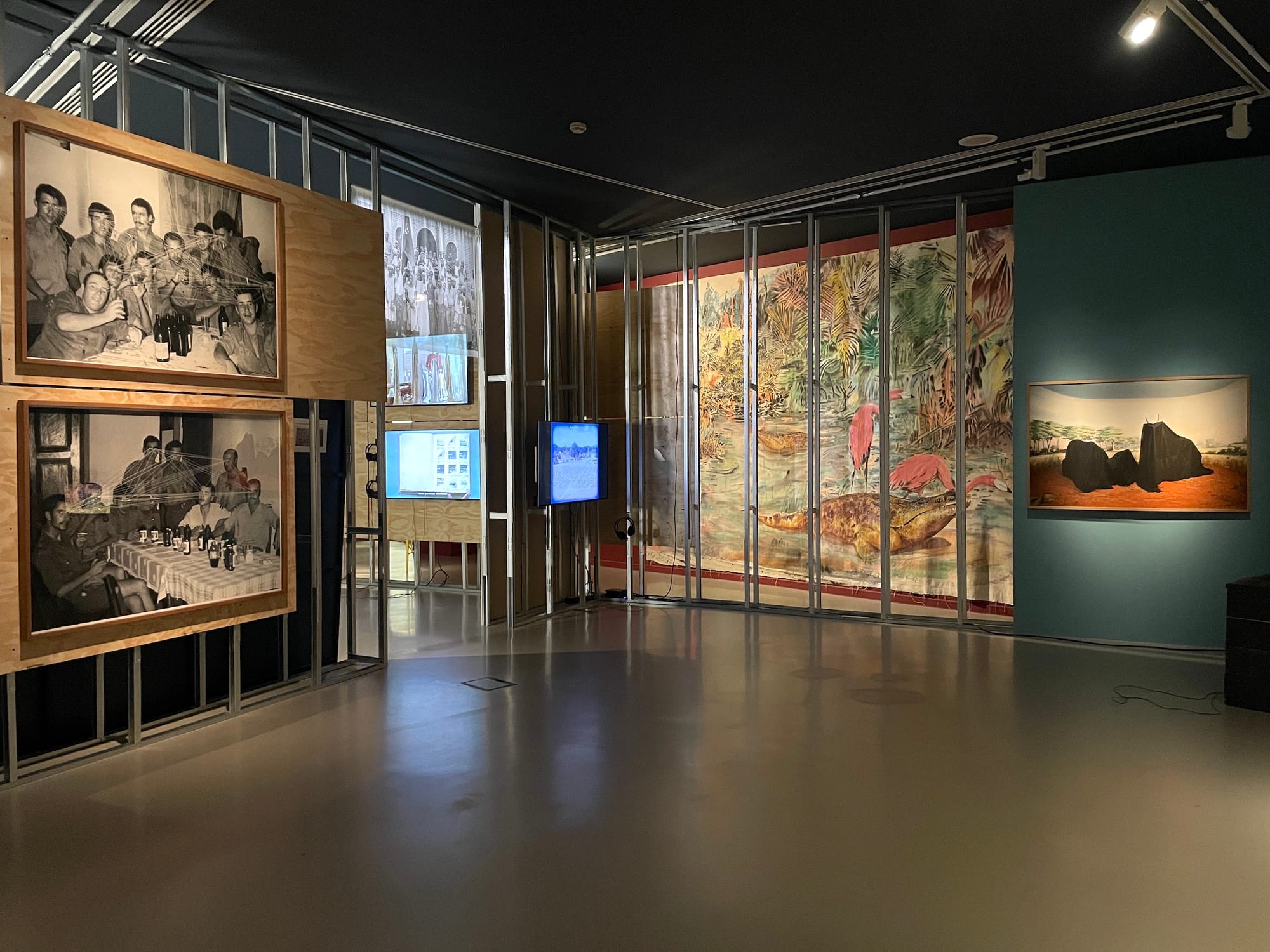
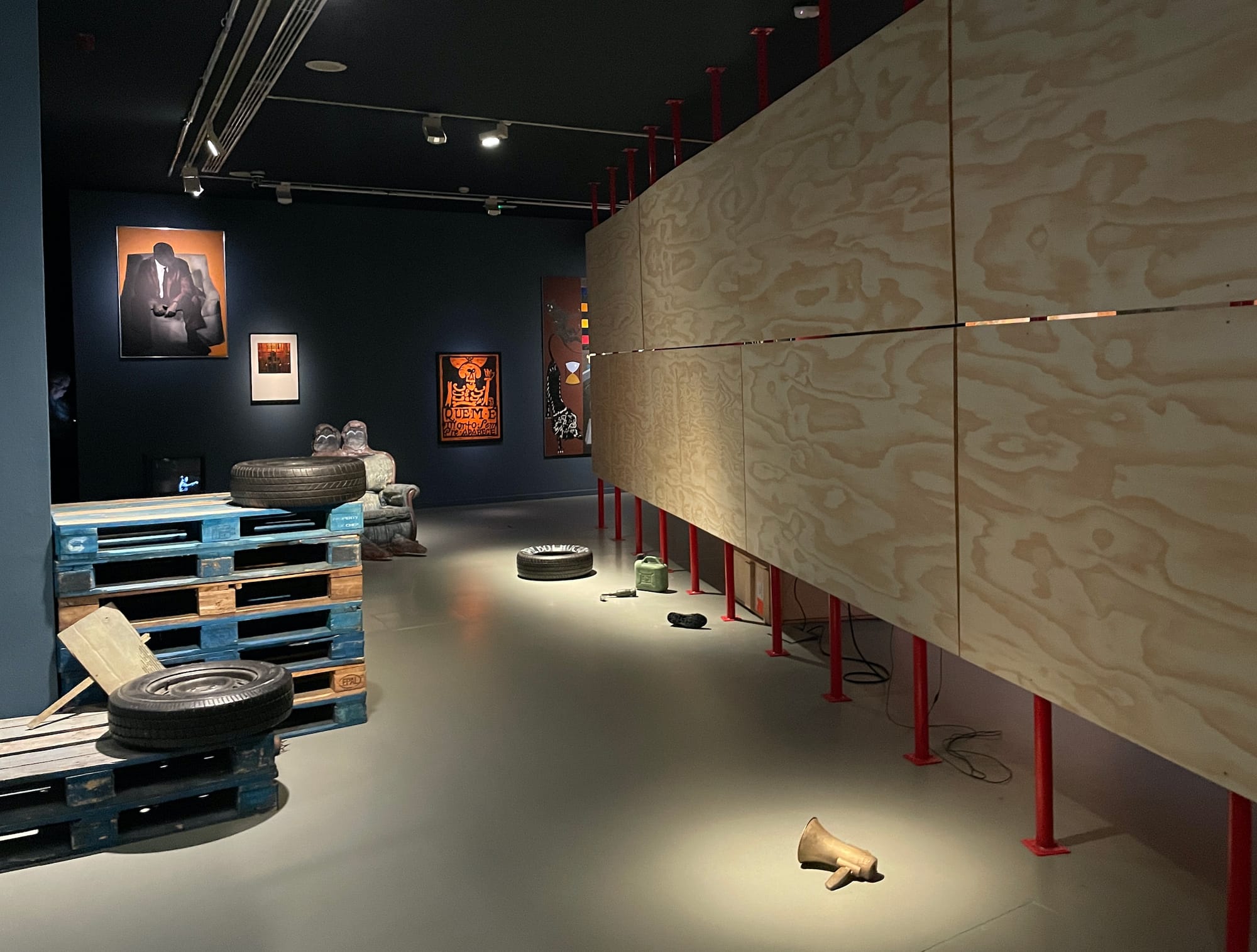
In fact, the exhibition takes its title from “Inquietação” (1982), an emblematic song by Portuguese singer, songwriter, and activist José Mário Branco that expresses a sense of post-revolutionary restlessness and instability. That feeling is reflected in the immersive, at times disorienting, multitude of revolution-era posters, stickers, speeches, and songs that crowd the space, as well as the nonlinear, quasi-unfinished quality of the exhibition design. With its provisional, unpainted walls, the space evokes a sort of construction site. This precarious lack of finality conveys the core idea of the show: Democracy is a work in progress that we all must constantly build.
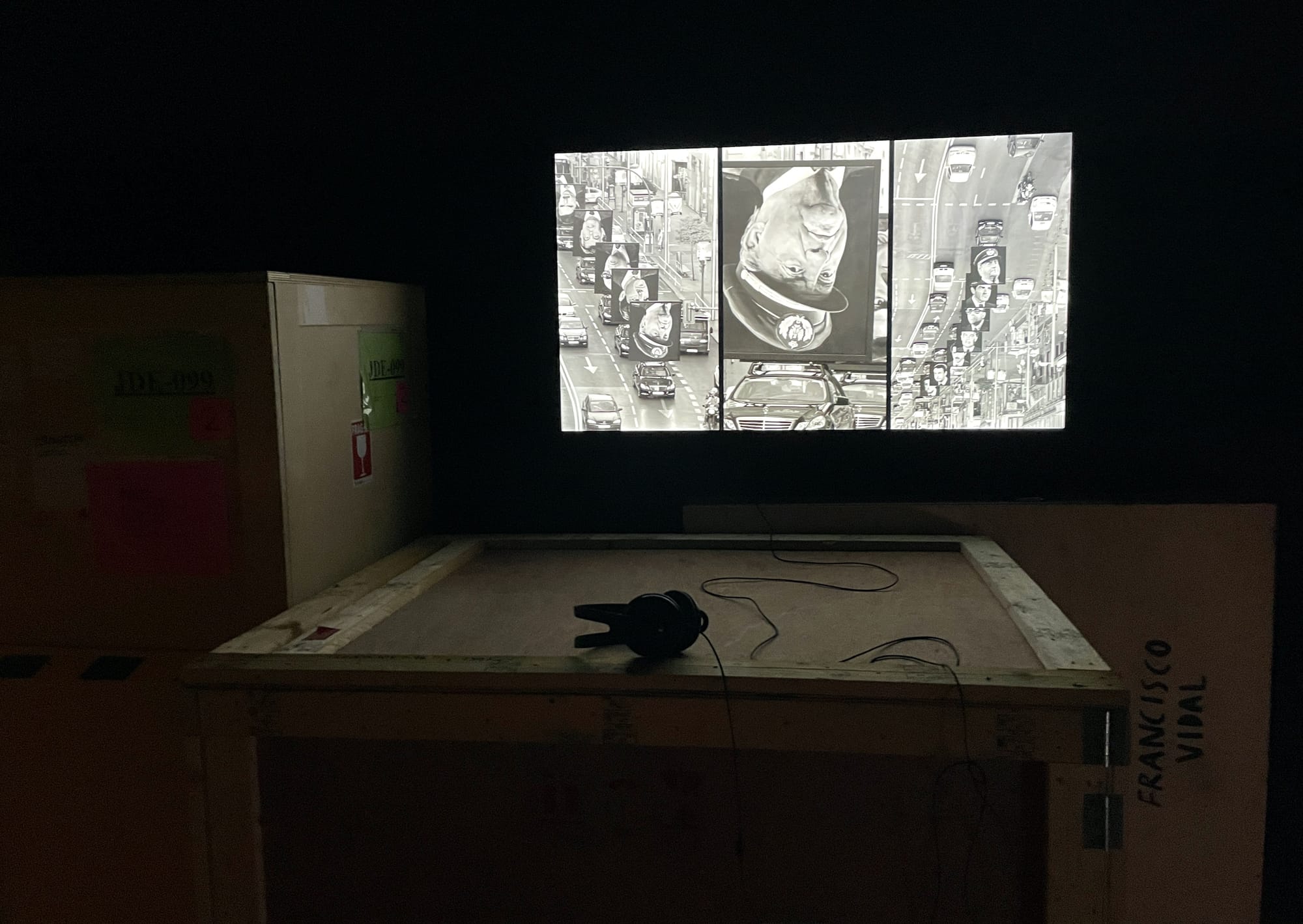
The first gallery is a darkened room crammed with large wooden boxes like those used to store and ship artworks. Here, Santiago Sierra and Jorge Galindo’s striking black and white video "Los Encargados" (“Those in Charge”) (2012) sets the tone for the overall show. In it, a line of identical black vehicles drives slowly down Madrid’s iconic Gran Vía carrying enormous portraits of Juan Carlos I and all of Spain’s presidents since its transition to democracy. The fact that each picture is inverted, and that the procession clearly mimics a funereal cortege, suggests that the transition away from dictatorship hasn’t always been sunny. The video was made before the Spanish king’s abdication and eventual exile in the United Arab Emirates, but he was already freighted with a troubled reputation that cast serious doubt on Spanish democracy and the leaders behind its progress.
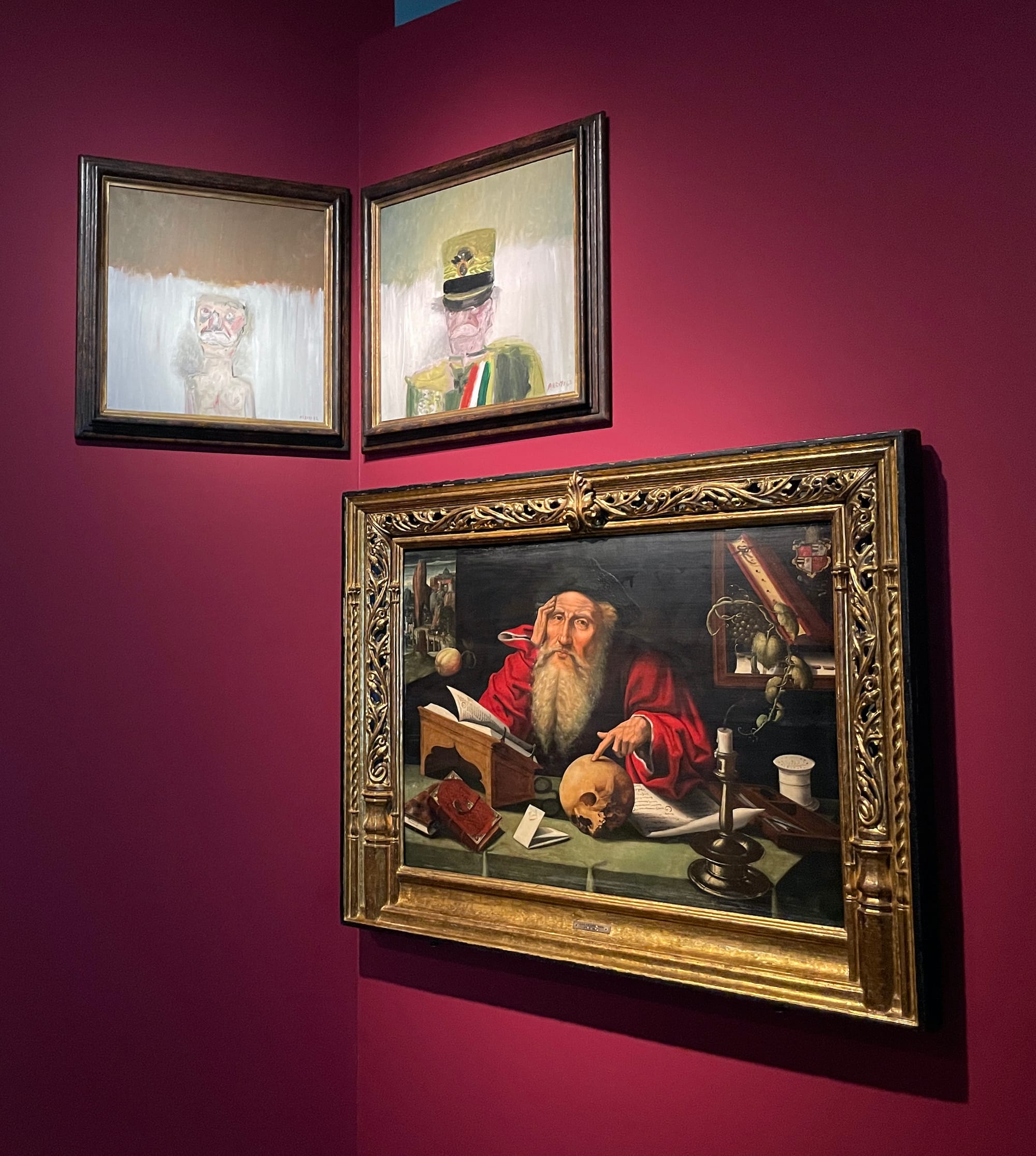
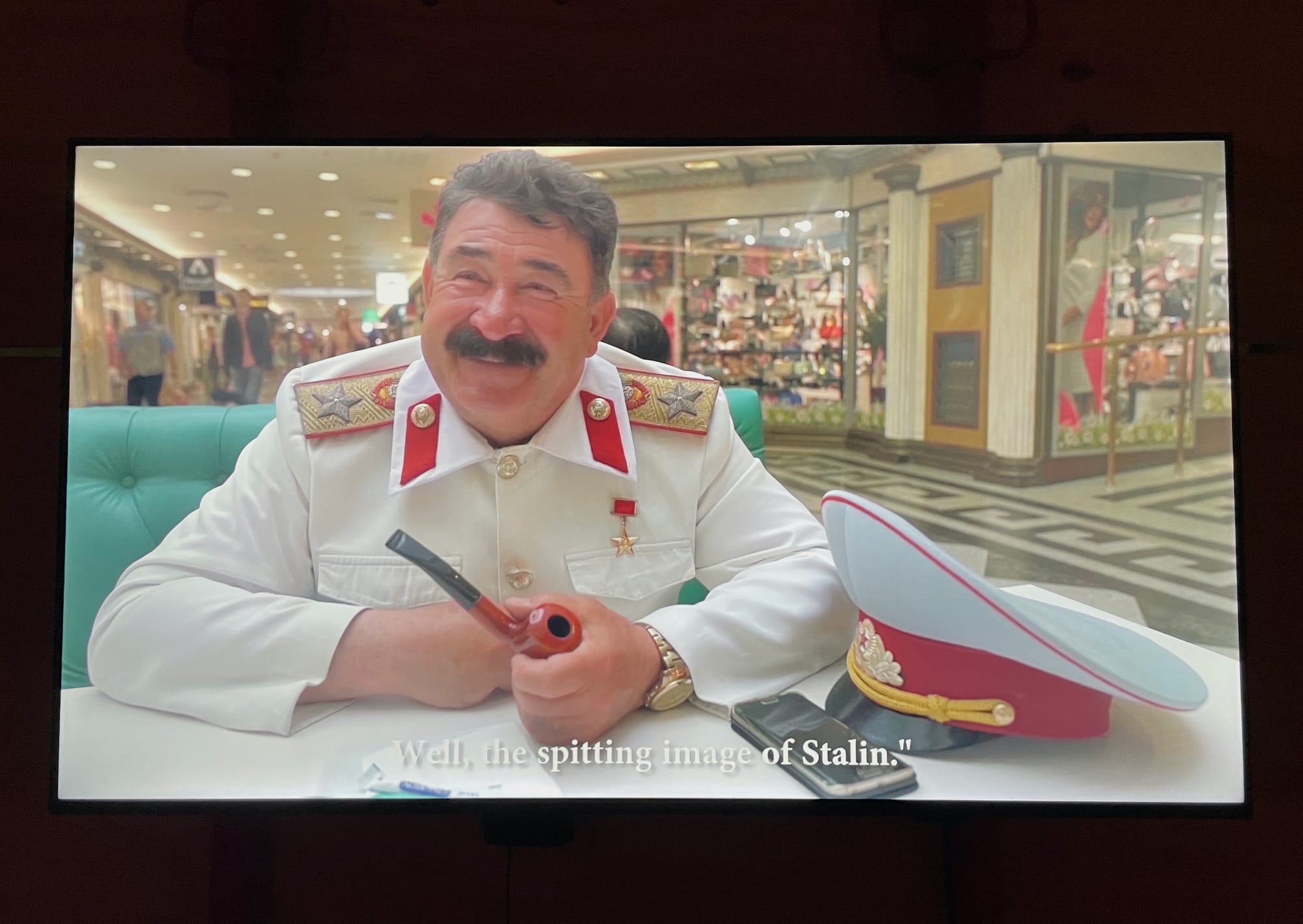
The back corner of one of the larger spaces in the show displays a series of portraits. Especially scathing is Eduardo Arroyo’s dual portrait of Victor Emmanuel III, the controversial Italian monarch and enabler of Benito Mussolini. In one, the king looks ridiculously small under his exaggerated military regalia; in the other, he’s a shriveled, pathetic shell. Painted in 1962, the images are a brave attack on authoritarianism and a thinly veiled critique of Franco. Nearby, Anna Jermolaewa’s video installation “The Doubles” (2021) follows Lenin, Stalin, Gorbachev, and Putin impersonators in Moscow’s Red Square, who offer fascinating insights into a society’s alarmingly forgiving and even sentimental view of its cruelest rulers: one elderly actor proudly remembers his mother celebrating his boyhood likeness to a young Stalin despite the ruler’s legacy of cruelty, which was still relatively recent at the time.
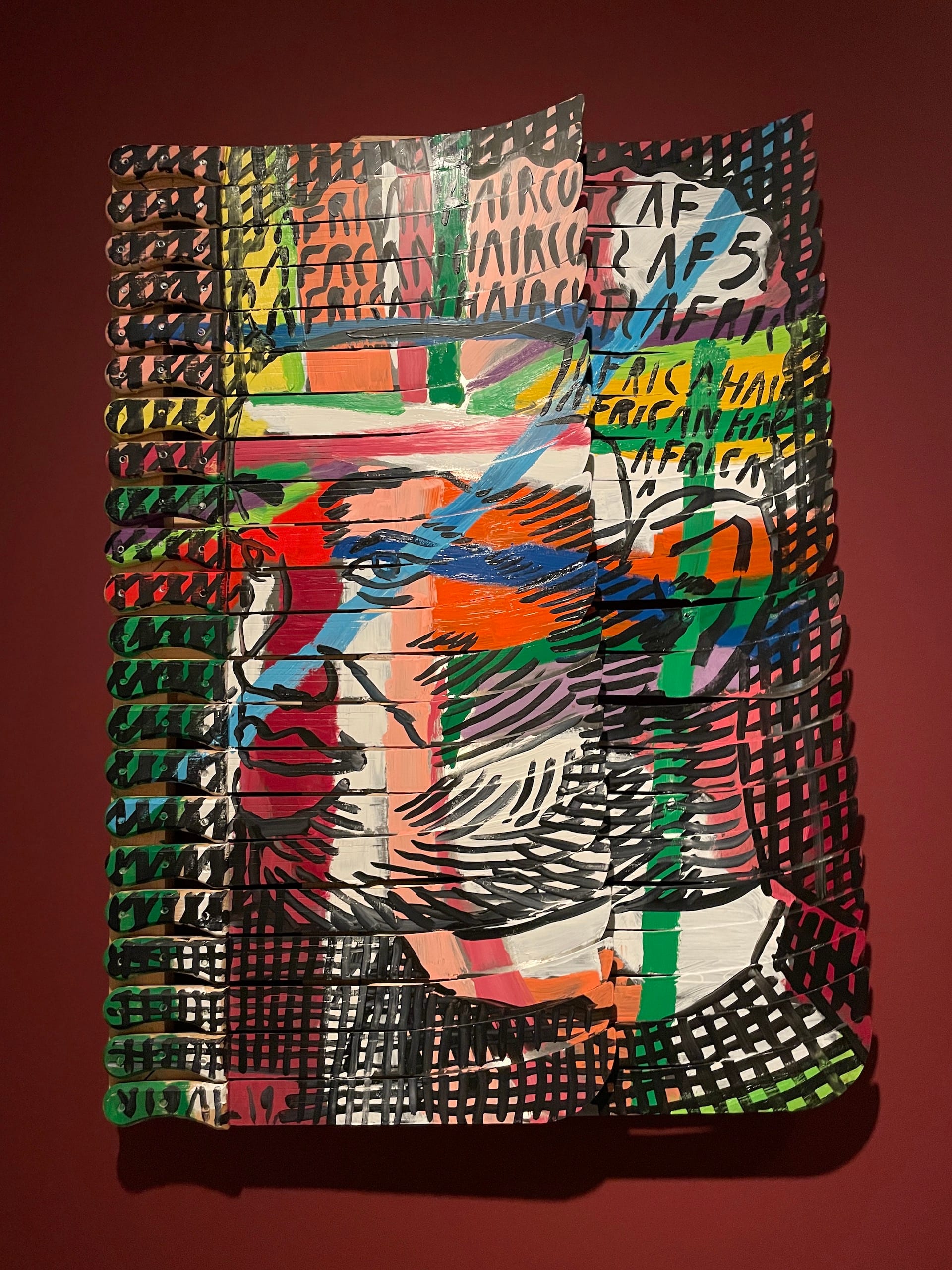
Women were severely oppressed under both Spanish and Portuguese dictatorships, and a set of lenticular photos, “Sem título (As mulheres do meu país)” (“Untitled [The Women of My Country]”) (2025) by Bárbara Fonte explores Portuguese women’s sometimes contradictory place within traditional systems of religion and sexuality. The revolution in Portugal also brought an end to the country’s colonial empire, which encompassed Angola, Cabo Verde, Guinea-Bissau, and Mozambique at the time. This complex, painful legacy — and related issues of mandatory conscription, wars, and immigration — are explored in several compelling works including Francisco Vidal's “African Hair Cut 5” (2018), a colorful portrait of a young man’s head, painted in oil on machetes in the style of a barber shop menu.
Altogether, Inquietud is an inventive and thought-provoking exhibition, and — as democracy is under attack in the United States and elsewhere in the world — it is a necessary and timely one, too. The varied, confrontational works on view are reminders of the intense labor required to protect liberty, and the constant and careful tending needed to maintain the ground on which our ideals are planted. “All of us must take responsibility for what we do with democracy,” Berástegui cautioned. “Freedom isn’t something given, but something earned.”
Inquietud. Libertad y democracia continues at La Casa Encendida (Ronda de Valencia, 2, Madrid, Spain) through March 8. The exhibition was curated by Paulo Mendes and Sandra Vieira Jürgens.