John Yau

Post image for A Truly Subversive Artist Is Not Necessarily Someone Who Is Theatrical or Gimmicky

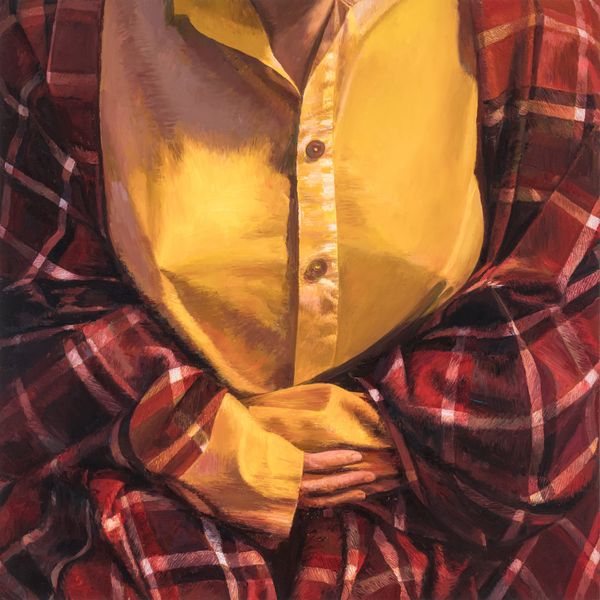
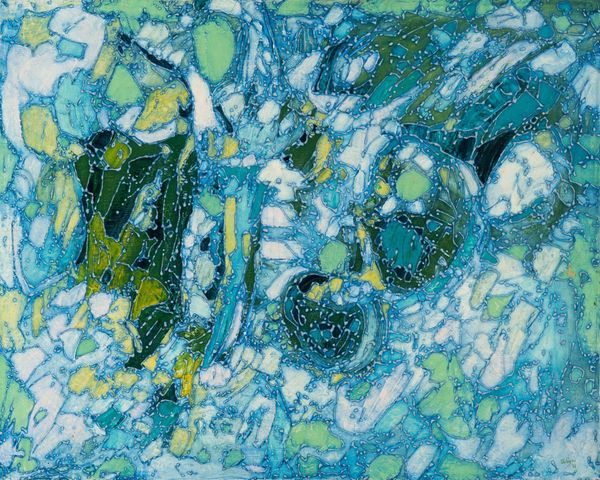
If there is one constant about Thomas Nozkowski that I would single out, it is his lifelong insistence on subverting conventions. In 1974 he began painting on canvas board measuring 16 by 20 inches. (Let’s be clear here — Bill Jensen never painted on this small a surface because it had no historical precedence). He used an inexpensive, mass-produced product, the same kind that comes in “paint by number” kits and carries associations with “Sunday painters.” No wonder his defiance went largely unnoticed, particularly when the ’80s rolled around.

Continue Reading →

Post image for The Daily Practice of the Impossible

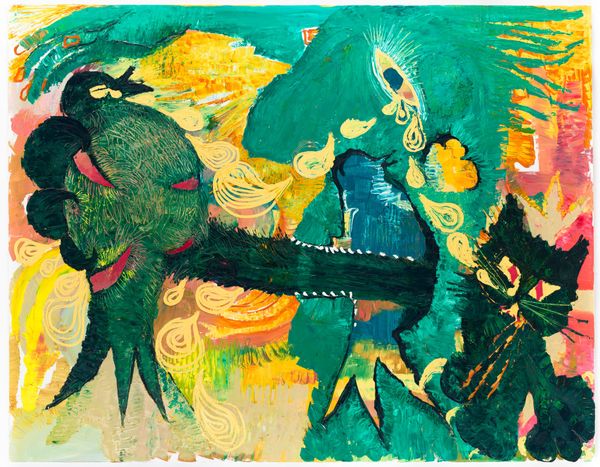
Dana Schutz, who is in her mid-30s, belongs to the generation of artists who grew up in an epoch where painting was routinely thought of as a dead practice. One couldn’t just be a painter, because doing so would be to enter a dusty domain crammed with empty signifiers. It would mean you were doing something that was obsolete (and reviled) — like speaking Latin to the drugstore cashier. The lines were pretty clear: dumb people became painters; smart people became conceptual artists who painted only when and if the subject called for it. This viewpoint might have started out as speculation, but now it’s a stupid and persistent prejudice.

Continue Reading →

Post image for Moving House: Chuck Webster at ZieherSmith

Chuck Webster is in his early 40s. He has been showing regularly in New York for nearly a decade. This is his sixth show at ZieherSmith since 2003.

Continue Reading →

EssaysWeekend

A Bird’s-Eye View of Heaven

by John Yau on May 6, 2012

Post image for A Bird’s-Eye View of Heaven

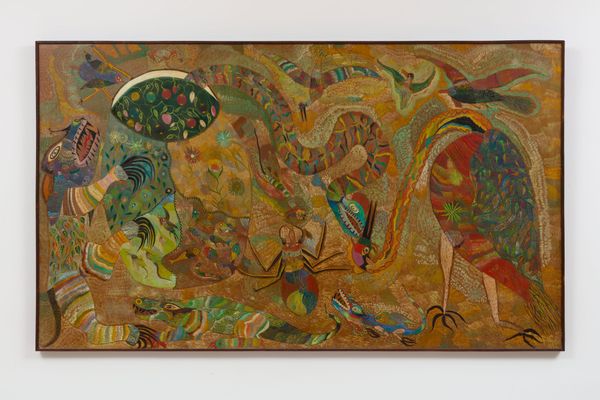
By all accounts, Pearl Blauvelt (1893–1987) was a recluse who lived in northeastern Pennsylvania in a house without running water, plumbing or central heating. Her neighbors referred to her as the “Village Witch.” In the mid 1950s, she was declared incompetent and moved to a facility where she resided until she died. The house she lived in stood vacant for nearly fifty years, until it was bought and restored. The people who bought the house discovered Blauvelt’s drawings in an old wooden box lodged under long-abandoned piles of things.

Continue Reading →

EssaysWeekend

Can We Still Learn To Speak Martian?

by John Yau on April 29, 2012

Post image for Can We Still Learn To Speak Martian?

Let us start with two addresses just a few blocks from each other in San Francisco, and what was happening there in the early and mid-1950s. On Halloween, 1954, the Six Gallery opened at 3119 Fillmore Street in San Francisco. The six founders were Wally Hedrick, Deborah Remington, Hayward King, David Simpson, John Ryan and Jack Spicer. Their shared interest was to have a place to exhibit art and host literary events, to put art and poetry on the walls, side by side. At the debut exhibition, Spicer’s poems were in fact on the wall, just like the paintings and drawings of the other co-founders.

Continue Reading →

Post image for What Happens When You Are Not a Track Star for Mineola Prep

Artist Gary Stephan, whose new drawings will be exhibited this fall at Devening Projects + Editions in Chicago, is doing the best work of his life.

Continue Reading →

Post image for No More Garden Variety Avant-Garde Has-Beens

Before focusing on Kathy Bradford’s exhibition of new paintings at the Edward Thorp Gallery, I want to mention Eric Fischl’s recent paintings and the second coming of the Titanic, both oddly relevant for their irrelevance.

Continue Reading →

ArticlesWeekend

Why There Are Great Artists (Part 3)

by John Yau on April 15, 2012

Post image for Why There Are Great Artists (Part 3)

The rigorous parameters that Sylvia Plimack Mangold established in her earlier bodies of work (the floor paintings and the landscapes framed by “tape”) continue to inform her paintings of individual trees (specifically the maple, elm, locust, and pink oak), which have been focus of her attention since the early 1980s. Year after year, in different seasons and subtly changing light, the artist has returned to the same handful of subjects seen from the same tightly cropped viewpoint.

Continue Reading →

GalleriesWeekend

Open Secret

by John Yau on April 8, 2012

Post image for Open Secret

Stanley Whitney is in his mid-sixties. By his own account, he struggled in the studio from the early 70s to the late 80s, “just trying to make work.” The issue was to make something that was his, rather than to make something that was the right or approved of thing to do. Although it is seldom discussed publicly, this is the dilemma facing every African-American artist. You must be a spokesperson who produces testimony that can be regarded as representative of Black culture — the “I” speaking for the “we.” (Even after the death of the author, it seems that there is at least one “we” that must be spoken for in this postmodern world.)

Continue Reading →

EssaysWeekend

Why There Are Great Artists (Part 2)

by John Yau on April 7, 2012

Post image for Why There Are Great Artists (Part 2)

Before writing about Sylvia Plimack Mangold’s shift from interiors to landscapes, I think it is useful to once again consider the floor paintings, which she worked on for about a decade, beginning in 1967. It is in these paintings that the artist defines an approach to subject matter from which she has never wavered. She will paint only what she observes, but with more rigorous parameters than simply investigating her immediate circumstances. Her subject matter will never suggest an elsewhere or material plenitude. She will make no allusions to fantasy, leisure, or social status. It is incumbent on us to reflect upon what she does and doesn’t do.

Continue Reading →