James McNeill Whistler’s Music for the Eyes
A long-awaited Whistler retrospective at Tate Britain makes the case that every brushstroke, color, and omission serves the pursuit of harmony.

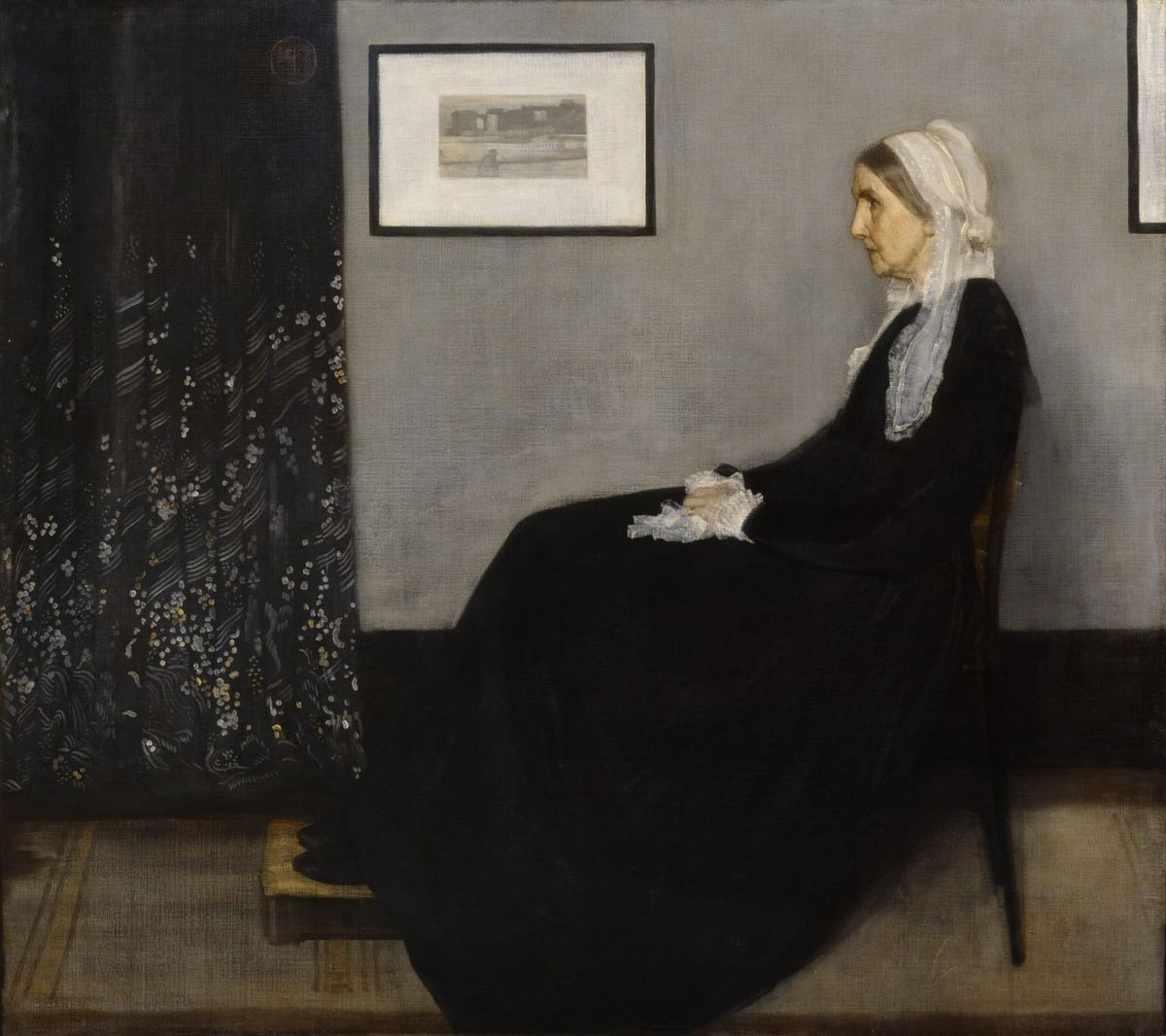
LONDON — James McNeill Whistler is at once ubiquitous and obscure. Born in 1834 in Massachusetts, he spent some of his childhood in St. Petersburg, Russia before moving to Paris and then London to study art. While he recalls the motifs and methods of European heavyweights such as Courbet, Renoir, Singer-Sargent, and Constable, Whistler’s work diverges in its technical progression. Whistler prioritized aesthetic effect over iconographic content, confining each piece to a limited chromatic palette in search of the sublime and forgoing faithful representational accuracy. Like music composed primarily for aural pleasure, his work avoids sharp or jarring notes in color, tone, or composition for aesthetic pleasure. In fact, Whistler often used musical titles like harmonies, symphonies, or arrangements to emphasize this; his most famous work, the 1871 portrait of his mother, is called “Arrangement in Grey and Black No. 1."
James McNeill Whistler at the Tate Britain is the first major solo exhibition of his work in the last 30 years, and this exhibition has been five years in the making. Part of Whistler’s relative obscurity in the United Kingdom stems from stipulations in major bequests that prevent loaning his work, most significantly from the collections at the Smithsonian Institution and the Hunterian at the University of Glasgow. Many may be familiar with Whistler’s work through reproductions, but this exhibition matters precisely because the ‘harmonious’ limited palette and subtle paint application are lost in photographic reproduction.
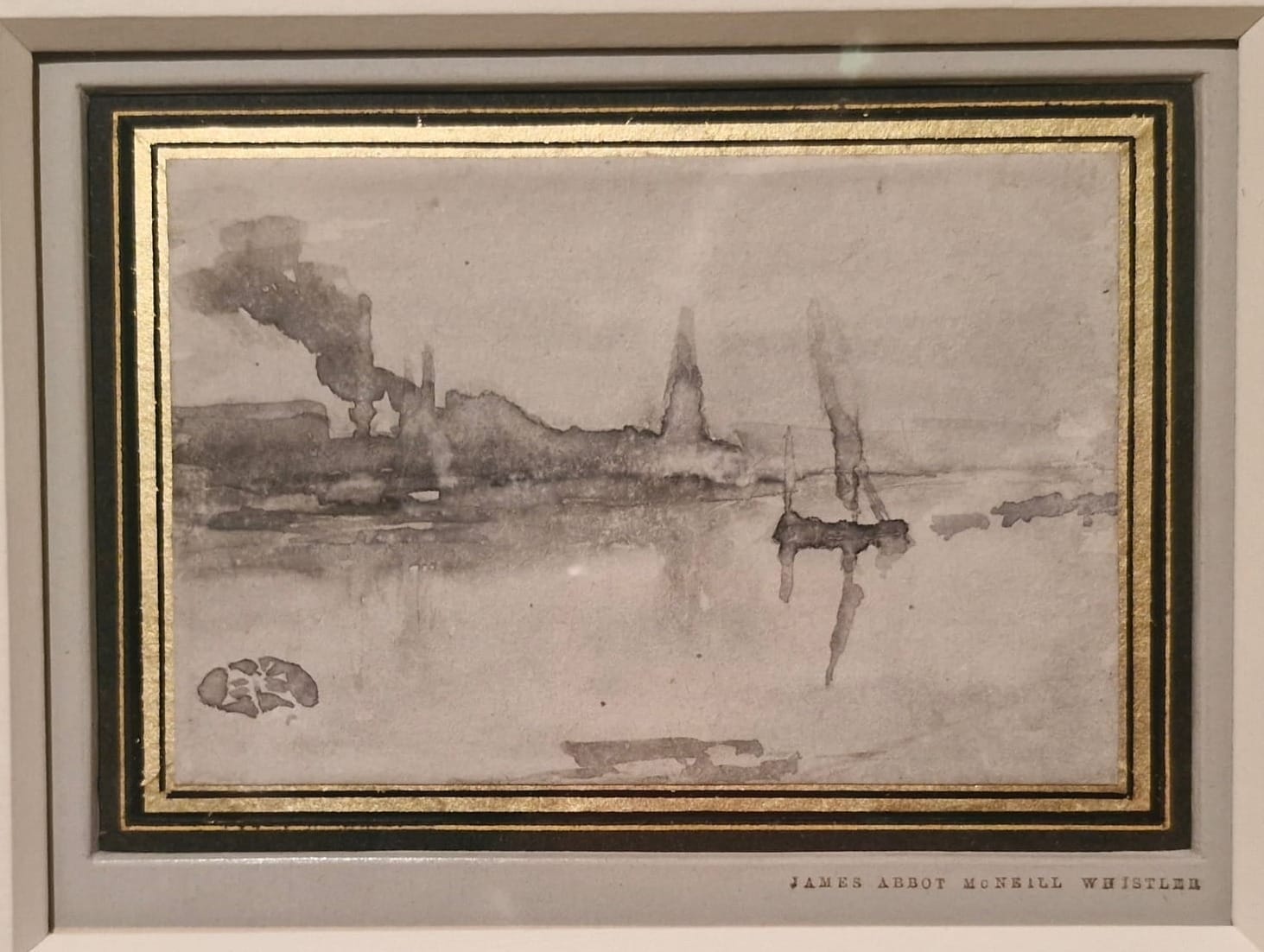
A fantastically singular technique distinguishes Whistler from contemporaries and other stylistic schools. Curators Carol Jacobi, Isobel Muir, and James Finch emphasize Whistler’s individuality through a laser-focused visual analysis of his paintstrokes, and by opening the show with a pseudo-reproduction of his studio, complete with theater windows. The curators take it a step further by presenting his brushes and palette to describe the physical process of making the strokes. A caption, for example, explains how in a nearby portrait of Effie Deans (or “Arrangement in Yellow and Gray,” 1876–68) he “created the folds of her skirt with a stiff, flat-ended brush … [pressing] harder against the canvas to deepen the shadow at the hem.” There is plenty more of this glorious catnip for anyone remotely interested in painterly technique. Interestingly, a technique peculiar to Whistler is using a loaded brush with excess paint spilling at its edges to create a thicker framing ridge on either side of the stroke. It is an ingeniously economical application simultaneously of both outline and fill, and once you spot it, it’s everywhere.
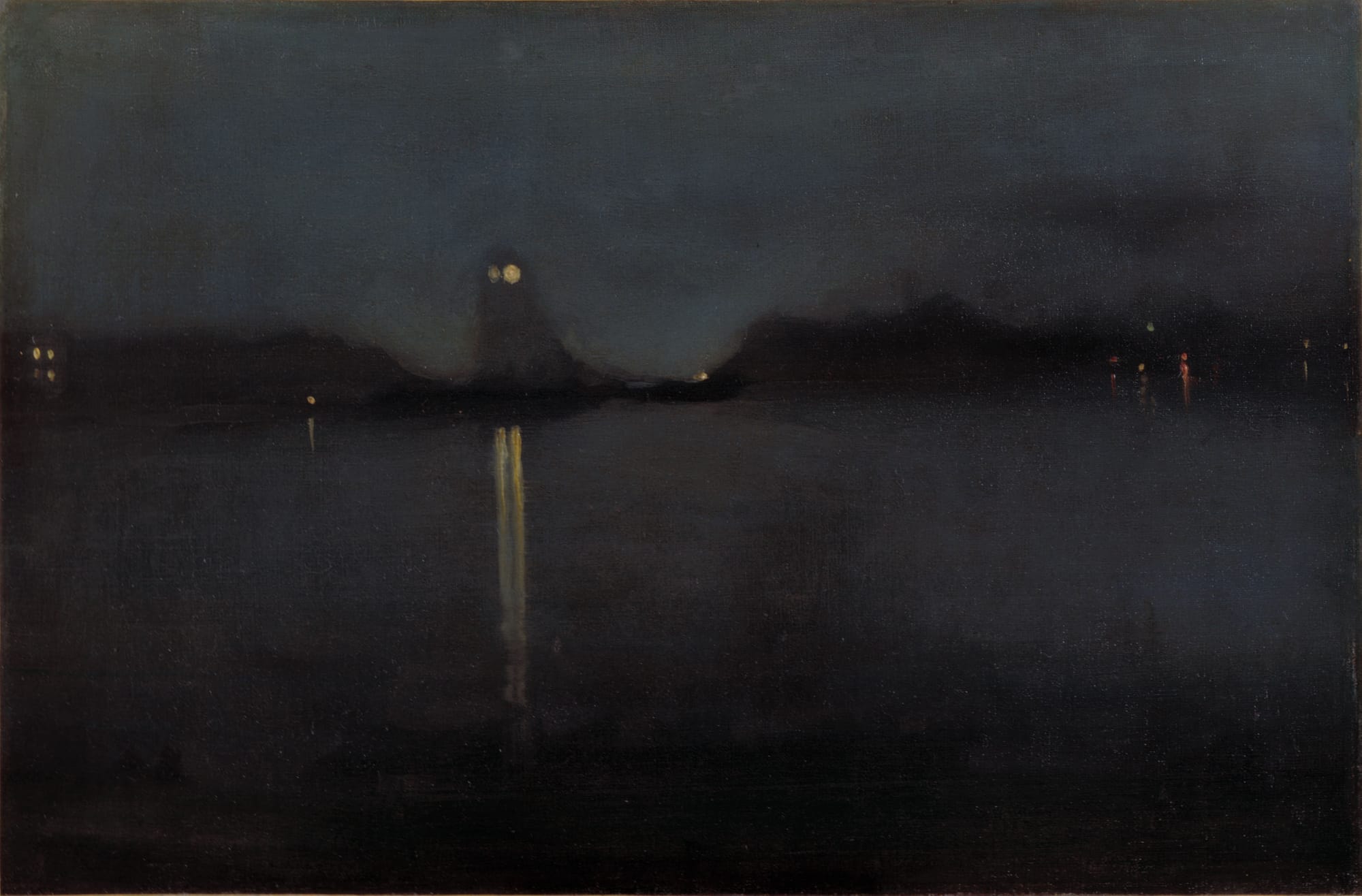
There is a sense of immense discipline in Whistler’s arc from traditional models to aesthetic tonality, such that he himself eventually disappears. A strict economy characterizes his efforts, from an early watercolor of “The Thames at Battersea” (c.1876–68) delineated fantastically by only about five light blobs, through to a distinct precision and restriction in what he actually applies and even takes away. Comparing this to the show-boating of Singer-Sargent’s loose, cutting-corners virtuosic brushwork, or the trowel-applied thickness of Manet hacking away in his painterly constructions, not a single brushstroke is in excess, with Whistler even wiping away to leave a mere trace of pigment. A quote pasted on the wall captures his idea exactly: “Paint should not be applied thick. It should be like breath on the surface of a plane of glass.” It fittingly appears in the section on his 1870s series, Nocturnes, which is perhaps the pinnacle of atmospheric mood: Only the odd tiny red or white catchlight punctuates these saturated, minimalistic nighttime river scenes.