How Miles Greenberg Got “WAR” Past the Censors
“There was not a single outlet, institution, or gallery that wanted to get behind this thing,” the artist told Hyperallergic about his new, six-hour performance piece.

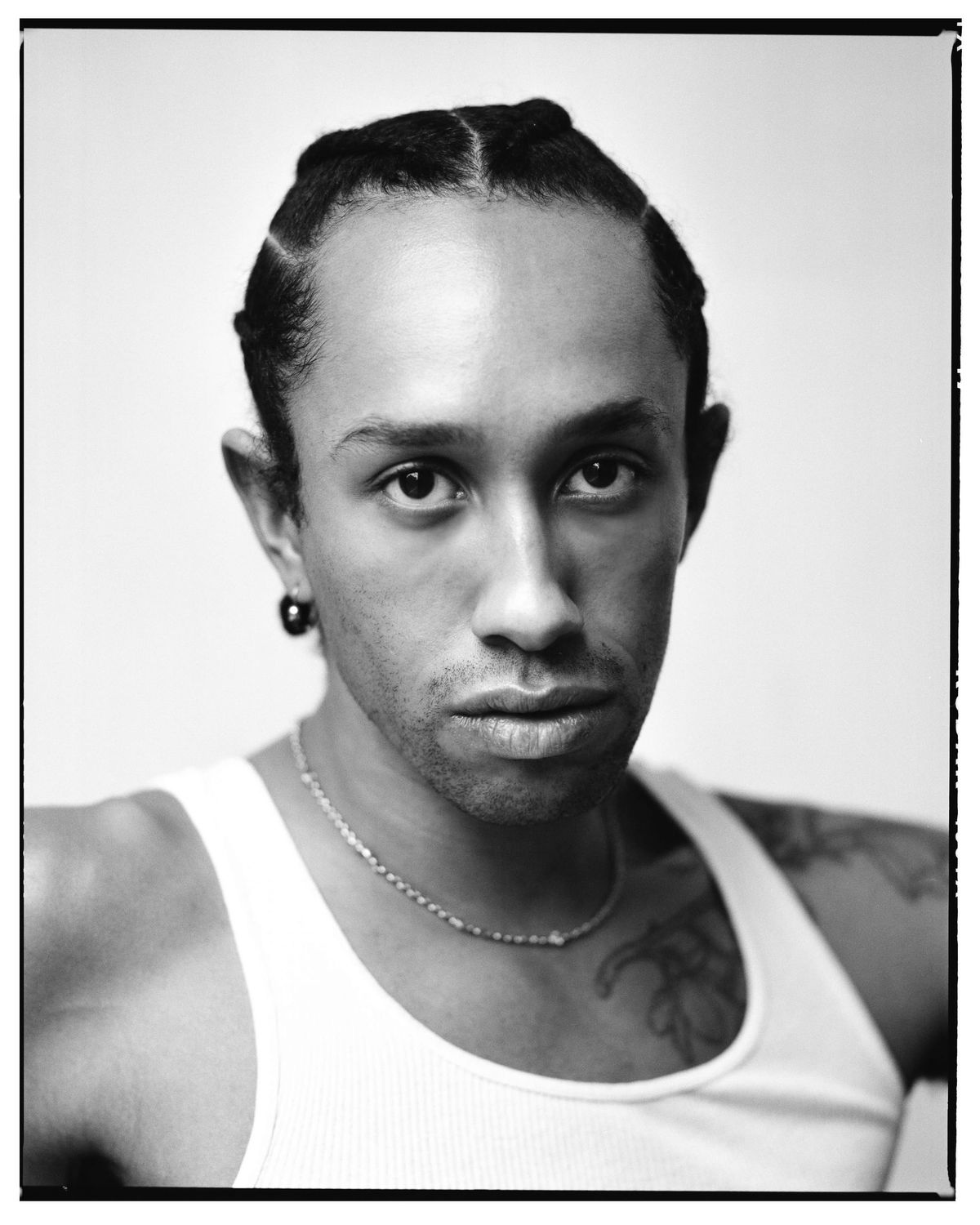
Miles Greenberg’s mother took him to see Marina Abramović perform The Artist Is Present at the Museum of Modern Art when he was just 12 years old. The experience would serve as the zero point for the New York-based Canadian artist’s own performance-based practice, and the birth of his unyielding desire to “see [his] work at a museum, where it would be approached as a sculpture.” Later training under playwright Robert Wilson, choreographer Édouard Lock, and the very “grandmother of performance art” who spurred his interest in the medium, Greenberg began developing works that ironically share more with the histories of painting and sculpture than a lineage of performance. He has stood on plinths as the tortured satyr Marsyas from Greek mythology, the arrow-pierced Christian martyr Saint Sebastian, and in original statuesque poses that recall the Baroque ecstasy of a Bernini sculpture.
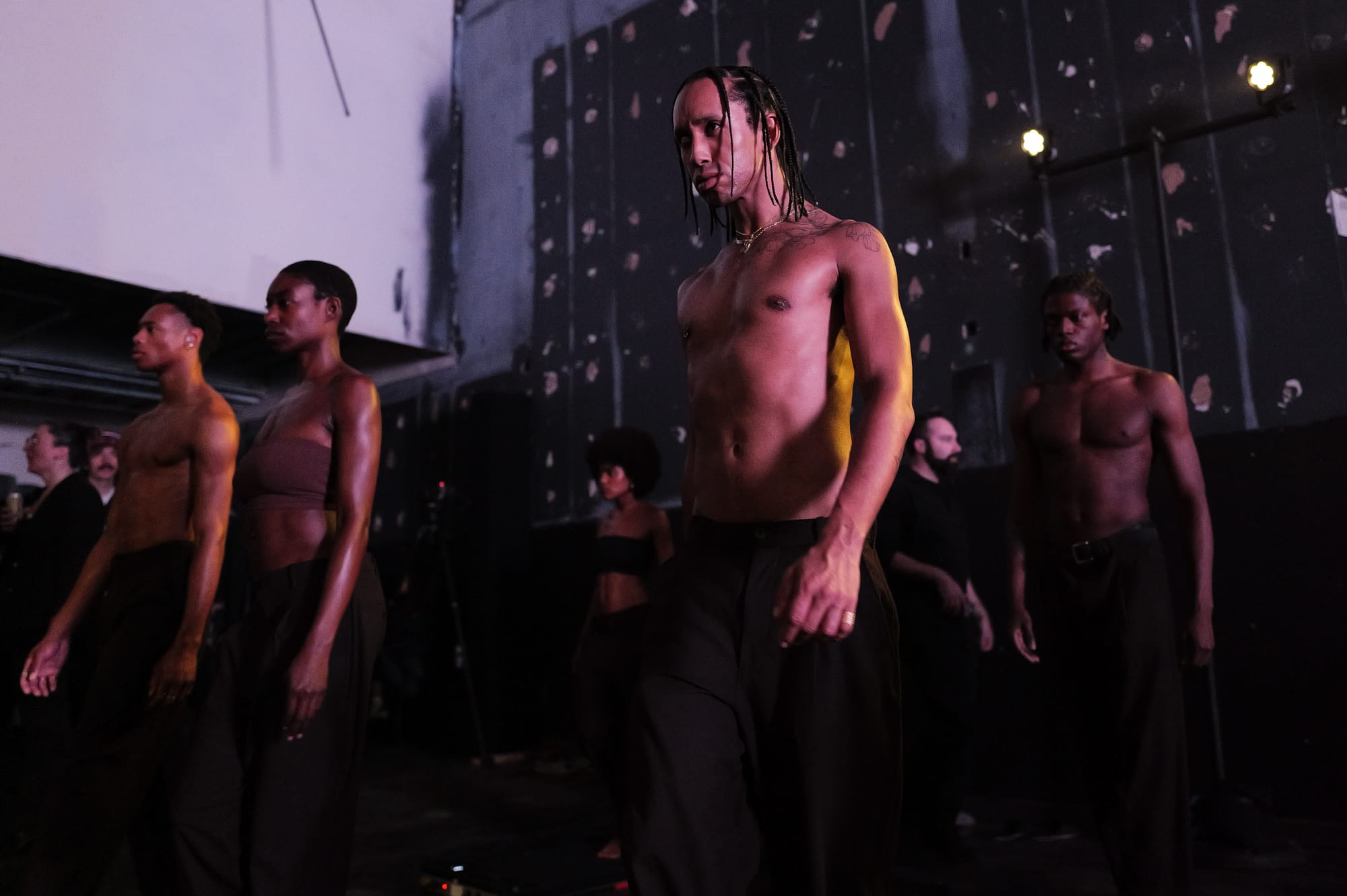
On October 29, the artist presented “WAR” (2026), a six-hour durational performance organized by Performa and curated by Zoe Lukov. More than 40 performers walked on treadmills in the vacant site of the former 86th Street Cinema in New York to a trance-like score by artist Chino Amobi. Greenberg spoke with Hyperallergic about the difficulties of securing a venue for the work amid Israel's genocide on Palestine, the limitations of endurance, and performance as a “gateway into a state that is difficult to reach.”
Hyperallergic: You often reference martyrs, saints, warriors, and other archetypes across history dedicated to either heroic causes or beliefs beyond themselves. Why are you interested in these figures? Do they resonate with you besides their art-historical or imagistic qualities?
Miles Greenberg: The West has canonized these stories as a means of cutting right to a series of moralistic teachings that have been central to Western societies writ large for the last several millennia. They're represented in different ways, but there's this longstanding tradition of just about every artist from the Renaissance up until contemporary times — though, maybe to a lesser extent — regurgitating these art-historical figures, characters, stories, and fables over and over again.
With performance, which continues to be niche and sit around the edges of art history, people’s minds go more to the shock value of it, which I’m not particularly seduced or interested by, rather than what it is that we mean or wish to convey. So it’s really a strategic play on my behalf to choreograph or rein in their imagination and channel it in the right direction. I think of these works as portraits more than I wish to identify with the figures. There can be some crossover. Saint Sebastian is a notable example I have some personal investment in as a queer person.
I also think situating myself centrally in that tradition helps to quite simply attribute value and clarity and define my practice within that canon and lineage of art history, rather than somehow adjacent or parallel to it as a young queer Black performance-based person. I’m not interested in marginality as a destination, and I don’t see any reason not to put me in conversation with the canon. I was raised by the canon, so I’m going to make like the canon.
H: What led you to turn to the subject of war with this particular work?