Why Pageant Is Suddenly All the Rage
In a world skewed toward artifice, the East Williamsburg performance space’s commitment to confronting, rather than escaping, one’s conditions in art feels like a renaissance.

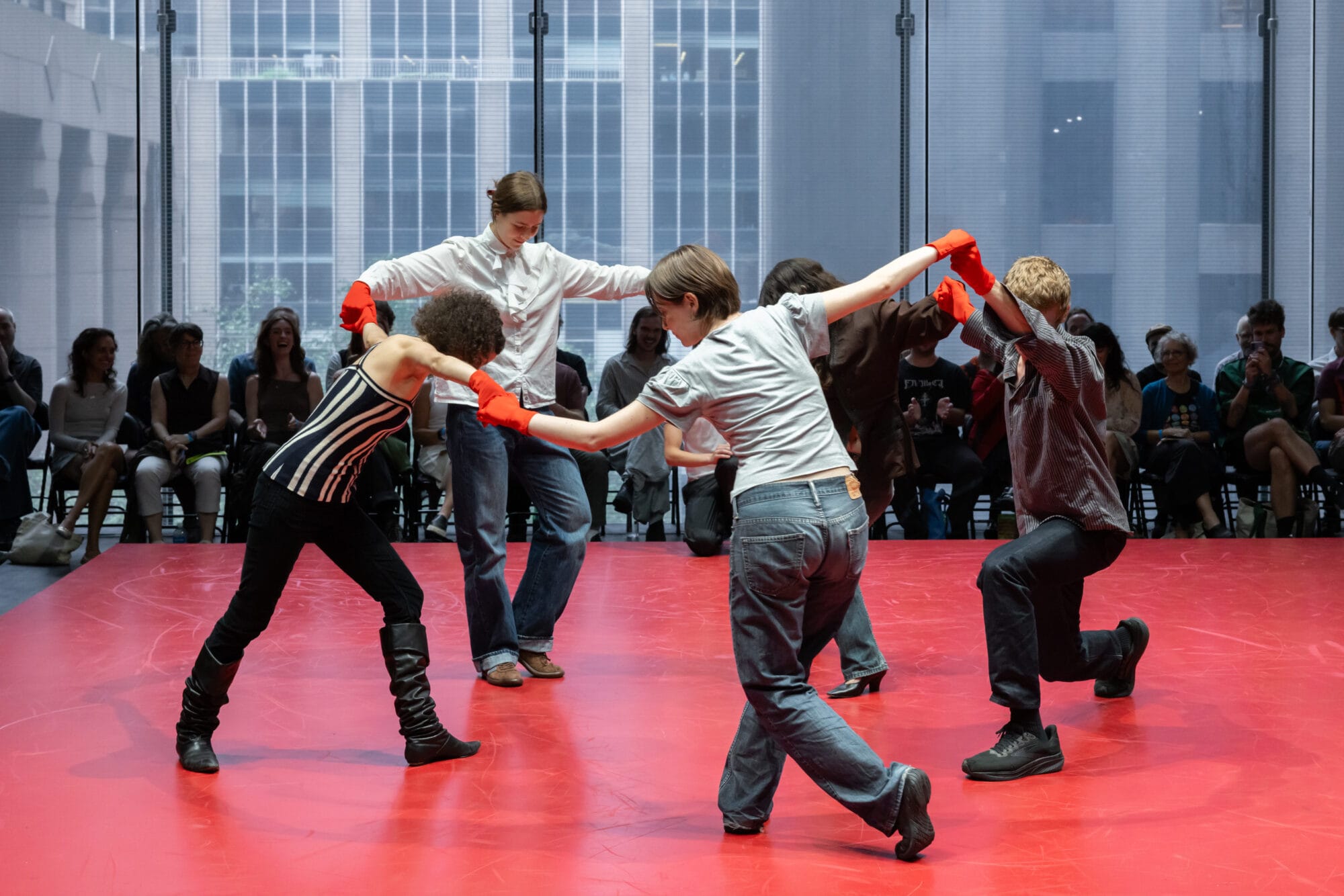
On a Friday morning in late August, dozens packed a small auditorium at the Museum of Modern Art to watch choreographer, director, and writer Isa Spector writhe on a red-painted platform, struggling to carry out the museum’s request to make “a painting of dance” in 10 minutes. After flailing to and fro, down on all fours to the red platform floor and up to the fluorescent studio lights, and calling out to a "mom" whose name changed to “MoMA” and a "dad" to “Dada” with an alliterative tongue, Spector had an epiphany. They knew what they were to paint. Seconds later, five performers donning red gloves emerged from backstage and assembled at the center of the platform. Hand in hand, they began twirling in a circle, staging a living parody of Matisse’s modernist masterpiece displayed in the galleries just a floor above.
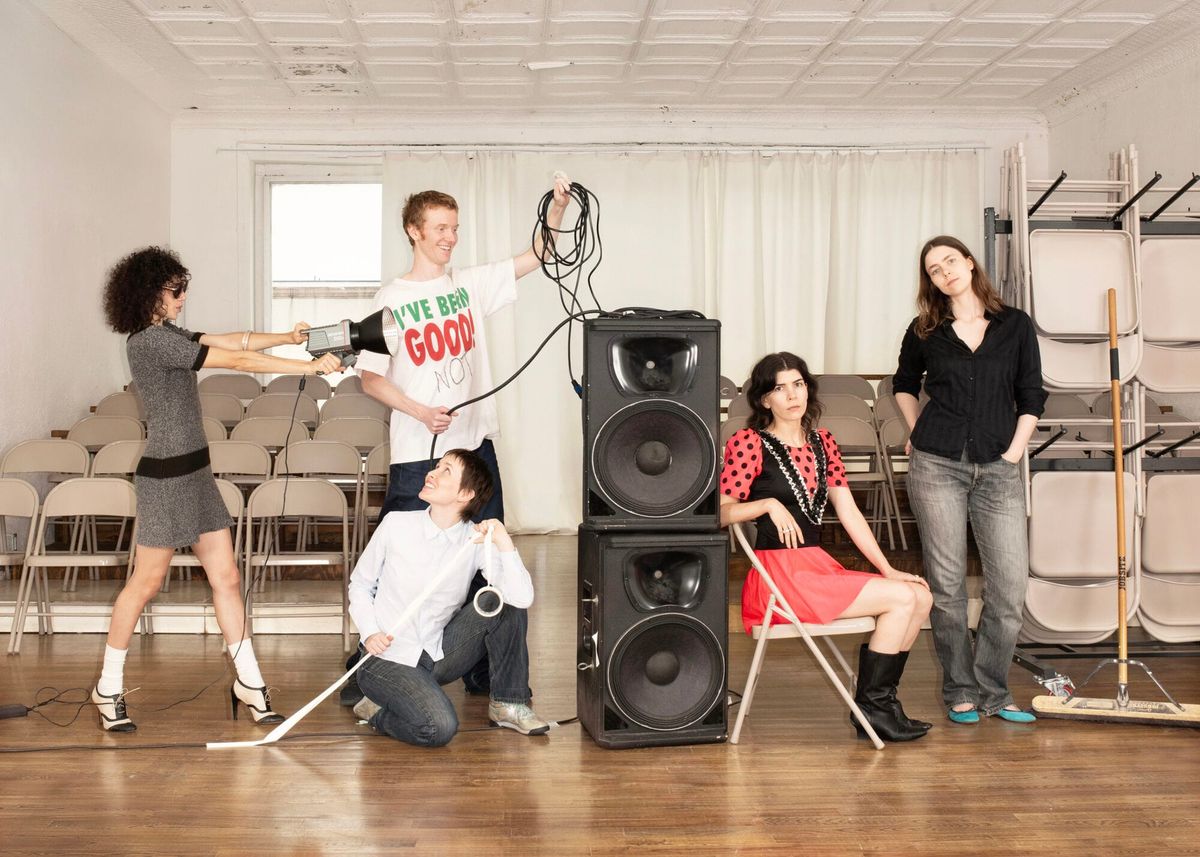
The five subjects of this commissioned “painting” — Sharleen Chidiac, Lili Dekker, Jade Manns, Owen Prum, and Alexa West — are the co-founders of Pageant, an artist-run Brooklyn performance space that held a month-long residency at MoMA in August. "MoMAlogue #1" inaugurated Pageant’s seven-hour MoMA performance marathon, of which Spector’s was the first, but certainly not the only, meditation on dance’s relationship to its own history and that of visual art across 25 10-minute performances.
“I think the history of dance, coming from a ballet proscenium stage into modernism, then into postmodernism, started with a pictorial form,” artist and choreographer West said in a group interview with Hyperallergic after the Pageant Presents Pageant marathon. “And it’s slowly been breaking away from that over time.”
Preceded by a different space that Manns and Chidiac ran out of their apartment, Pageant was established in 2022 in a third-story loft on Graham Avenue in East Williamsburg. According to West, there was initially “no clear marketing vision” for Pageant. It was merely a solution to the group’s shared desire “to provide context to our practices in a post-COVID landscape in which there were very few opportunities to show work at our stage of artmaking.”
“We didn’t set out with the intention for it to be like an institution,” Chidiac added during the interview. “We just needed a space to work, to show our work, and to show other people’s work.