Richard Dadd’s Strange and Delicate Worlds
Known primarily for his work of fantastical landscapes and mystical woodland creatures, a new retrospective tells the full story.

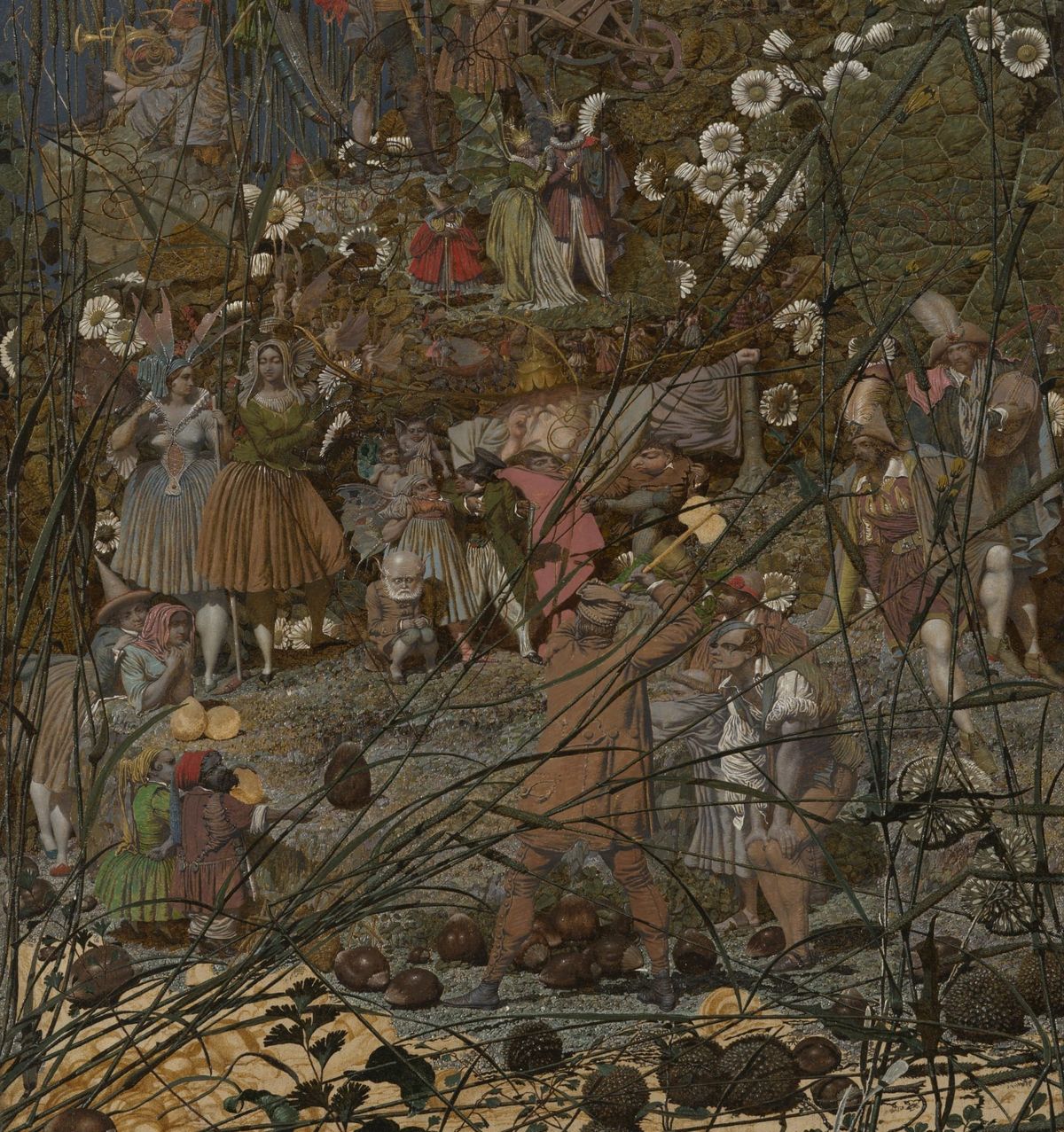
LONDON — Most British viewers know Richard Dadd from “The Fairy Feller’s Master-Stroke,” replete with its controlled chaos of subject matter and unavoidable depiction of a man suffering from mental illness. The diminutively scaled work, now in Tate Britain’s permanent collection and on view at the Royal Academy of Art’s retrospective exhibition, Richard Dadd: Beyond Bedlam, was painted between 1855 and 1864 and worked over repeatedly for nearly a decade while Dadd was incarcerated at Bethlem Royal Hospital. The work is filled with minutely detailed fantastical figures and fairies, overlaid ad infinitum under a web of flowers and grass blades that bisect its surface.
Dadd was born in 1817 in Chatham, England, worked during the Victorian era, and studied at the Royal Academy art schools. He was recognized as a leading talent among a group called The Clique, alongside other English artists such as Augustus Egg and William Powell Frith. But his biography is overshadowed by mental illness, which first became acutely evident on an expedition through Europe to Greece, Turkey, and Syria as a draftsman and culminated in a delusional episode in 1843 when he killed his own father and fled to France. After his arrest and return to England, authorities committed him to Bethlem Hospital's criminal department.
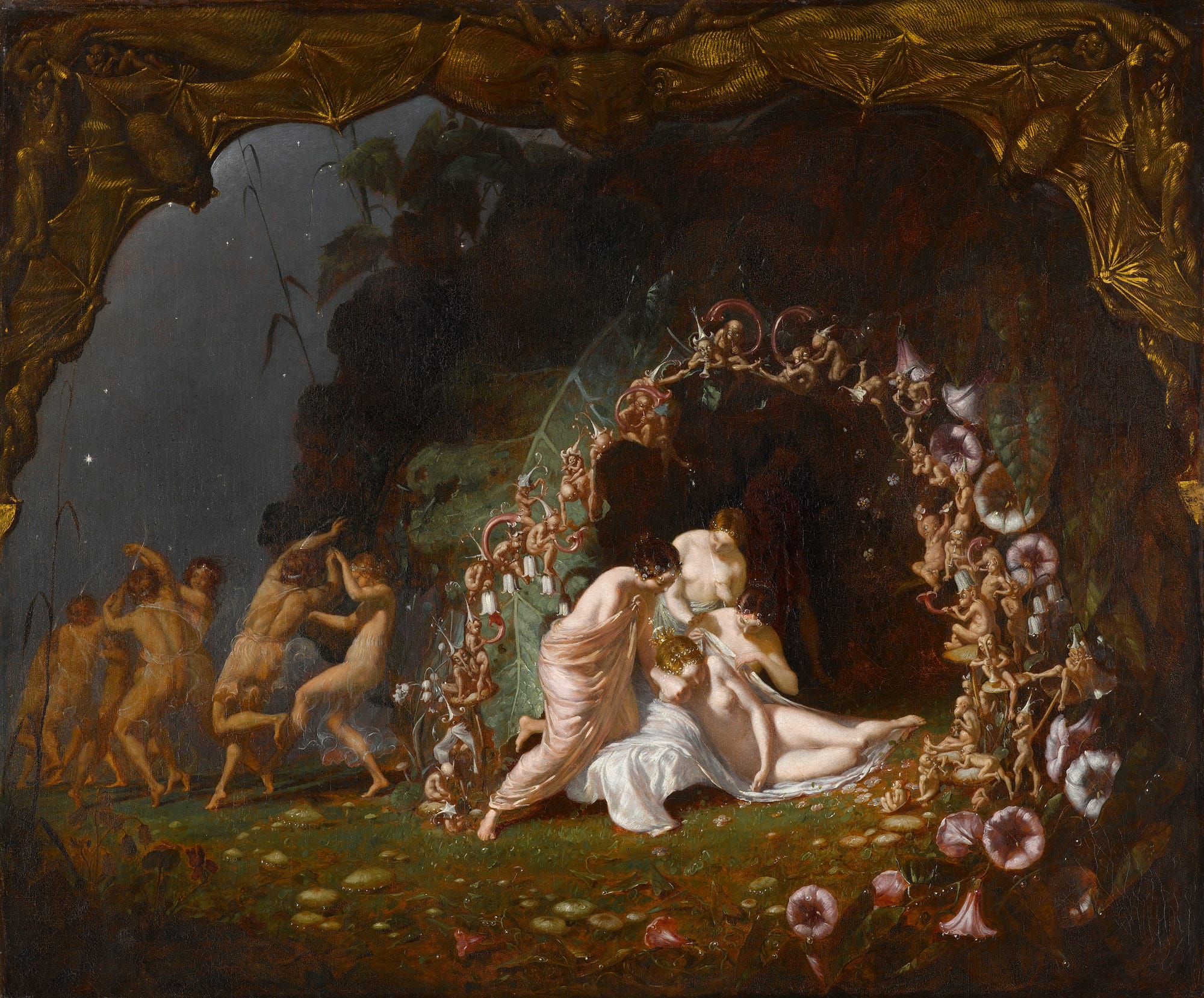
Though his meticulously realized, highly individualized output sits largely outside the historical canon, the Royal Academy wisely avoids treating their new comprehensive survey of Dadd’s career as outsider art. The exhibition also avoids psychological interpretation and refers visitors to the Bethlem Museum of the Mind, from which many pieces have been loaned, for further medical and historical detail about Dadd’s stay there.